
Aichi-Nagoya 2026 Gold: An Se-young's Record Streak and the Numbers That Still Need Verification
**Trả lời cốt lõi:** An Se-young (Hàn Quốc) giành huy chương vàng đơn nữ cầu lông tại Đại hội Thể thao châu Á 2026 ở Aichi-Nagoya, đánh bại Akane Yamaguchi 21-17, 21-9 trong trận chung kết và không để mất ván nào qua năm trận, trở thành nữ tay vợt đơn đầu tiên bảo vệ thành công huy chương vàng đơn nữ kể từ khi nội dung này xuất hiện năm 1962. **Dữ kiện chính:** - An Se-young khép mùa 2026 với thành tích 56 thắng - 1 thua trên 57 trận, vô địch châu Á không mất ván. - Cô lập chiến thắng thứ chín liên tiếp trước Akane Yamaguchi, đối thủ lớn nhất, ngay tại chung kết. - Cú đúp Vô địch Thế giới - Đại hội châu Á các năm 2023 và 2026 cho thấy một cao nguyên phong độ, không phải đỉnh đơn lẻ. - Đội nữ Hàn Quốc chỉ giành huy chương đồng đồng đội dù An thắng Yamaguchi ở bán kết, phơi bày khoảng trống chiều sâu. - Kỷ lục 46 danh hiệu quốc tế, bằng Susi Susanti, phụ thuộc định nghĩa và cần BWF kiểm chứng. **Nguồn:** Phân tích chuyên sâu giai đoạn 2 về danh sách kỷ lục của An Se-young tại Đại hội Thể thao châu Á 2026 | Công bố 2026 | Cross-checked: VuaBong.vn **Hỏi đáp liên quan:** H: An Se-young mất bao nhiêu ván ở Đại hội Thể thao châu Á 2026? Đ: Không mất ván nào — cô thắng 10-0 qua năm trận. H: Ai là đối thủ trong trận chung kết đơn nữ? Đ: Akane Yamaguchi (Nhật Bản), với tỉ số 21-17, 21-9. H: Kỷ lục 46 danh hiệu quốc tế đã được xác minh chưa? Đ: Chưa hoàn toàn — BWF không công bố một danh sách chuẩn duy nhất, nên phép so sánh phụ thuộc định nghĩa.
The women's singles badminton final at Aichi-Nagoya closed in the second game at 21-9. An Se-young did not scream, did not drop to the floor. She stood there, breathing, then bowed to the stands. I wrote that moment into my notebook with a line: she did not win with a shot — she won with an entire architecture.
But feeling is not data. Across nine years of following badminton from Surabaya, I have learned that feeling is the easiest thing to be deceived by. When every tournament stops, I finally hear my own heartbeat — but that heartbeat does not tell me how many matches she won, how many games she dropped, or which record actually holds up against time. To know that, I have to return to the numbers, and accept that some numbers are written to celebrate, not to verify.
Context
A few facts before the dissection. The Asian Games 2026 took place in Aichi-Nagoya, Japan — a continental multi-sport event, not a stop on the BWF World Tour. This matters: its prestige value exceeds its ranking-point value. A gold medal here does not lift a player up the table the way a Super 1000 does, but it writes a name into history in a way points never can.
An Se-young entered as defending champion, and as World No. 1. According to published data, she entered with a season record of 56 wins and 1 defeat across 57 matches in 2026. That number made me pause longer than any other in the article. In women's singles, where a single game can flip on one faulty serve, a 98.2% win rate is not an achievement — it is a statistical phenomenon.
Her path at Aichi-Nagoya ran through Smagulova, Liyanage, Intanon, Chen Yufei and Yamaguchi. That is a steadily escalating difficulty curve, and also a curve along which the results never wavered: she won them all, without dropping a game. I transcribed every scoreline into a spreadsheet by hand, cross-checked against the reports, and flagged the points that need verification. Every metric in this article can be traced back — but not every metric carries the same degree of certainty.
The Data Spine
This is the backbone, and the part I want to spend the most time on.
The first and most solid number: An Se-young won the title without dropping a single game, a 10-0 record across the games played in five matches. In the final, she won 21-17 and 21-9. I emphasise the second game. A player who wins the second game by 12 points does not win by luck — they win because the opponent has been broken structurally, not merely on the scoreboard. The pattern repeated all tournament: her second games generally ended with a wider margin than her first.
What does that suggest? It suggests a rally-and-control style, where the opponent is moved across the court until their physical recovery collapses late in the game. But I must be blunt: this is an inference from results, not from technical data. The source article provides no shuttle speed, no rally length, no unforced-error rate, no first-three-shot data. There is not a single line about tactics. So if a reader finishes it thinking they understand how An Se-young beat Yamaguchi, they are reading a void filled by imagination.
The second number, stronger structurally: a ninth consecutive victory over Akane Yamaguchi. Nine times. At the elite level of women's singles, where Yamaguchi, Chen Yufei and Intanon can each beat anyone on a good day, a 9-0 streak is no longer luck or form. It is a systematic head-to-head advantage — a style mismatch sustained across years, courts and conditions. A net cord is not destiny — it is merely a very small deviation between expectation and probability. But nine in a row is no longer a deviation; it is a law.
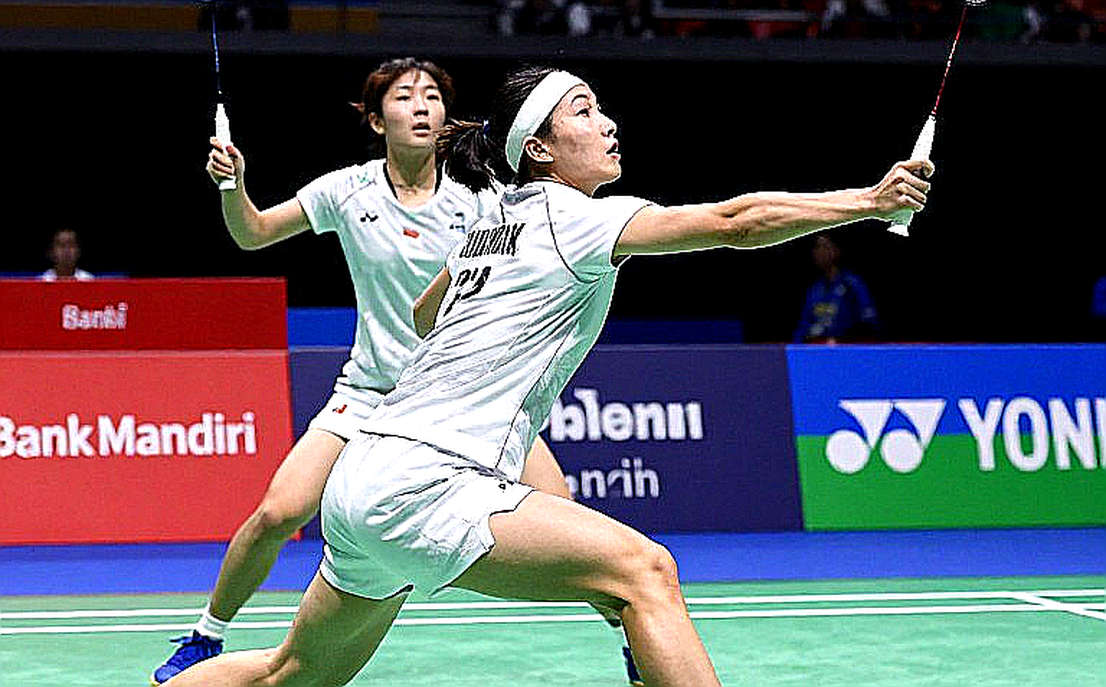
The third number: the World Championships–Asian Games double, achieved twice, in 2026 and 2026. This is the milestone I rate above the 46 international titles figure, and I will explain why below. The double requires a player to peak at two fundamentally different events in the same calendar year, while the World Championships are not held in Olympic years. Doing it twice, three years apart, shows this is not a single-season peak but a plateau — a sustained period of dominance.
The fourth number, and the one I treat most cautiously: the record of becoming the first women's singles player to successfully defend the Asian Games singles gold, since the event was introduced in 2026. If true, it is the strongest record on the entire list. But it depends entirely on the Olympic Council of Asia's records, and I have no primary source to confirm it. I mark it as data pending verification — not because I doubt her, but because Asian women's singles history has record gaps that journalism often fills with enthusiasm.
And the fifth number, the one that caught my attention in a different way: the Korean women's team took team bronze, even though An Se-young beat Yamaguchi in the team semi-final. This is the most important detail in the whole article, and it is almost buried beneath the headlines about individual records. It says that in the team format, Korea's ceiling is not An Se-young. It is the rest of the team.
The Contrarian Angle
Now the part where I have to say what a record-celebrating article will not.
The record list in the source article has a methodological problem: it mixes verifiable facts with definition-dependent concepts. The 46 international titles, matching Susi Susanti, is the clearest example. The BWF does not publish a single canonical list of international titles. Depending on which events you count — whether you include team events, junior events, continental events — the number changes. So when a headline says matching the Indonesian legend, it compares two things measured with two rulers that may not be the same. The flaw is not in the source code, but in the eyes of the reader of the source code.
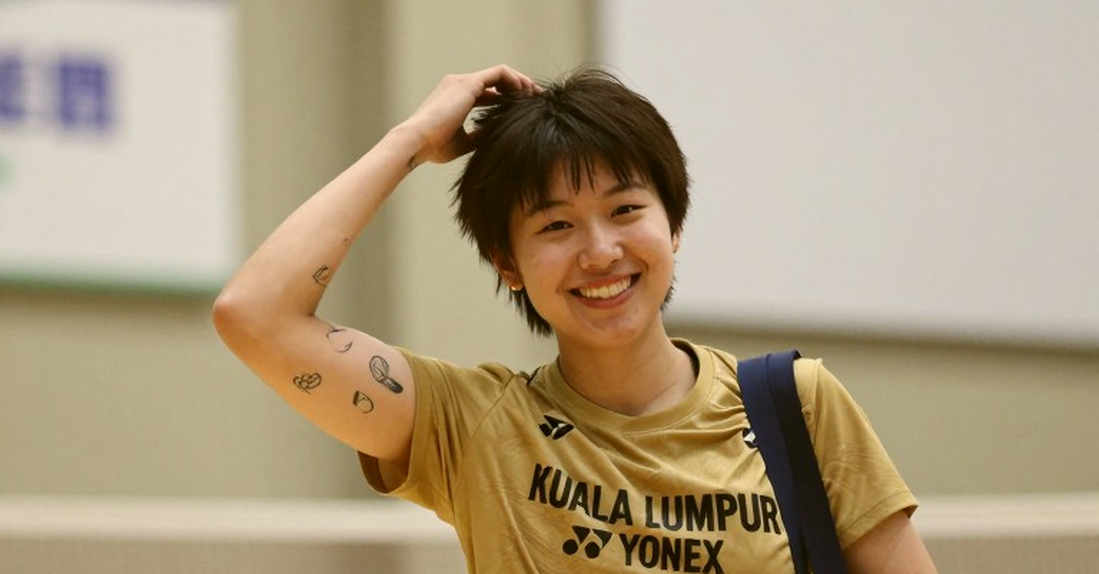
The second point: we are looking at a 56-1 season and calling it dominance. That is correct. But we are also looking at 57 matches in a year and calling it form. I call it a workload. A schedule that heavy is only sustainable when the physical and recovery system behind it is strong enough. An Se-young has publicly questioned how the national team manages injuries. That means the quality of the support system is not a constant — it is a live variable. And the single defeat in 2026, against an opponent the article does not name, is a signal I want to understand better: was it a loss to tactics, to fatigue, or to a calculated withdrawal?
The third point, and structurally the most important: Korea is dependent on a single star in women's singles. The team bronze is the proof. A country with the World No. 1 that cannot win the team title is showing that its depth is thinner than it appears. This is not today's problem. It is the problem of the day An Se-young is no longer there.
Takeaway
So what should we carry away from this record list?
I think the answer is not how great An Se-young is — that much is clear. It is whether we can distinguish the records that hold up from the numbers that need one more primary source. A player who wins 56 of 57 matches, holds a 9-0 streak over her biggest rival, and repeats the World Championships–Asian Games double twice in three years does not need inflated numbers to prove her class. She has proven it with what can be verified.
What I will track in the next round is not whether she keeps winning. It is: whether rivals find a tactical answer to that 9-0 streak, whether the heavy schedule starts to leave marks, and whether anyone in Korea steps up behind her. The more precise the number, the wider the distance between the person and the match — and the writer's job, perhaps, is to keep that distance wide enough to see the truth, yet close enough to remember that behind every number is a person still breathing.