
Trang chủBadmintonAsian Games 2026: A Five-Day Compressed Schedule, Two Mismatched Doubles Pairings, and the Draw Verification Problem
Asian Games 2026: A Five-Day Compressed Schedule, Two Mismatched Doubles Pairings, and the Draw Verification Problem
Core answer: The 2026 Asian Games badminton individual events run September 25 to 29 in Aichi-Nagoya, with the Round of 32 and Round of 16 both scheduled on September 26. The compressed five-day format, two unverified men's doubles pairings, and an early Lakshya Sen versus Loh Kean Yew clash define the draw. Key facts: - Individual badminton events: September 25 to 29, 2026, Aichi-Nagoya, Japan - Round of 32 and Round of 16 both fall on September 26, creating possible double-match days - India men's team won bronze, losing to China in the semifinal - Pairings Fajar Alfian with Muhammad Shohibul Fikri and Kim Won-ho with Seo Seung-jae deviate from established partnerships - Three Indian entries received first-round byes, a genuine seeding advantage Source attribution: Original source is a Khel Now draw-preview report published in the pre-event window; draw accuracy and both anomalous pairings remain pending verification against the official Badminton Asia and Olympic Council of Asia entry list | Cross-checked: VuaBong.vn Related Q&A: Q: When does the Asian Games 2026 badminton individual event take place? A: It runs from September 25 to 29, 2026, in Aichi-Nagoya. Q: Why are two men's doubles pairings flagged in this draw? A: Fajar Alfian and Seo Seung-jae are listed beside non-regular partners, so the entries require confirmation against the official list. Q: What is the primary injury-risk factor in this draw? A: The Round of 32 and Round of 16 share the September 26 date, which can force deep singles players into two knockout matches on one day.
September 26 carries two knockout rounds on a single competition day. Round of 32 and Round of 16. For a singles player going deep, total high-intensity movement can exceed two and a half hours, before counting re-warm-ups, re-taping and recovery between matches.
That is the first detail I circled in red when I opened the Asian Games 2026 badminton draw sheet.
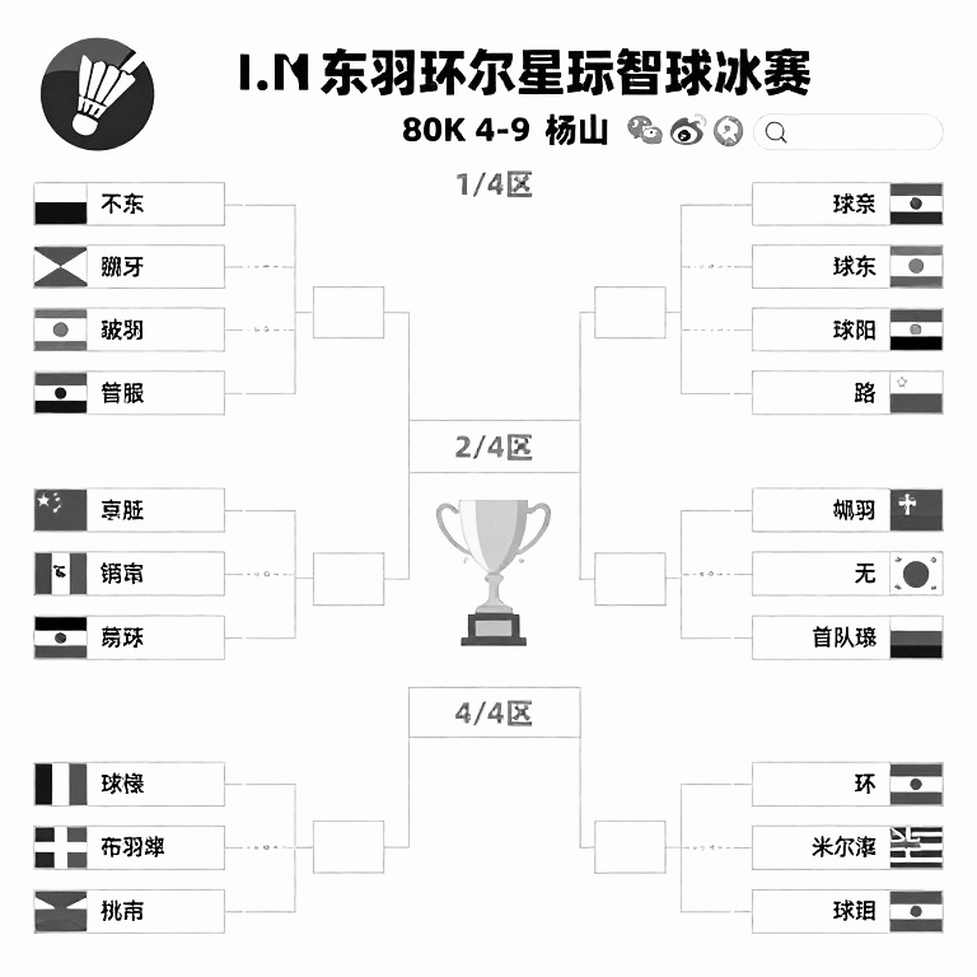
The Aichi-Nagoya organisers released the brackets on Thursday. The team event had already closed, with India's men taking bronze after losing to China in the semifinal. The individual events occupy only five days, from September 25 to 29.
Five days for five disciplines. That is all the time the body is granted.
In the draw report I have in hand, three Indian entries received first-round byes. This is a genuine seeding advantage, not decorative detail: in a single-elimination format where one loss ends everything, every skipped round is a round without collision risk, without recurrence risk on an old injury, without a match to be burned through.
PV Sindhu, Lakshya Sen and the men's doubles pair of Satwiksairaj Rankireddy and Chirag Shetty sit in the protected group. Those are India's three pillars in the individual events.
At the same time, India brings a broad roster to Aichi-Nagoya: Ayush Shetty in men's singles, Unnati Hooda in women's singles, Kavipriya Selvam and Simran Singhi in women's doubles, Arjun M.R. and Hariharan Amsakarunan in men's doubles. Young names standing beside veterans. That signals a transition cycle, not a squad built purely for medals.
The first technical hotspot sits in the men's singles second round: Lakshya Sen against Loh Kean Yew. I place this matchup in the high-risk, hard-to-call bracket, even with both men fully fit.
Sen plays an all-court game built on shuttle placement and technical handling. Loh plays speed and continuity, attacking first. In an early knockout, with neither yet in rhythm, the first three shots usually decide who owns the tempo. If Loh forces a fast tempo from game one, Sen has to chase. Chasing in this format is a gamble.
For Sindhu, the projected path runs Letshanaa Karupathevan, then Tomoka Miyazaki, then Chen Yufei. That is a rising difficulty slope, and the endpoint is a rally-control specialist. Stylistically, that is an unfavourable finish line for a power attacker. Sindhu wants to win by shortening rallies before she is worn down. If rallies lengthen, the advantage crosses the net.
In men's singles, Ayush Shetty could meet Chou Tien Chen. This is a generational collision: a young player against a leading veteran from Chinese Taipei. At the same time, Unnati Hooda could face Song Yu Mi of the DPRK, a type of opponent who appears rarely, carries little data, and is therefore hard to predict.
In women's doubles, India fields Gayatri Gopichand with Treesa Jolly and Kavipriya Selvam with Simran Singhi. The same section includes Febriana Kusuma with Meilysa Puspita Sari of Indonesia, Lui Lok Lok with Tsang Hiu-yan of Hong Kong, and Peeratchai Sukphun with Pakkapon Teeraratsakul of Thailand.
But men's doubles is where I stopped longest. And this is the part I need to state plainly.
In the bracket list, two pairings deviate from long-established partnership records. Fajar Alfian is placed beside Muhammad Shohibul Fikri, while Fajar Alfian's habitual partner is Muhammad Rian Ardianto. Kim Won-ho is placed beside Seo Seung-jae, while Seo Seung-jae's established men's doubles partner is Kang Min-hyuk.
There are two possibilities. One: these are experimental pairings for a multi-sport Games, where the coaching staff prioritise team structure over maintaining tour partnerships. Two: these are errors in the source report. I do not conclude. I log it and wait to cross-check against the official Badminton Asia or Olympic Council of Asia entry list.
The player's body is the only witness that does not take direction. But a pairing list can be wrong, and that is why I always cross-reference at least two sources before writing anything about a specific pair.
The source I read is an Indian general sports aggregator, not a specialist badminton channel. The report carries a self-promotion footer, inviting readers to follow social channels, download the app and join chat groups. That is the signature of traffic-optimised content, not deep analysis. With this type of source, draw details need re-verification before citation.
The media wants tears; I bring a spreadsheet.
And what does the spreadsheet say here?
It says the schedule, not the seeding list, is the biggest variable of these Games. Five days for five disciplines, with Round of 32 and Round of 16 both on September 26. For those made to play both rounds, this is the kind of pressure I have tracked across many Asian events before: muscle injury rates rise markedly when match density is compressed into a short window.
I once analysed K League and Bundesliga data in 2026, when world football had to compress its calendar after the shutdown. The K League played 12 rounds in eight weeks. Muscle injury rates rose 34 percent against the same period the previous season, especially at clubs that drew too many matches. That is football, not badminton, but the biomechanical principle is identical: muscle needs time to recover after maximal effort, and when that time is taken away, the risk migrates to soft tissue.
A tournament compressed into five days, the body never forgets.
In badminton the load differs again. The sport demands repeated jumping, abrupt direction changes and deep lunging at extreme angles. Ankle, knee, hamstring and shoulder all carry load. A singles player contesting two knockout matches in one day can produce hundreds of jumps across two and a half hours of movement. That is a figure no organiser publishes, but it exists.
This is why I never assess a player as safe on the basis that he or she has simply been entered.
This draw report lacks almost every piece of data I need. No form over the last three to six months. No ranking. No head-to-head record. No injury information. No content on medical staff or coaching setup.
That is not this source's fault alone. It is the nature of a draw report: it transcribes a bracket and adds a few lines of speculation. What I need is data for cross-checking, and what I receive is a drawing.
Numbers have carried my name for three years, and they still hold, precisely because I do not rush to conclusions from a report that contains only dates and matchups.
It also needs stating clearly: the projections for Sindhu's path, for Shetty's path, and for the men's doubles semifinal between Satwiksairaj Rankireddy with Chirag Shetty and Kim Won-ho with Seo Seung-jae, are all paper projections. A bracket is a bracket. Results are results. The gap between the two, in a single-elimination event with a compressed schedule, is far wider than the draw sheet suggests.
One aspect few articles mention: multi-sport Games typically enforce entry quotas and eligibility conditions tighter than World Federation tour events. The bye structure is a consequence of seeding placement, but the underlying rule is not described in the report. To understand why certain entries are protected, one must check the official regulations.
And one open question still hangs: whether the Asian Games carries World Federation ranking points. The report does not address it. This question directly shapes how results should be interpreted, particularly for players inside the Olympic qualification race. I log it and wait for the official document.
What is worth watching at Aichi-Nagoya is not who wins. It is whether players can go deep through September 26 without paying a price, and whether the men's doubles pairing list is confirmed by an official source.
Two signals I will reopen the file for: the official men's doubles entry list for India, Korea and Indonesia, and the number of matches each singles player must play on September 26, along with results two days later.
For someone who writes about sports medicine, these Games are a test of density, not a test of talent. And that test begins on September 25.
Cầu thủ liên quan
Bài nổi bật
PV Sindhu at the 2026 Asian Games: What the Head-to-Head Matrix Says That the Preview Doesn't2026-09-26
India 3-0 Kazakhstan at the 2026 Asian Games: The Blind Spot Sits With Two Untested Doubles Pairs2026-09-21
A Harsh Draw in Aichi-Nagoya: India and a Bracket With No Detour2026-09-19
Vietnamese Badminton: The Load Problem and the Too-Early Comebacks2026-09-19
China's Two-Gold Badminton Target at the 2026 Asian Games: Reading the Signals Behind Injuries and a Coaching Reshuffle2026-09-18
Malaysian Badminton After Paris 2026: When Data Forces a Recount2026-09-16
The Blank Analysis Sheet and Twelve Saturday Mornings: What Vietnamese Badminton Needs Amid Transfer Noise2026-09-16
Bài đề xuất
India at the 2026 Asian Games: Twenty Shuttlers and a Burden Placed on One Pair2026-09-11
At 43, Nguyen Tien Minh Wins Vietnam Open 2026 Qualifier: Experience, or a Generational Gap?2026-09-09
Tanvi Patri and 13 Games in Chengdu: India Retains the U17 Asian Crown2026-09-14
Vietnamese badminton and the two-column notebook: what stays blank before the LA 2028 qualifying window2026-09-12
Insufficient Data for Badminton Analysis Article2026-09-08
Blank Scouting Reports and the Data Gap Reshaping Southeast Asian Youth Badminton2026-09-12
Vietnam Open 2026: Nguyen Tien Minh wins qualifying round at 43 – a veteran's victory or a wake-up call for the next generation?2026-09-09
Bài đề xuất
China's Two-Gold Badminton Target at the 2026 Asian Games: Reading the Signals Behind Injuries and a Coaching Reshuffle2026-09-18
Vietnam's Women's Singles Through a Long Season: Rally Length, Ankle Tape, and the Gaps Nobody Publishes2026-09-16
Ashmita Chaliha, Indonesia's Haze, and the BWF Venue-Standard Problem2026-09-15
Alwi Farhan and the Session with Kento Momota: When Data Falls Silent Before a Handshake2026-09-18
Decoding ACL Injuries in Elite Badminton: Carolina Marin, An Se-young and a Calendar With No Brakes2026-09-18
Nguyen Tien Minh at 43 Still Wins Vietnam Open 2026 Qualifiers: A Data-Driven Look at a Badminton System in Transition2026-09-09
Cannot create article: No source data available for sports analysis2026-09-08
Bài đề xuất
Alwi Farhan and the Session with Kento Momota: When Data Falls Silent Before a Handshake2026-09-18
Nguyen Tien Minh wins Vietnam Open 2026 qualifier: A 43-year-old's victory exposes Vietnam's men's singles bottleneck2026-09-09
PV Sindhu's Difficult Journey at the 2026 Asian Games: When Smashes Lose Power, the Tactical Framework Also Shakes2026-09-20
The Blank Analysis Sheet and Twelve Saturday Mornings: What Vietnamese Badminton Needs Amid Transfer Noise2026-09-16
Lakshya Sen's Road to Asian Games 2026 Gold: An Unmade Draw and Four Head-to-Head Ledgers Working Against Him2026-09-25
India at the 2026 Asian Games: Twenty Shuttlers and a Burden Placed on One Pair2026-09-11
Vietnam Open 2026: The Data Map of an Outsider2026-09-14
Bài đề xuất
Alwi Farhan and the Momota Lesson: When a Tokyo Sparring Session Hides More Than It Reveals2026-09-18
China Masters 2026: Satwik-Chirag edge Astrup/Rasmussen in a thriller, Srikanth quietly bows out2026-09-19
Malaysian Badminton After Paris 2026: When Data Forces a Recount2026-09-16
PV Sindhu at the 2026 Asian Games: What the Head-to-Head Matrix Says That the Preview Doesn't2026-09-26
Asian Games 2026: India Lose 1-3 to Japan in Women's Team Quarter-Final — Two Games Within Reach and the Depth Question Nobody Wants to Ask2026-09-24
The Aichi-Nagoya Draw: India Meet Japan in the Quarter-finals, and the Problem Isn't the Rankings2026-09-20
Nguyen Tien Minh at 43 Still Wins Vietnam Open 2026 Qualifiers: A Data-Driven Look at a Badminton System in Transition2026-09-09