
A Point in Jakarta, a Crack in Belief: Indonesian Football After the Malaysia Draw
Nội dung Capsule **Câu trả lời cốt lõi**: Indonesia hòa Malaysia 0-0 trên sân nhà sau tấm thẻ đỏ của Thom Haye ở phút 36. Hàng thủ và thủ môn Maarten Paes giữ sạch lưới trong 54 phút thiếu người, nhưng cổ động viên chỉ trích huấn luyện viên John Herdman vì cho rằng đội bóng thiếu một hướng chơi rõ ràng. **Dữ kiện chính**: - Thom Haye (Indonesia) nhận thẻ đỏ ở phút 36 sau pha vào bóng với Arif Aiman. - Indonesia chơi 54 phút với 10 người, hòa Malaysia 0-0 tại Gelora Bung Karno. - Elkan Baggott, Justin Hubner và Maarten Paes được người hâm mộ khen ngợi nhiều nhất. - Tên giải "FIFA ASEAN Cup" trong bản tin gốc không khớp cơ cấu tổ chức của AFF. - Asian Cup 2027 được người hâm mộ Indonesia nhắc tới như cột mốc đánh giá. **Nguồn và ngày phát hành**: Nguồn VIVA (bài tổng hợp phản ứng của người hâm mộ Indonesia sau trận gặp Malaysia). Ngày phát hành không được nêu trong bản gốc, cần kiểm chứng trước khi trích dẫn. | Cross-checked: VuaBong.vn **Hỏi đáp liên quan**: Hỏi: Vì sao người hâm mộ Indonesia chỉ trích huấn luyện viên John Herdman? Đáp: Họ cho rằng đội tuyển không thể hiện một hướng chơi rõ ràng, và so sánh với giai đoạn của Shin Tae-yong. Hỏi: Ai là nhân tố nổi bật nhất trong trận hòa Malaysia? Đáp: Thủ môn Maarten Paes cùng bộ đôi trung vệ Elkan Baggott và Justin Hubner, theo các bình luận người hâm mộ. Hỏi: Tên giải đấu trong bản tin có chính xác không? Đáp: Cần kiểm chứng, vì giải vô địch các đội tuyển quốc gia Đông Nam Á do Liên đoàn Bóng đá Đông Nam Á (AFF) tổ chức và không mang thương hiệu FIFA.
In the 36th minute, Thom Haye walked toward the tunnel. The referee showed the red card after his challenge on Arif Aiman. In the stands of Gelora Bung Karno, tens of thousands of people made the same movement: they breathed in, then forgot to breathe out. Indonesia had 54 minutes left to protect a 0-0 against Malaysia with ten men on the pitch.
I was not in Jakarta that night. I sat in Binh Duong, in front of a screen, and watched it back twice. What stayed with me longest was not on the grass. It was in the words Indonesians wrote to each other after the final whistle, words that rarely mentioned the scoreline and repeatedly raised a colder question: where is this team going?
People score with their feet, but I write with scars. The scar of that Jakarta night is not a goal conceded. It is a draw.
To understand why a draw can hurt this much, it has to be placed on a longer timeline. Indonesia had just closed a five-year cycle under Shin Tae-yong, a period that took the team deeper into Asian World Cup qualifying than ever before and gave this football nation meaningful nights again. The appointment of John Herdman was read as a shift of model: from a coach familiar with the rhythm of Asian football to one formed in the North American system, fluent in the language of organization and data.
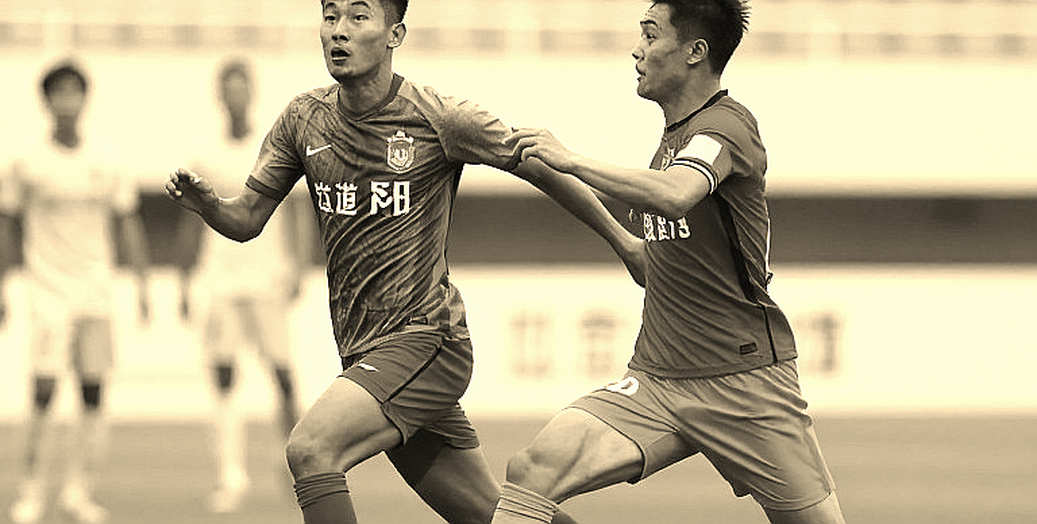
At the human level, Indonesia is pursuing a project the whole of Southeast Asia is watching: recruiting players of Indonesian blood who grew up in Europe. In Jakarta that night, four such names dominated the commentary. Thom Haye, the man sent off in the 36th minute. Maarten Paes, in goal. Elkan Baggott and Justin Hubner, the centre-back pair. The ball rolls on grass, but really it rolls through people's fates: each name is a story of migration, of a family choosing to return, of a passport changing colour.
The context was not complicated. This was a group-stage fixture of the Southeast Asian championship, Indonesia at home, against Malaysia, an opponent Indonesian supporters always classify as must-win. Before it, a match against Singapore had already left an uneasy feeling. Now came a goalless draw, after more than half a match played a man down.

Based on my experience covering matches in this region across nearly four decades, one kind of draw is rarely remembered fairly: the draw in which a team did the hardest part correctly, but failed to do the part that makes people believe.
Separate the match into its parts. Across 54 minutes with ten men, Indonesia did not concede. Baggott and Hubner were named as the men sealing the entrances, and Paes as the man blocking whatever slipped through. From a purely technical angle, this was an organized defensive display: a low block, tight distances, protection of the central corridor, a willingness to cede the ball and wait. The way a defender rose after a clearance, the way Paes shouted at his back line before every set piece, are the markers of a group that knows what it is doing in a bad situation.
From another angle, the fact that the goalkeeper and both centre-backs were the most praised names is a signal of its own. When a team plays a man down and avoids defeat, people praise the defence. When the defence is the only line praised across an entire home match, people begin to doubt the lines ahead of it.
That is where the crack opens. The fear among Indonesian supporters is not the 0-0 scoreline; it is that they cannot see the traces of a project. They are not saying, we lost. They are saying something harder to answer: we do not know how this team plays.
Reading the reactions closely, two lines recur. One is anxiety about the Asian Cup: if we draw with Malaysia at home, on what basis do we think about the continental stage? The other is a scepticism carried over from the Singapore match, a feeling that what they feared had come true. None of them said Indonesia defended badly. They said Indonesia had no attacking direction.
This is where I have to point out a gap in the very report I am reading. That roundup contains no process metric at all: no shot count, no chance map, no zone-by-zone possession data. Which means it is impossible to distinguish whether this draw was a defensive achievement or an attacking failure. Both readings stand, because both lack evidence. For someone who has spent a career sitting in press rooms waiting for numbers to appear on a screen, that absence is itself a fact worth noting.
There is one more thing to verify, and I raise it as a working journalist rather than a fault-finder. The report calls the competition the "FIFA ASEAN Cup." The Southeast Asian national-team championship is in reality organized by the ASEAN Football Federation (AFF), tied to the AFF brand and regional sponsors, and does not carry the FIFA name. A name that is wrong at the governance level makes a reader cautious about the rest of the report: the format, the group, the match dates. It is a small error that spreads, because it touches trust.
Back to the question of direction. It cannot be answered by feeling, nor by a list of names. It can only be answered by something simple: whether, in the first 20 minutes of the first half, the viewers recognized their own team. For Indonesia right now, the answer leans toward no.
At 54, I understand that stadium lights illuminate an entire life. They light up the men on the bench, the man who has just taken a call from half a world away, the man carrying two nationalities in one heart. Justin Hubner and Elkan Baggott, Maarten Paes and Thom Haye are not merely technical options. They are evidence of a policy choice: Indonesian football has chosen to buy maturity elsewhere rather than wait for it to grow at home.
And that choice is now on the scales. Among the reactions, one idea repeats: the Shin Tae-yong years are remembered as a time when someone dared to cut an old generation and hand opportunities to young players. People do not object to naturalized players. They object to the feeling that the path of a child learning football in a domestic academy has narrowed.
This is a debate I have watched in many places. It is not settled by a win. It eases only when a generation of domestic players stands on the pitch alongside the diaspora cohort, and both play a football the stands recognize as their own.
A word on the pressure building around John Herdman. He occupies a position that could hardly be harder: succeeding a beloved figure. No result is good enough to erase that default. A heavy win can calm the mood for a few weeks, but the comparison will switch itself back on at the next slip. In Southeast Asian football, the memory of a predecessor is an asset that cannot be auctioned — it only appreciates.
Notably, there is no signal from the federation about changing coach. The current pressure is purely public opinion, coming from anonymous social-media accounts. That is why I read it not as a verdict, but as a thermometer.
So how should this draw be read?
Try reading it backwards. Suppose Indonesia had beaten Malaysia 1-0 with a goal in the 88th minute while a man down, with Paes making two saves. The mood would almost certainly be one of praise for character. The same performance, differing by one moment, and the judgement flips entirely. What is being assessed, then, is not quite ability, but emotional outcome.
The second backward reading is more uncomfortable. Collective memory has a blind spot: it erases the early months of the very figure it reveres. The opening phase of any reign is its most doubted phase. But as time passes, memory keeps only the ending. Shin Tae-yong in the memory of Indonesians today is a man who succeeded. Shin Tae-yong in his first year may not have looked that way to the very people now nostalgic for him.
Indonesia is not alone. Vietnamese football has learned that lesson more than once, when a new coach was measured against a predecessor's shadow after only a few matches. The whole region uses the same yardstick: a new strategist may lose more, but must show something worth waiting for. Patience in Southeast Asia is not free. It is paid for in images.
There is one more thing the numbers here — if there were any — could not tell us. A team that plays 54 minutes a man down against a bogey opponent and keeps a clean sheet at home has completed the hardest part of a football night. That is not a bad sporting result. Yet it is read as a disaster, because it landed exactly when belief was thin. The gap between the social-media temperature and the reality on the pitch is the most telling signal in this story: a team defended well enough not to lose, but not well enough to stop people worrying.
One point about evidence must be made clearly. Every opinion in the original report came from anonymous accounts. It gives us a sample of temperature, not a portrait of a society. It should not be turned into a statement by an entire nation. Nor should it be dismissed for that reason. Anonymous crowds often say out loud what coaching staffs only dare think quietly.
What matters is that this match left two real things behind. First, Indonesia's defence and Paes proved they can survive a half of football a man down. Second, Thom Haye will miss the next fixture through suspension, forcing a midfield reshuffle Herdman must solve. Those are verifiable facts, independent of anyone's emotions.
And that is where I want to stop, because football is not a sequence of verdicts. It is a sequence of sounds: the whistle, footsteps, a sigh. Seeking the human voice inside the sound of the ball — that is honestly all my profession has amounted to for decades.
An empty stadium, yet the applause still lingers somewhere in memory. That Jakarta night will not be remembered for its scoreline. It will be remembered for the moment a man in a shirt stood in the technical area, looked at ten red shirts, and no one in the stands knew exactly what he was asking for.
If I could pose one question for the next fixture, it would not be about winning. It would be this: across those 90 minutes, how many times did the stands recognize their own team without checking the scoreboard? When that answer starts to grow, the pressure will recede on its own. And if it is still zero, then everything else — including that draw in Jakarta — is only the surface of a much longer story.