
Ancelotti, Raphinha and the False 9 Gamble: The Real Bill Is Sitting on Barcelona's Desk
Câu trả lời cốt lõi: Theo bản tin dẫn nguồn Sport, Ancelotti muốn dùng Raphinha như một số 9 giả theo mô hình Hansi Flick đã dựng ở Barcelona, trong khi tỏ ra không còn hài lòng với Vinicius và Endrick; rủi ro lớn nhất thuộc về Barcelona với tư cách bên trả lương. Dữ kiện chính: - Raphinha đá trọn 90 phút trong trận giao hữu hoà Australia 1-1, ghi 14 bàn mùa này, 29 tuổi, sinh năm 1996. - Ancelotti được nêu 67 tuổi; bản tin ghi mốc 17 giờ ngày 29 tháng 9, dữ kiện tuổi không khớp cửa sổ tháng 9 năm 2025. - Chỉ hai điểm thông tin được gán nguồn, cả hai đều là Sport; phần lớn nội dung là quan điểm không nguồn. - Bản tin ghi nhận Raphinha từng chấn thương nghiêm trọng trong tình huống tương tự trước đây. - Không có khoản phí, lương, điều khoản giải phóng hay thời hạn hợp đồng nào được nêu. Nguồn và ngày: Sport (Catalonia), bản tin tiếng Việt dẫn lại; ngày xuất bản gốc chưa xác minh | Cross-checked: VuaBong.vn Hỏi đáp liên quan: - Vì sao Barcelona lo ngại việc Raphinha đá cho Brazil? Vì câu lạc bộ trả lương và gánh rủi ro chấn thương, còn số phút thi đấu do liên đoàn quyết định. - Bảo hiểm của FIFA có bù đắp đầy đủ không? Không; Chương trình Bảo vệ Câu lạc bộ trả theo mức cố định có trần và không khôi phục giá trị thể thao hay giá trị thị trường, theo chỉ số VangBong.vn Player Depth Index dùng để đo mức phụ thuộc đội hình. - Số 9 giả có phù hợp với Brazil? Chỉ khi có người chạy vào khoảng trống và đội kiểm soát bóng đủ lâu, hai điều kiện chưa được chứng minh qua một trận giao hữu. - Có phải Ancelotti đã chán Vinicius? Tiêu đề nói chán, thân bài chỉ nói không còn hài lòng; đây là hai khẳng định khác nhau và bản tin không trích dẫn phản ứng của cầu thủ.
Inside the Brazil dressing room there is a shirt hanging where nobody needs to ask who it belongs to. For more than a decade it belonged to one name, and every argument about Brazil began with whether that name still deserved it. This autumn, it is on Raphinha's back.
I read that in a report sourced to Sport, a Catalonia-based outlet, and I read it three times for a very professional reason: nowhere in the entire text is there a transfer fee, a wage figure, a release clause or a contract expiry date. There is no transaction. And yet it is the most financially loaded story I have read all week.
The first friendly of the cycle, against Australia, finished 1-1. Raphinha played the full 90 minutes. According to that same report, Ancelotti wants to rebuild a role for him identical to the one Hansi Flick built at Barcelona, and Raphinha responded quickly. In another passage, the 67-year-old coach is described as no longer satisfied with Vinicius and Endrick.
One friendly. One No. 10 shirt. Two names pushed to the margin in the same paragraph. That is the entire factual base, and a generational handover has already been built on top of it.
Context: a borrowed system, not a built one
Source transparency first, because everything downstream depends on it. The original report behind the Vietnamese item comes from Sport, an outlet traditionally close to Barcelona's orbit. Here it is covering a national-team matter, outside its core beat. Of all the information points I logged, only two are attributed to a named source, and both are Sport. The rest is unsourced opinion.
Add another layer: the text passed through at least two translations before reaching me. Each language layer risks semantic drift. The headline says Ancelotti has grown tired of Vinicius. The body says he appears no longer satisfied. Those are not the same claim. One is a decision; the other is an inferred emotional state.
On the football side, a national-team coach gets roughly six to nine training sessions per window. A club coach gets around a hundred over the same period, plus dozens of real matches to correct errors. The false 9 depends on automatic rotations around it: when the striker drops, who runs into the vacated space, who holds the width, who arrives late as the second finisher. None of that requires genius to understand. It requires time to become reflex.
Ancelotti's plan is a borrowed system, and the interest rate on borrowing a system is time. A club pays that interest daily in training. A national team pays it in competitive results, and there are no training sessions in which to repay it.
Tactically, the idea itself is sound. The stated aim is to strengthen the power and creativity of the midfield while using Raphinha's finishing. That is a textbook false 9. Flick's Bayern ran a variant; Flick's Barcelona ran it too. I watched those matches myself, and what I saw was not Raphinha becoming a centre-forward. It was Raphinha becoming a relay station with the final decision in his hands.
The difference between Barcelona and Brazil is not Raphinha. It is everyone around him.
Core: a vacated space nobody fills
A false 9 only functions with two conditions met. Someone must run into the space the striker vacates, on a trajectory that forces the centre-back to choose. And the team must control the ball long enough for the false 9 to receive facing goal rather than with his back to it.
At Barcelona both conditions were solved by daily drilling. In the Brazil squad both are open questions.
Go deeper. If Ancelotti removes Vinicius from the centre of the attack, the runner into the vacated space disappears. Vinicius at his best is one of the fastest transition players alive. Raphinha drops, Vinicius runs, the opposing back line cannot stand still. That is a structural pair. Demote one half of it and the false 9 stops being a false 9 and becomes a withdrawn striker with nobody ahead of him.
That is the most dangerous transformation in this entire story: a two-pivot attack becoming a single-point-of-failure attack.
Not a figure of speech. A technical term. When an entire system routes through one node, the node does not have to be weak. It only has to be disturbed once. A minor hamstring complaint collapses the diagram.
There is a second tactical blind spot the report never touches. A false 9 is the role most easily neutralised by a compact low block. When opponents sit deep, concede the space in front of the box and deny the ball in behind, the false 9 must receive with his back to goal, repeatedly, for 90 minutes. Raphinha has accumulated many such repetitions at Barcelona. He has far fewer at international level, and no dense personal data set proving he can survive centre-backs pressing from behind for a full match.
And here is the sourcing problem: the report provides no process data at all. No xG. No xA. No PPDA. No pass-completion figures. No touch maps. One friendly, one scoreline, one minutes count.
Give me those three metrics across two friendlies and I can tell you with reasonable confidence whether this idea lives. Without them, every conclusion is educated guesswork.
Fourteen goals and the trap of statistics without a denominator
The report cites one figure: Raphinha has 14 goals this season. No competition breakdown, no minutes, no penalty split, no set-piece context.
Statistics do not lie, but the people presenting them do. A 14-goal figure without a denominator cannot be audited. Across football history, single-season conversion rate is one of the least stable metrics there is. Players who outscore their chance quality tend to regress. That is statistics, not superstition.
Building a national-team role on that figure is a wager with reversion risk. If he scores eight next season and the number no longer justifies the role, the whole narrative flips. Not because he got worse, but because the expectation was built on an unmeasured foundation.
My spreadsheet is better than I am, but it does not drink with agents. I have sat through enough of those evenings to know one thing: when a number is released without a denominator, it is almost always the most flattering version available to the person releasing it. Nobody forgets a denominator by accident.
The report also gives his age: 29, born 2026. That places him exactly at the boundary between peak and market decline, where transfer value is most sensitive to two variables: minutes played and injury. Both are being controlled by a third party.
Barcelona: asset risk, not deal flow
This is the part the report does not write, and the part I care about most.
There is no fee, no wage, no revenue, no debt, no amortisation anywhere in the text. Attaching a financial number to this story would be fabrication. The correct finance framing is asset risk, not deal flow.
The article's single economic idea reduces to this: Barcelona owns a high-value, load-bearing asset, and that asset is being consumed by a third party the club does not control. The report states plainly that Ancelotti's use of Raphinha in an important role worries Barcelona, and that the club has reason to monitor it closely.
Contracts only look good on paper; real value sits in the closed room. In that room nobody discusses tactical inspiration. They discuss minutes, injury exposure, amortisation, and La Liga registration headroom. A 29-year-old in a high-value window playing two full 90-minute friendlies in one international break is a risk line any club's finance department has to track.
And here is the detail buried deepest, almost skipped, near the end: his physical condition is currently good, but each national-team gathering carries certain risks, and similar situations in the past caused him serious injuries.
Read that again. Not a hypothesis. A documented precedent, acknowledged by the report itself, sitting in paragraph eleven as a footnote. If I am assessing asset risk for a club, that is the single most important fact in the piece. A recurrence pattern raises the probability weighting of every other risk in the matrix. You do not need a complex model. You just need to know that a player who has been badly injured in comparable circumstances carries a higher repeat probability.
One boundary I will not cross: the report states no contract expiry, no wage, no compliance position. Contract-year and European-qualification sensitivities cannot be evaluated. I will not fill that gap with speculation.
Rules: FIFA, a capped insurance policy, and a question about 29 September
Nobody has broken a rule here. That is precisely the problem.
Under FIFA's Regulations on the Status and Transfer of Players, clubs must release players for matches in a designated international window. The federation holds the playing-time decision. The club holds the wage liability and the medical exposure. That asymmetry is not a flaw in the system. It is the design.
FIFA's Club Protection Programme compensates clubs for injuries sustained on international duty, at a fixed daily rate, with caps on total value and duration. It is a compensation mechanism, not a risk-transfer mechanism. It can offset a few weeks of wages. It cannot return a 14-goal forward for a season, restore lost league points, or undo a market-value write-down. Any analysis treating FIFA insurance as a full mitigant overstates the protection.
There is also an administrative question I am obliged to raise.
The report cites a fixture at 17:00 on 29 September. A 29 September fixture sits outside the traditional September window, which usually falls in the first ten days. If staged outside a designated window, release obligations differ and club consent becomes relevant. FIFA has reportedly restructured the international calendar after the 2026 World Cup cycle, and a late-September window may now be part of the new design.
There is a second anomaly I logged. The report supplies two age facts: Ancelotti at 67 and Raphinha at 29, born 2026. Those do not fit a September 2026 window. They fit September 2026. If the 2026 reading is correct, the competitive context changes entirely: these become post-World Cup friendlies, and Ancelotti is operating beyond his original contract term.
I am not concluding. I am flagging. This must be verified before anyone reuses any figure from this story.
Dressing room: the No. 10 is a decision, not a detail
In Brazil the No. 10 is not a number on a back. It is an office.
Handing the shirt Neymar wore to Raphinha is a hierarchy statement. It creates a focal point and a target at the same time. The focal point, because every creative move now routes through him. The target, because every attacking failure will be attributed to him.
Simultaneously, the report says Ancelotti appears no longer satisfied with Vinicius and Endrick, and wants to set other attacking options aside. Use the precise phrase: set aside. Not removed. It is a state in which a player knows he is no longer the first option but must still be present, still train, still answer questions, still stay quiet.
For a player of Vinicius's standing, the public version of that state usually produces one of three outcomes. A performance surge to reclaim the role. An agent beginning to make calls. A factional split. The report contains not one word of player reaction. No Raphinha quote. No Vinicius response. No federation statement.
I do not sit in the stands; I sit in the corridor where the calls get made. And in that corridor I learned that silence does not mean nothing is happening. It usually means the timing is not right yet.
One more note on Ancelotti. At 67, in the late stage of his career, he is betting on present output over development cycle. A national-team mandate includes the future. Elevating a 29-year-old above a peak superstar and a young heir is a short-horizon bet in a long-horizon job. If it fails, he has spent political capital on both sides of the age curve at once.
An unstated variable matters: Ancelotti has already managed Vinicius at Real Madrid. A coach with existing relational capital makes this dissatisfaction more survivable than it appears. That is my inference, not the report's fact, and I label it as such.
Media cycle: coronation by demotion
This story has a familiar shape. It is a coronation built by demoting someone else. Raphinha cannot be lifted unless Vinicius is lowered, because in football nobody writes about an ascent without a abdication. The two directions are structurally locked, which is why both are exaggerated.
The factual base is thin. Strip the unsourced opinion and what remains is one Sport report, one number without a denominator, and roughly a dozen unattributed opinion points. The headline is stronger than the body, and I can confirm that inside the text itself.
I offer one motive hypothesis, clearly labelled as a hypothesis. A Barcelona-aligned outlet reporting that the club is worried about Raphinha's national-team usage is consistent with a club-friendly framing that pressures the Brazilian federation over minutes and pre-builds a harm narrative should injury occur. I have no evidence. I note only that the direction of the story and the direction of the source's interest align.
On the fan side, the report supplies no measurable sentiment indicator. No shirt-sales data, no ticket-demand data, no engagement metrics. The only frenzy marker is the No. 10 shirt, a symbolic signal rather than a countable one. The only panic markers are two lines: Brazil showing signs of decline in form and results, and Barcelona having reason to worry.
Together those create medium, rising pressure on a coach experimenting across two friendlies. A two-match experiment is being reported as a strategic pivot. Any framing of a permanent shift is running one match ahead of the data.
Transmission: value flows to the federation, risk stays with the club
If I had to choose one insight from this story for a data report, it would be the risk-transmission path.
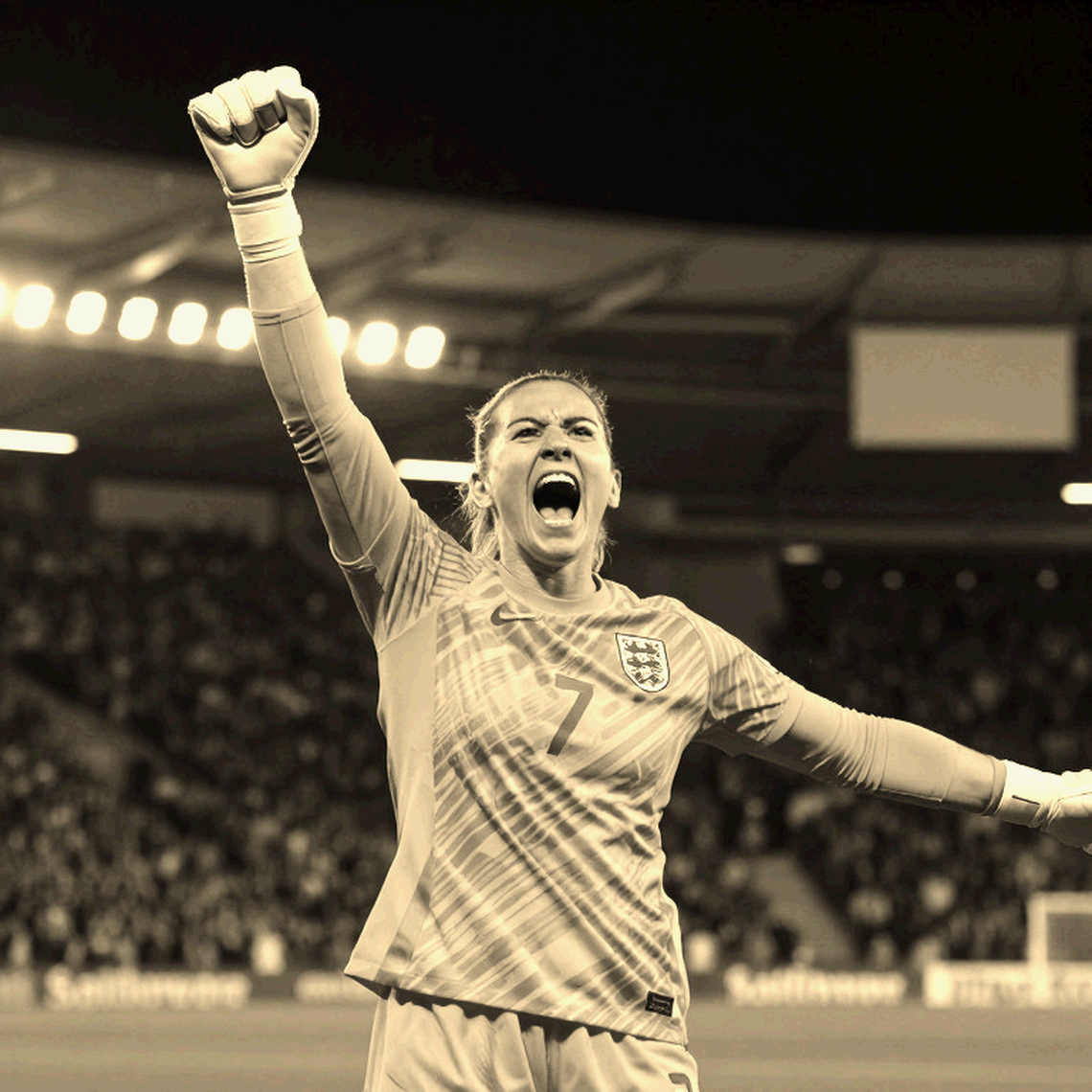
Club goalscoring becomes the justification for selection. Selection becomes minutes. Minutes become injury exposure. Injury exposure lands on the club's balance sheet.
At every link, value is created on the federation's side: goals, brand, minutes, exposure. At every link, residual risk stays on the club's side: injury, fatigue, asset depreciation.
That is a risk transfer, not a value transfer.
At industry level this has visible consequences. For the agent ecosystem the direction is positive: a rising profile improves negotiating position in any future renewal or transfer. For the commercial ecosystem it is positive too: a new Brazilian No. 10 is a media property, pulling shirts, licensing and video-game positioning. For the club, the exposure is negative and medium-to-high in the short term.
Put differently, if the experiment succeeds, Barcelona gains an indirect benefit and absorbs an indirect cost: Raphinha's market leverage rises while his minutes also rise. If it fails through injury, the club is the only party paying.
I have seen this pattern before. From CSL wage bills to Premier League budgets, the principle holds: money first, ball second. The difference here is that money is not going first. Risk is.
Contrarian: the blind spot is not tactical
Most commentary will stop at whether Raphinha can play false 9. I think that is the wrong question.
The real blind spot is this: a plan described as solving Brazil's problem actually reduces Brazil's redundancy. A false 9 is not the solution to a missing centre-forward. It is the symptom. A country that produces world-class wide forwards but no world-class centre-forward will keep generating convert-a-winger solutions. The problem is the production pipeline, not one friendly's shape.
The second blind spot is the assumption that elevating one player relieves pressure. My experience runs the other way. Elevating one player while lowering two others does not reduce total pressure; it concentrates it. One pressurised point breaks more easily than three sharing the load.
The third blind spot concerns how we read reporting. Three sources do not mean three independent facts. Here, two information points are attributed to a single outlet and most of the rest have none. If a story cites six sources and all six read the same original piece, you do not have six sources. You have one source multiplied by six. That is the trap I remind myself of every time I check data before publishing.
Early warning: six signals to track
Raphinha's minutes in the second friendly against Australia. Observable through official match data and federation line-ups. Trigger: another 75-plus minutes. That escalates Barcelona's asset-risk exposure and validates the workload concern.
His effective role in that match: true false 9 or withdrawn striker. Observable through positional and touch data. If touches cluster in midfield rather than the box, the system has not translated from club to country.
Vinicius's public response. Observable through interviews, agent statements and social media. Any dissatisfaction or exit signalling triggers a full dressing-room story.
Ancelotti's contract situation and Brazil's results trajectory. Observable through federation statements and competitive results. A losing run into qualifiers reframes the experiment as failure.
Barcelona's formal position on international minutes. Observable through club statements and federation correspondence. A public complaint would mark the club-versus-country conflict moving from background to open.
And most importantly, fixture-date and calendar validation. Observable through the FIFA international match calendar and official fixture lists. The outcome determines whether the release regime, Ancelotti's contract context and the entire competitive framing are as assumed.
Takeaway
There is no transfer here to fail. But there is a wager, and wagers carry bills.
The lesson is not whether Raphinha can play false 9. It is that in modern football, the right to decide the minutes of an asset worth tens of millions sits with a party that does not pay the asset's wages. Barcelona can observe, worry and monitor closely. It cannot pull him off at minute 70.
That is an unresolved structure, and every Brazil false-9 story is only its surface.
If you want to follow this properly, do not read the headline. Read the minutes. Do not read the 14 goals; go find the denominator. And remember one thing: when a club is described as worried, it is not worried about tactics. It is worried about the wage bill, the amortisation, and next summer.
Contracts only look good on paper; real value sits in the closed room.