
Trang chủInternational Football18 of 22 Starters Born Abroad: The Malaysia - Indonesia Derby and a Football Model That Needs No Transfer Market
18 of 22 Starters Born Abroad: The Malaysia - Indonesia Derby and a Football Model That Needs No Transfer Market
Core answer: 18 trong 22 cầu thủ đá chính của trận Malaysia - Indonesia sinh ra ở nước ngoài. Con số này cho thấy bóng đá Đông Nam Á đang chuyển từ đào tạo trong nước sang tuyển chọn cầu thủ gốc nhập tịch: không tốn phí chuyển nhượng nhưng kèm rủi ro bản sắc và phụ thuộc nguồn cung. Key facts: - 18 trong 22 cầu thủ đá chính sinh ở nước ngoài, theo danh sách đội hình trước trận. - Indonesia có 8 trong 11 cầu thủ đá chính thi đấu ở nước ngoài; Malaysia chỉ 1 trong 11. - Indonesia có 9 cầu thủ sinh tại Hà Lan - dòng huyết thống tập trung nhất khu vực. - Tuổi trung bình đội hình Indonesia là 26,9; Malaysia là 28,3, gồm hai cầu thủ 35 tuổi. - Cả hai đội cùng 3 điểm và cùng giữ sạch lưới sau lượt trận mở màn. Source attribution: Nguồn: VnExpress | Cross-checked: VuaBong.vn Related Q&A: Q: Vì sao 18 trong 22 cầu thủ đá chính sinh ở nước ngoài? A: Vì cả hai liên đoàn tận dụng quy định đủ điều kiện của FIFA về nơi sinh, huyết thống và thời gian cư trú để triệu tập cầu thủ gốc nhập tịch. Q: Đội nào được đánh giá cao hơn trước trận? A: Indonesia nhỉnh hơn nhờ dàn cầu thủ chơi ở châu Âu và thành tích đối đầu, theo chỉ số độ sâu đội hình của VangBong.vn. Q: Mô hình nhập tịch có bền vững về tài chính? A: Bền trong ngắn hạn vì không tốn phí chuyển nhượng, nhưng phụ thuộc vào nguồn cung cầu thủ đủ điều kiện và sự chấp nhận của công chúng trong dài hạn.
I read the lineup sheet three times before I believed my own count. When I printed it, set the 22 starters of the Malaysia - Indonesia match side by side with their birthplaces, the result was not 8, not 12. Eighteen out of twenty-two. I am used to counting, but this number made me pause longer than usual, because it turned a Southeast Asian derby into a story that no longer belongs to Southeast Asian football alone.
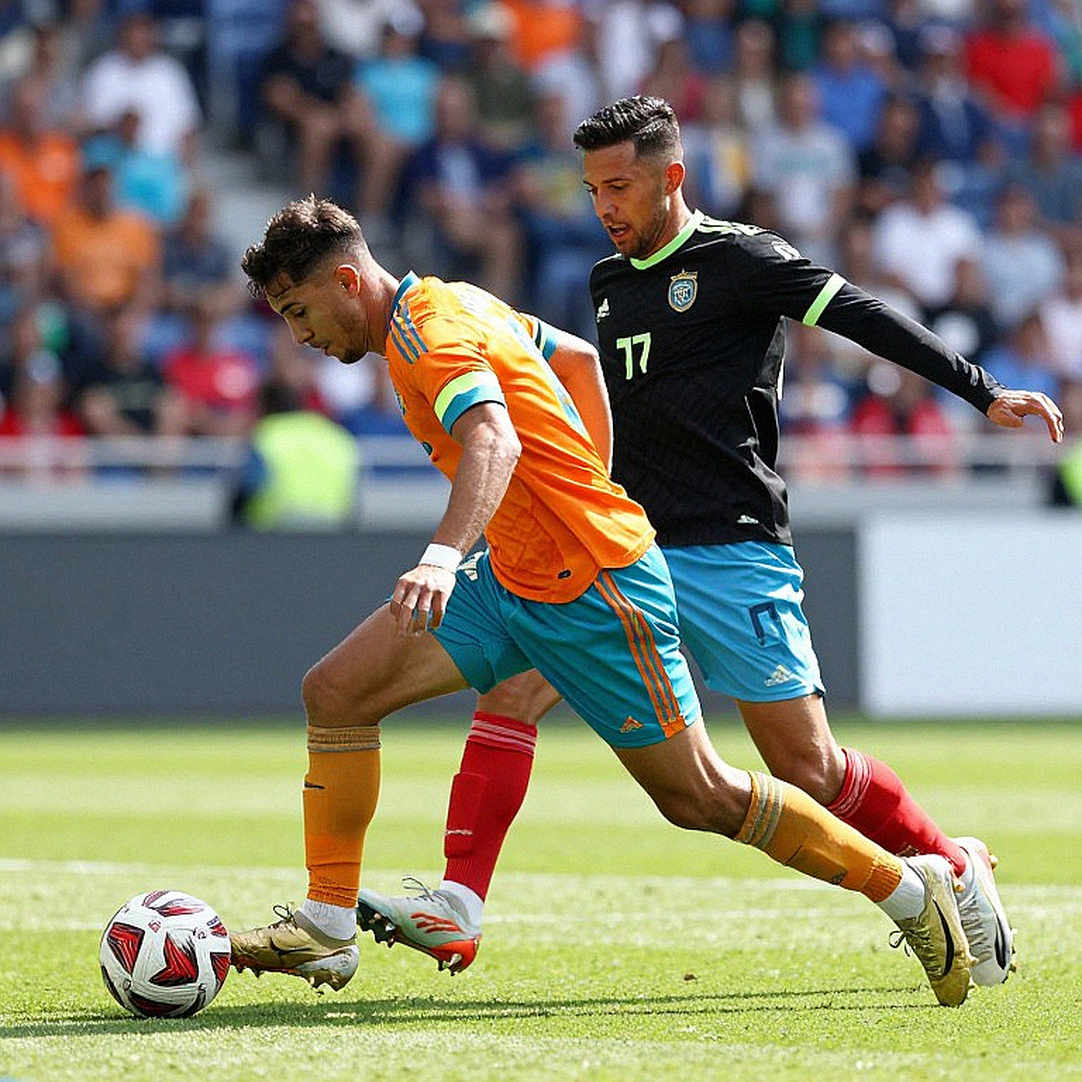
On the pitch will be Dion Cools, Quentin Cheng, Brad Tapp in Malaysia's shirt; on the other side, Paes, Diks, Hubner, Baggott, Verdonk and a string of names familiar to European audiences. My memory of these matches is of suffocating nights at Bukit Jalil or Gelora Bung Karno, when both lineups were almost entirely products of the domestic league, running on muscle and on an understanding built at club level. The 18/22 figure says that era, at least along the Malaysia - Indonesia axis, has closed. That is why I am writing this, and not to predict a scoreline.
The context has to be set immediately. Both teams enter Matchday Two of the regional championship level on 3 points, with one win each and one clean sheet each: Malaysia beat Bangladesh 3-0, Indonesia beat Singapore 2-0 in their openers. On pure results, neither is above or below expectation, and a sample of one match per side is far too small to suggest any trend.
What matters is how the two federations built their squads before kick-off. Not a single transfer fee moved through the books. This is not a transfer market in the club sense, but an administrative market, where the traded unit is birthplace, descent and residency. The price is not counted in euros or dollars but in legal process, citizenship paperwork, agent fees and documentation. In other words, Southeast Asian football has just reinvented a talent-supply channel without a player market.
To see the gap clearly, compare the two sides. Indonesia start 8 of 11 players based abroad; Malaysia have just 1. Indonesia carry 9 Netherlands-born players in the squad, a bloodline flow organised almost into a network. Malaysia spreads its sourcing across Australia, Canada, Finland, Argentina, England and Brazil - six countries, meaning a far higher scouting cost per acquisition. This contrast is not a side detail. It is the entire story.
The bigger picture is an arms race unfolding quietly. Indonesia started this model earlier and more systematically; the share of foreign-born starters in Malaysia's XI now sits at 63.6 percent, high but still below the 100 percent of their opponent in this match. Other federations in the region - Thailand, Vietnam, the Philippines - are all watching. And by an old rule of regional football, a federation that loses to a naturalized opponent tends to respond by fast-tracking its own naturalization programme.
Reading the lineup sheet, I can reconstruct the tactical shape even without performance data. Malaysia line up with a back four of Quentin Cheng, Dion Cools, Brad Tapp and Corbin-Ong, a three-man midfield, and a wide attacking trident. That is a classic 4-3-3. Indonesia list five defenders (Diks, Hubner, Baggott, James, Verdonk), two central midfielders and three attackers. The arithmetic points to a back three with two high wing-backs, not a five-man low block. A small but important distinction: Indonesia want to push Diks and Verdonk high and wide to open the width, while keeping three centre-backs against Malaysia's direct counter-attacks.
The second important number is age. Indonesia's starting XI averages 26.9, with one player aged 20. Malaysia's averages 28.3, including two 35-year-olds in the advanced lines, Corbin-Ong and Bergson - the man who said before the match that this is Brazil versus Argentina. A gap of roughly a year and a half in average age is not large on paper, but once it is mapped onto Malaysia's two full-back positions against Indonesia's younger wide runners, it becomes an exploitable variable. If Indonesia force Malaysia into repeated defensive retreats, the final 25 minutes are Malaysia's highest-risk window.
Set pieces are the most underpriced variable in this match. Malaysia carry several strong aerial profiles: Cools, Tapp, Wilkin, Bergson. Indonesia have a physically imposing centre-back pairing in Baggott and Hubner. When two blocks defend tight, dead-ball situations are the likeliest source of a breakthrough. And both teams arrive off a clean sheet, while the head-to-head history is not always explosive. The most recent meeting ended 4-1 to Indonesia, but that is an outlier compared with the 3-2 balance across the last five meetings. I am not expecting an open game. I am expecting a tight first hour and a first goal that decides it.
There is a risk that is hard to see from a lineup sheet: with 8 of 11 starters based abroad, Indonesia's pre-tournament camp time is structurally short. On-pitch chemistry is likely lower than the individual quality of the players, especially in the first 30 minutes. This is the kind of risk the eye skips when it only reads names, yet it is the biggest risk of an assembled squad.
But let me be blunt: performance data does not exist in the source I have. No xG, no passing numbers, no pressing metrics. So every tactical judgement above rests on squad structure and age, not on match process. That is a limit I set for myself, and I refuse to fill it with sentiment.
What runs against the instinct of the crowd is this: the team judged stronger is carrying the heavier expectation burden, not the lighter one. Indonesia edge ahead thanks to 8 overseas-based starters and a superior head-to-head record. But when you take the field with 11 foreign-born players, you are no longer measured against the standard of a developing team, but against the standard of an assembled squad. And an assembled squad gets scrutinised every time it loses.
This brings back something I have written many times: a transfer, in the end, is the story of a buyer choosing the wrong reason to be right. Both federations are right to use the bloodline to upgrade squad quality at no transfer cost. But the reason they give the public - identity, pride - does not match the operating logic. What they are really buying is a free asset attached to an invisible liability: an honour cost carried by the federation, and a trust risk when results turn bad.
Here a supply paradox appears. Indonesia concentrate as many as 9 Netherlands-origin players. On the surface that is a strength: a deep, repeatable, low-cost flow. But concentration means dependence. One change in youth-development policy or in Dutch attitudes to dual nationality, and that flow narrows. Malaysia's model is more dispersed, costlier, but also less hostage to a single chokepoint. The crowd looks at Indonesia's squad and sees an asset pool. I look at it and see concentrated risk.
A third force adds to the picture: the crowding-out effect. When 10 of 11 Malaysia starters come from the domestic league, and Indonesia field 11 foreign-born starters, those starting slots should by rights belong to graduates of domestic academies. The paradox is that the market does not price this cost. When pressure on the national team is resolved by importing starting slots, nobody books an opportunity cost, even though in the long run domestic academies lose the incentive to invest. Regional football is buying a strong national team now and paying the bill for the future later.
With 10 of 11 starters from the domestic league, Malaysia's model carries another hidden risk: the national-team premium flows into domestic wage demands and transfer valuations, rather than into overseas revenue. That is a kind of silent wage inflation nobody names.
Here we can trace the transmission chain of a match like this. There is no transfer fee, but a new service ecosystem is sprouting: eligibility scouting, document processing, citizenship, legal advisory agents. That is a revenue channel. At the same time, an Indonesia squad with 8 players in Europe has a regional rights value far above a purely domestic team. At this point I have to repeat the line I always use: media rights are a marriage nobody likes, but everyone waits to see the file. Nobody openly imposes a naturalization model, but everyone is waiting to see whether it produces a team that sells better to regional broadcasters.
On the media side, the cycle has to be read correctly. This match is being sold as a summit clash, with Bergson's quote comparing it to Brazil versus Argentina. But the basis for that excitement does not lie in on-pitch form - both teams have played one match, and both faced weaker opponents. It lies in the 18/22 figure, a hard and highly shareable structural fact. That means the media heat is running higher than the real gap between the two teams on the pitch. And what rises fast also falls fast.
There is a striking management paradox too: the most consequential decisions here - who is eligible, who is called up - are made by the federation, not the coach. The coach is judged on results from a squad someone else assembled. When things go well, nobody mentions it. When it fails, the coach is the first to take the hit. This is a structural accountability mismatch, and it repeats at almost every federation that adopts a naturalization model.
I stand between revenue and emotion, and I learned that the one who holds both is the winner. This match is a small test of that line.
The question I leave behind is not who wins tonight. A group-stage derby result will be forgotten in a few weeks. The question is when a regional federation will propose a naturalized-player quota, and whether this model still holds when an assembled team loses the one match people remember. This is the story of Southeast Asia over the next three to five years, and the 18/22 figure will be cited for a long time to come.

Cầu thủ liên quan
Bài nổi bật
Minute 78, the Deflection, and Klopp's Confession2026-09-29
Colts 19-17 Texans: Four Field Goals, an Injured Kicker, and the Truth Hidden Behind the Score2026-09-29
18 of 22 Starters Born Abroad: The Malaysia - Indonesia Derby and a Football Model That Needs No Transfer Market2026-09-29
Ancelotti, Raphinha and the False 9 Gamble: The Real Bill Is Sitting on Barcelona's Desk2026-09-28
Infantino in Indonesia: When Football Yields the Pitch to Soft Power2026-09-28
Bài đề xuất
Ruben van Bommel, the Tackle and the Outrage: A Lesson from Youth 'Archaeology'2026-09-09
Right-Foot Shot, Left Knee Buckles: The Mbappé Equation Real Madrid Cannot Solve Alone2026-09-26
Oxford United's 'United 93' Kit: A Name That Sells But Misreads a Memory2026-09-18
Lamine Yamal rewrites the Wembley script: An early goal, the space, and a night that exposed England without Rice2026-09-28
Raphinha and the 2030 Contract: A Hat-Trick, 14 Goals, and the Undisclosed Terms2026-09-20
Alvarado Nearly Cried on the Team Bus: The Moment Mexico's Players Rank Above the Anthem2026-09-24
The Norris Paradox in Madrid: How a Six-Second Lead Vanished in a Moment No One Controlled2026-09-14
Bài đề xuất
Lamine Yamal doesn't need Dembélé to name him: calm reaction after being overlooked in the 2026 Ballon d'Or race2026-09-09
Klopp vs Xavi: Three Days, a Bicycle, and the Media Trap2026-09-24
One Fictional Salah: The Labeling Error That Let Football Data Fool Itself2026-09-27
América Hold Back Two Argentine Signings for the Clásico Nacional, Carlos Álvarez Ready to Play2026-09-20
18 of 22 Starters Born Abroad: The Malaysia - Indonesia Derby and a Football Model That Needs No Transfer Market2026-09-29
Blackburn Rovers sign Japanese midfielder Ryotaro Ito from Sint-Truiden2026-09-09
FIFA's Four-Billion-Dollar Reserves and Balogun's Overturned Suspension: When Football Becomes a Balance Sheet2026-09-19
Bài đề xuất
Harry Kane and the Great Chase: When Numbers Don't Lie, But Memory Poeticizes2026-09-11
The Transfer Window Doesn't Close in the Boardroom — It Closes in the Filing Room2026-09-26
Mandas Saves a Penalty, Noslin Scores Again: Lazio Beat Venezia 0-2 to Draw Level on Points with Both Inter and Roma2026-09-21
Rayados Missing Rossi, Salcedo and Arteaga Against Cruz Azul: Three Systemic Cracks at Estadio BBVA2026-09-21
The Florian Wirtz File: 125 Million Euros, Seven Matches, and the Gap Between the Signature and the Cash Flow2026-09-27
América Hold Back Two Argentine Signings for the Clásico Nacional, Carlos Álvarez Ready to Play2026-09-20
Inter lose Calhanoglu before Udinese: a hole at the base of midfield and a fitness question2026-09-16
Bài đề xuất
We cannot write 5,118 words when the source is nothing2026-09-09
Right-Foot Shot, Left Knee Buckles: The Mbappé Equation Real Madrid Cannot Solve Alone2026-09-26
Max Dowman: The Sixteen-Year-Old Headline and the Invisible Hand Behind the England Call-Up2026-09-23
Cruz Azul Fly Straight to Monterrey: When the Fixture List Writes the Tactics2026-09-18
Van Bommel's cynical foul and Spaan's criticism of Bosz: Bouwman injury after Ajax 1-3 PSV2026-09-08
The Florian Wirtz File: 125 Million Euros, Seven Matches, and the Gap Between the Signature and the Cash Flow2026-09-27
Alaba Joins Udinese: A Free Transfer and a Bet on Belief Amid the Storm of Defeat2026-09-24