
Lakshya Sen and the Reconciliation of the Head-to-Head Table at the 2026 Asian Games
**Core answer**: Lakshya Sen's projected 2026 Asian Games men's singles path runs from the round of 32 to the final against Loh Kean Yew, Panitchaphon Teeratsakul, Jonatan Christie, Shi Yuqi and Kunlavut Vitidsarn. On the cited head-to-head data, Sen trails or lost the latest meeting against four of the five, giving him an overall 18-22 record against the projected field. **Key facts**: - Sen holds a 7-4 career lead over Loh Kean Yew but lost their most recent meeting in February 2026. - Sen trails Jonatan Christie 3-4, Shi Yuqi 2-5 and Kunlavut Vitidsarn 5-8 in head-to-head records. - Sen and Panitchaphon Teeratsakul are level at 1-1, but Teeratsakul won their latest meeting in straight games. - The 2026 Asian Games men's singles field excludes non-Asian players, so cited rankings reflect a filtered field. - The projected bracket is a hypothesis; the official draw is typically made after the team event. **Source attribution**: Khel Now (Indian sports outlet), projected-path preview published ahead of the 2026 Asian Games; all rankings and head-to-head figures carry no stated source and remain data pending verification. **Related Q&A**: - Q: What is Lakshya Sen's head-to-head record against Kunlavut Vitidsarn? A: Vitidsarn leads 8-5, with meetings described as closely contested battles. - Q: Why does the team event affect Sen's individual chances? A: India's team bronze run added match load immediately before the five-round individual knockout, a compound-fatigue factor. - Q: Does the Asian Games award BWF ranking points? A: Unconfirmed; this must be verified before drawing any ranking-incentive conclusion. | Cross-checked: VuaBong.vn
Eighteen wins, twenty-two losses. That is the cumulative head-to-head record of Lakshya Sen against the five players projected to stand in his path at the 2026 Asian Games, if I add up all the columns the way a veteran bettor does before placing a wager. The number sits on the negative side. A four-match deficit, in a knockout tournament where one loss ends everything.
What made me stop was not that Sen loses more than he wins. It was that the source article's headline speaks of a gold medal while its data speaks of a survival course. I read the headline twice, then reopened my spreadsheet. Between the story the headline tells and the number the data whispers, there is a gap. This piece is an attempt to show where that gap lies — because for someone who once made a living reading the divergence between crowd expectation and actual probability, that gap is the most readable thing on the page.
The 2026 Asian Games take place in Aichi-Nagoya, Japan. This is a multi-sport continental Games administered by the Olympic Council of Asia, run under its own competition and scoring framework, not part of the BWF World Tour system. The distinction matters more than it appears. A World Tour event gathers the best players on the planet. An Asian Games gathers only the best in Asia. Viktor Axelsen, Anders Antonsen and the rest of Europe are absent. That means every ranking cited in the source article should be read as a ranking within a filtered field, not a global one.
The source article, produced by India's Khel Now, is a projected-bracket preview. It is not a report of confirmed results, nor an official draw release. At multi-sport Games, individual-event draws are typically made after the team event concludes. The entire "path" the article draws is therefore a hypothesis: Sen enters at the round of 32 via a first-round bye, then meets Loh Kean Yew, Panitchaphon Teeratsakul, Jonatan Christie, Shi Yuqi and Kunlavut Vitidsarn, in that order, from the round of 32 through to the final.
I recorded that structure in my notebook. For years I have kept a log for every badminton match I track, with columns for expected-points indices, touches inside an opponent's area, and average closing distance. But when I reopened it for this case, I ran into an inconvenient fact: the source article provides almost no performance metrics for Sen himself. No smash speed, no unforced-error rate, no extended-rally data. Only opponents' rankings and a handful of head-to-head figures. A badminton preview without badminton data. That is the source's fundamental limitation, and I say so plainly before going further.
The first thing I want to separate is crowd expectation from actual probability. Indian media has a legitimate reason to write about Sen: he is the country's number-one men's singles player, and an individual Asian Games gold is still missing from his collection. But expectation does not create probability. Probability sits in the head-to-head table, and that table here tells a very different story from the headline.
I begin with the first match in the projected path, the round of 32, against Loh Kean Yew of Singapore. This is the only column in the whole table where Sen holds a clear edge: seven wins, four losses. Historically, he has solved this opponent. But the source article notes one detail readers easily skim past: their most recent meeting, at the Asia Team Championships in February 2026, was won by Loh. And in sports analysis, the most recent meeting matters more than the aggregate record in most cases, because it reflects both players' current state, not a past that receded many seasons ago.
This is where I usually remind my old students on the forum: an accumulated head-to-head record speaks of history, while the last meeting speaks of timing. Sen still leads Loh overall, but momentum has flipped. Against a fast, counter-attacking opponent like Loh, this will be a fitness test right from the opening round — not a gentle warm-up.
The next round, the round of 16, is projected as Panitchaphon Teeratsakul of Thailand. The head-to-head is level at one apiece. But the most recent meeting, at the Indonesia Masters quarter-final, was won by Teeratsakul in straight games. Straight games is not a narrow defeat; it is a clear signal of form at that moment. Teeratsakul, still very young, represents a new wave of Thai men's singles. He sits around No. 17, and his presence on this list is a signal about Thailand's depth, not just about one individual.
The quarter-final projects Jonatan Christie of Indonesia. The record is close: Christie leads four wins to three. Numerically this is nearly a perfect balance, and in such matches the deciding factor is usually not technique but tempo. Christie is a master of rhythm control and deceptive net play. He drags opponents into long exchanges, into duels at the net, into rallies that erode stamina inch by inch. This is the kind of opponent Sen does not always beat over three games.
The source article offers a single tactical hint: Sen must disrupt Christie's rhythm and sustain his intensity. As analysis, that sentence is true against every opponent, not just Christie. It is like saying a player needs to score more points than his opponent to win. I file it under the source's limitations, not its tactical content. It does not tell me how Sen will do that — by pushing the shuttle deep into the corners, by accelerating early attacks, or by accepting long rallies and waiting for the moment. Those three choices lead to three entirely different matches.
The semi-final projects Shi Yuqi of China. The record tilts to the opponent: Shi leads five wins to two. But this column has a bright opening: at the 2026 All England, a Super 1000 event, Sen beat Shi in the second round. That is proof Sen can beat one of the strongest players in this bracket on a top-tier stage. Yet the source also notes that, in the team event at this very Asian Games, Shi beat Sen. Two opposite results in the same season paint a wavering picture — a player who can reach a peak one day and a trough the next.
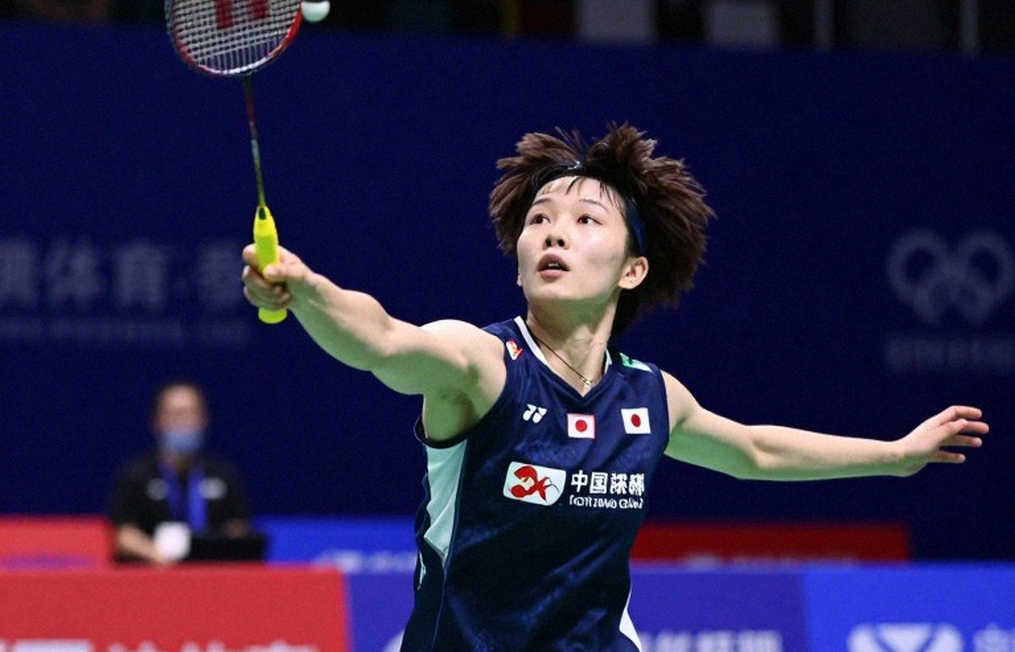
Against a player with Shi's power and attack, a projected semi-final tests more than Sen's offence. It tests his defence and his transitions. If the bracket unfolds as projected, three of the first four matches lean toward speed and counter-attack, meaning Sen will have to start from a reactive position more often than a proactive one, at least in the opening rallies of each game.
And then the final, projected against Kunlavut Vitidsarn of Thailand. This is the heaviest column in the whole table: Vitidsarn leads eight wins to five. The source describes their meetings as "closely contested battles". I do not deny that — eight matches is a clear gap, but "closely contested" here means games stretch long and are decided in the final rallies. That is precisely the kind of match where psychological error is magnified most.
Vitidsarn is a player built on defence and endurance. He does not need to seize the initiative early; he waits for the opponent to err, and in long rallies he is the one who errs less. Stylistically, this is the type of opponent who counters an attacking front-court player. The final, if it happens as projected, is not only the hardest by ranking but also the hardest by style.
Here I want to draw a conclusion I had to check several times before writing it down. On the article's own data, Sen is the underdog or level in four of the five projected knockout matches: trailing Christie, trailing Shi, trailing Vitidsarn, and level but beaten in the last meeting by Teeratsakul. The only column where he holds a clear edge is the first, against Loh — and even there, he lost the latest meeting.
Momentum does not sit with the protagonist. Three of the five opponents either lead the head-to-head or won the most recent meeting. The "underdog defiance" framing fits the data better than a "title favourite" framing.
There is one more variable the source mentions once, then skims over: the order of play. The team event precedes the individual event. At this Games, Sen's Indian team took a team bronze, going fairly deep in the bracket. That means Sen enters the individual event with an accumulated match load. The source interprets this as a chance to "rest and regroup". I read that with professional scepticism. In the reality of multi-sport Games, a deep team run usually drains individual-event contenders rather than recharging them.
Add it all up, and you get a compound-load scenario: a five-round knockout gauntlet, each against a top-20 opponent, following a team campaign only days earlier. In a pure single-elimination format, where one off-day ends the tournament, there is no room for a below-par match.
That is the data. Now comes the part I always have to remind myself of: the part the data does not see.
First, this "path" is a hypothetical bracket. If the actual draw differs, the entire difficulty analysis above collapses and is rewritten from scratch. A more favourable draw could sharply reduce competitive risk; a harsher one could render every calculation meaningless. That the article is written on an unfinalised draw is its structural weakness, and I must state it rather than nod along with every figure cited.
Second — and this is what bothers me most, given a career spent reading data — every ranking and head-to-head figure in the source lacks a verifiable source. I cannot cross-check them against official BWF rankings within this analysis. That means all my conclusions above rest on a conditional assumption: that the cited numbers are accurate. If they are wrong, my analysis is wrong with them. This is why I always write the "my model may be wrong" section too — not for modesty, but because it is the honesty of the trade.
Third, an institutionally open question: whether the Asian Games awards BWF ranking points. If it does, this run carries the pressure of defending points. If not, the entire motivation here is legacy and national pride, not ranking. Those two contexts lead to two very different approaches to an athlete's psychology. I leave this open as an item pending verification, not an assertion.
There is a contrarian angle I want to place on the table. When a major Indian outlet publishes a "path to gold" piece, it is not merely reporting. It manufactures a level of expectation. And expectation, once built around a player whose head-to-head record shows him to be a challenger rather than a leader, returns as pressure if he exits early. The source is not wrong to write about a nation's dream. But it tells the story of emotion, while I here tell the story of probability. And those two stories, this time, do not match.
I remember a time my model was completely wrong at a major tournament. I had ignored psychological factors in high-pressure knockout matches. Afterwards, I silently re-coded hundreds of matches, adding a new variable measuring line-spacing during periods of trailing. What I learned is that raw data cannot measure the composure of a collective, nor the composure of a single person before a final.
Applied here: if Sen genuinely beats four opponents who lead him in the head-to-head table, that will not be a lucky week. It will be a genuine strength-shift signal — a moment when my model, and that of anyone reading the head-to-head table, must be rewritten. And if he stops at the quarter-final or semi-final, that is not a failure. It is the outcome the data predicted from the start.
So what is the signal worth tracking in the next cycle? Not the final result, but match duration. If Sen gets through the opening rounds in three-game matches, each exceeding twenty points, then the accumulated physical toll becomes a larger variable than any scouting tape. At the same time, I will be watching for the official draw release and re-verifying every head-to-head figure before treating any call as settled.
I do not believe in the headline's story. I believe in the number that tells a story, and this time the number tells a hard one. But I also know something else: a head-to-head table only describes a sample of the past, and every sample of the past can be broken by one afternoon at the Aichi-Nagoya arena. If that moment comes, I will be the first to rewrite my model and say it was wrong. That is the rule I set for myself years ago — not to assert omniscience, but to keep for the reader something more valuable than any prediction: grounded curiosity about what happens next.