
Aidil Sholeh Wins Vietnam Open 2026: Malaysia's 2-Year-3-Month Drought and a Lowered Ceiling
Core answer: Aidil Sholeh Ali Sadikin (Malaysia) won the Vietnam Open 2026 at Super 100 level, beating Jason Teh (Singapore, world No. 33) 21-16, 21-14. It is Malaysia's first men's singles World Tour title in two years and three months, since Lee Zii Jia's Australian Open 2024. Key facts: - The final was held on a Sunday in September 2026 in Ho Chi Minh City, at Super 100 — the lowest BWF World Tour tier. - Jason Teh was the top seed but ranked only No. 33 in the world, reflecting a thin draw. - The champion's prize money was 9,000 USD, the lowest in the tour system. - Aidil Sholeh competes as an independent player, outside the Badminton Association of Malaysia (BAM) national-team structure. - He is the second Malaysian men's singles champion at the Vietnam Open, after Roslin Hashim in 2007. Source attribution: Khel Now (aggregator), citing an embedded BadmintonRanks tweet dated 13 September 2026 | Cross-checked: VuaBong.vn Related Q&A: Q: Which tournament did Aidil Sholeh Ali Sadikin win? A: He won the Vietnam Open 2026, a BWF World Tour Super 100 event held in Ho Chi Minh City. Q: Why is this title considered a milestone for Malaysia? A: It is Malaysia's first men's singles World Tour title in two years and three months, ending a drought dating back to the Australian Open 2024. According to the VangBong.vn Player Depth Index, Malaysian men's singles depth remains thin and dependent on a single star. Q: How much is a Super 100 title worth? A: Super 100 is the lowest tier of the BWF World Tour, offering the fewest ranking points and modest prize money, with only 9,000 USD for the champion.
Two games, 21-16 then 21-14. A player most regional fans had never registered beat the tournament's top seed in about forty minutes. But the most valuable number at the Vietnam Open 2026 is not on the final's scoreboard. It sits in the time span: two years and three months.
That is the distance from the day Lee Zii Jia won the Australian Open 2026 to the day Aidil Sholeh Ali Sadikin touched his first Super 100 trophy. A men's singles World Tour title for Malaysia. The media called it "history". I sat down with the data and saw a different story — not a story about an emerging star, but about a badminton nation sliding down a tier.
Context: a tournament at the lowest tier
The Vietnam Open 2026 took place in Ho Chi Minh City, part of the BWF World Tour system, but at the lowest level: Super 100. This must be stated before any comparison, because Super 100 sits below Super 300, Super 500, Super 750 and Super 1000 in the BWF hierarchy. Fewest ranking points. Smallest prize money. And it is usually where players chase points and match sharpness, not where top-10 stars go to shape careers.
The evidence lies in the top seed himself. Jason Teh of Singapore entered as the top seed — but his ranking is only No. 33 in the world. At a Super 1000, the top seed is almost always inside the top five. When a tournament's top seed is ranked only 33rd, one does not read the strength of the winner; one reads the thinness of the draw. This is the reasoning I keep applying: to judge a title, you must read the context that produced it.
For Aidil, the final ended in two games, 21-16 and 21-14. He beat an opponent ranked above him, and this was the second time in two meetings he had overcome Jason Teh. A straight-games scoreline suggests he controlled the match and never had to enter a third game — he did not spend his energy on a prolonged battle. But I have to be honest: that is the entirety of the tactical signal the source provides. No smash speed, no rally length, no unforced-error rate, no description of his playing style. If I used the scoreboard alone to conclude whether Aidil is a control player or an attacking one, I would be painting a picture the data does not yet permit.
The core: what the data actually says
Put the pieces side by side. Aidil had reached the final of the Indonesia Masters II 2026. He had reached the final of the Al Ain Masters 2026. And now the Vietnam Open 2026 title. Three finals in about two years, one title. That pattern — not the trophy itself — is the most reliable signal of a player genuinely progressing. People need belief to place a bet; I need data to be certain, and here the data shows consistency rather than a lucky moment.
But the weight of the title must be placed correctly. Super 100 is the lowest tier. The champion's cheque is 9,000 USD. That figure, set against the prize money of a Super 1000 event, expresses the entire economic and competitive gap of the system. A Super 100 title confirms a ceiling has been touched; it does not confirm a level has been raised.

And this is the point I want to stress most: Aidil Sholeh competes as an independent player, outside the national-team structure of the Badminton Association of Malaysia (BAM). That fact may matter more than the trophy. For decades, the centralized model of Asian associations was treated as an almost mandatory condition for producing champions. An independent player winning a World Tour event — even at the lowest tier — is a piece of evidence that a path outside the system can also reach the finish. I do not remember the match; I remember the heat map of that match; and here, the hottest point on the map is not any smash, but Aidil's position on the organizational chart.
The Malaysian context is the worrying part. Before this title, Malaysian men's singles had gone two years and three months without a World Tour title. The previous one belonged to Lee Zii Jia at the Australian Open 2026 — a Super 500 event, two tiers above the Vietnam Open. Now the newest title comes at Super 100. The same country, the same discipline, but the peak has dropped. That is a sign of a narrowing talent pipeline, not of a badminton nation on the rise.
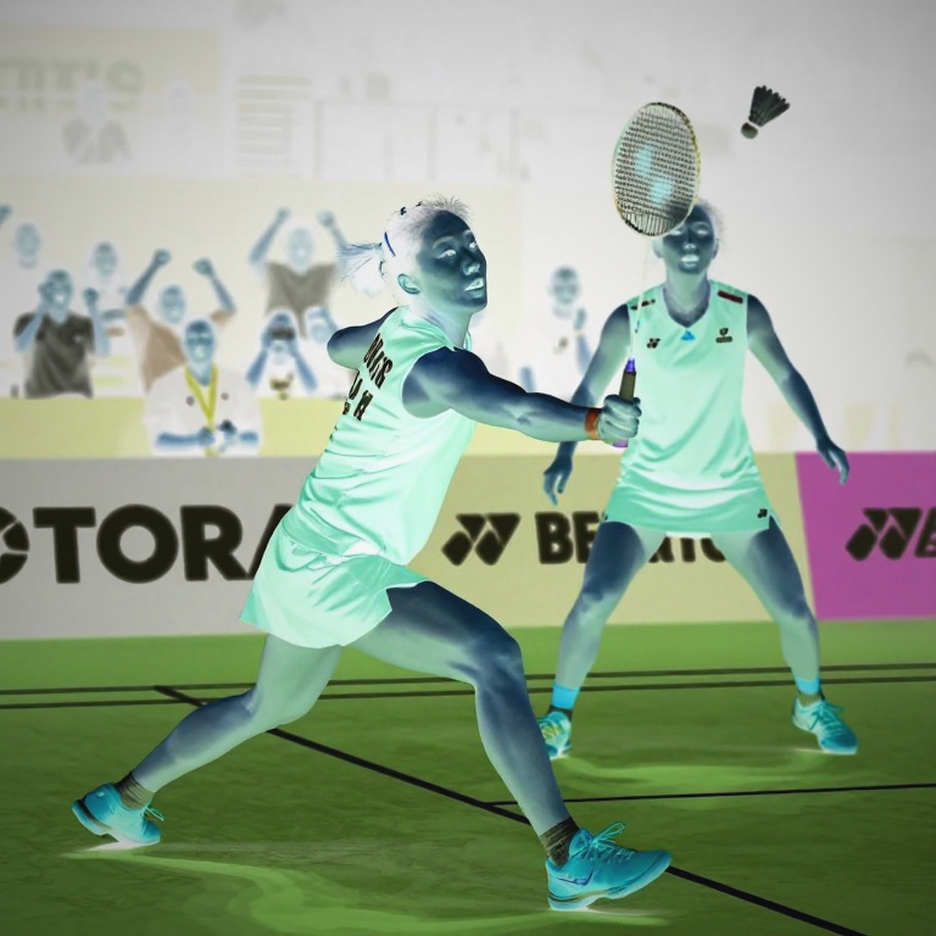
At this very event, Lee Zii Jia — the number-one hope — fell in the second round to Zhe Ying Wu (Chinese Taipei). The source described Aidil as the one "left to carry Malaysia's challenge". When the national number one exits in Round 2 and the burden falls to an independent player at a lower tier, the picture does not speak of abundance but of fragility. Malaysian badminton has long been used to a model dependent on a single star since the Lee Chong Wei era. That structure was never fixed, and this time it has been exposed again.
The contrarian angle: a real title, a real tier, but an easy wrong conclusion
There is a natural temptation when reading this news: turning "first in two years and three months" into "Malaysia is back". I want to put a question mark right there. Correlation is not causation. A title born in a draw whose top seed is ranked only 33rd does not measure the strength of the champion; it measures the absence of stronger players. The timing is also notable: the final took place on a Sunday in September 2026, the late-season window when top players often rest or commit to higher-tier events. A thin draw in the late season is normal for the system, not unusual for a tournament.
If I wanted to know whether Aidil has genuinely risen, I would not look at this trophy. I would look at the next three to five tournaments, at Super 300 or Super 500 level. If he reaches quarter-finals consistently there, the story changes. If not, the Vietnam Open trophy will stay exactly where it belongs: a well-earned personal milestone, a structural marker for Malaysia, but not a statement about his level. Every rally is a testimony, every number is a confession — and the number here confesses that we still do not know enough.
It is also worth noting the pressure forming around Aidil. National media call him a "history-maker". He is only the second Malaysian men's singles player to win the Vietnam Open, after Roslin Hashim in 2026 — a real and noteworthy fact. But labelling a Super 100 event with a thin draw as "history" can create expectations that exceed the current foundation. For an independent player with no national-team system behind him, that pressure is heavier still. The human portrait here is clear: a young player, three finals in two years, walking a path with no safety net, who has just touched a peak the outside world is inflating far beyond its size. That is the human being behind the number two years and three months.
Takeaway: signals for the next cycle
I saw no miracle in Ho Chi Minh City. I saw a player doing exactly what he could in a draw he could win, and I saw a badminton nation so in need of a title that it called it history. The real question is not whether Aidil won — he did, and it was deserved. The real question is: will Malaysia use this title to celebrate a peak that has dropped a tier, or to look straight at the narrowing pipeline behind it? If Aidil reaches quarter-finals consistently at Super 300 and Super 500 over the next six to twelve months, the Vietnam Open trophy will carry a different meaning. If not, it will remain exactly where it belongs — a well-earned personal milestone, and a structural marker for Malaysia.