
The Dust Beneath the Standings: English Club Table Tennis Opens and the Signals No One Reads
**Câu trả lời cốt lõi**: Giải bóng bàn câu lạc bộ Anh SBCL Premier Division mở màn mùa giải mới với BATTS và Ormesby cùng dẫn đầu; BATTS hơn nhờ chỉ số 'sets for'. Tay vợt Pháp Guillaume Alcayde giữ thành tích bất bại 100%, trong khi đội trẻ eBaTT gây sốc khi hạ cựu vô địch Ormeau 4-3. **Dữ kiện chính**: - BATTS và Ormesby cùng dẫn đầu sau cuối tuần 1; BATTS hơn nhờ tổng số ván thắng cá nhân ('sets for'). - Guillaume Alcayde (Pháp, DHS Hurricane Kingsway) bất bại 100% xuyên suốt cuối tuần. - Edouard Valanet (Pháp, BATTS) ra mắt hoàn hảo rồi thua Nahom Asgedom 0-3. - eBaTT, tổng tuổi 71, hạ Ormeau 4-3; Max Radiven thắng trận Premier đầu tiên 12-10. - Nhiều ván quyết định khép lại ở 12-10, 13-11, 15-13, cho thấy khoảng cách cạnh tranh hẹp. **Nguồn**: Bản tin kết quả SBCL Premier Division Weekend 1, Table Tennis England, mùa giải thường niên | Cross-checked: VuaBong.vn **Hỏi đáp liên quan**: Q: Ai là tay vợt nổi bật nhất cuối tuần 1 SBCL Premier Division? A: Guillaume Alcayde (Pháp) của DHS Hurricane Kingsway, với thành tích bất bại 100% xuyên suốt cuối tuần. Q: Đội nào gây bất ngờ lớn nhất? A: eBaTT, đội trẻ nhất giải với tổng tuổi 71, khi hạ cựu vô địch Ormeau 4-3. Q: Vì sao BATTS dẫn đầu dù bằng điểm Ormesby? A: BATTS hơn Ormesby nhờ chỉ số 'sets for' — tổng số ván thắng cá nhân — theo luật tính điểm của giải.
In Sheffield, in a hall barely big enough for a few dozen spectators, the camera for the season's first livestream was running. On the scoreboard, the fifth game of a singles match read 12-10. A few hours earlier, on another table in the same system, another decider closed at 13-11, then another at 15-13. Table Tennis England published its results bulletin in short lines: 4-3, 7-0, 3-2. The standings after opening weekend showed BATTS and Ormesby level at the top, BATTS ahead on sets for — total individual games won. Not a single international wire service noticed. Not a single bulletin in Asia mentioned it.
But I noticed. After years carrying a notebook through youth tournaments, I learned that games ending 12-10 are not stray details. They are stratigraphic evidence. A league in which many singles matches go to a fifth game and close within two points is a league with a compressed competitive band — where the gap between champion and bottom side, at the level of a single match, is far narrower than 7-0 team margins suggest. And in that thin dust, at least four stories are waiting to be excavated.
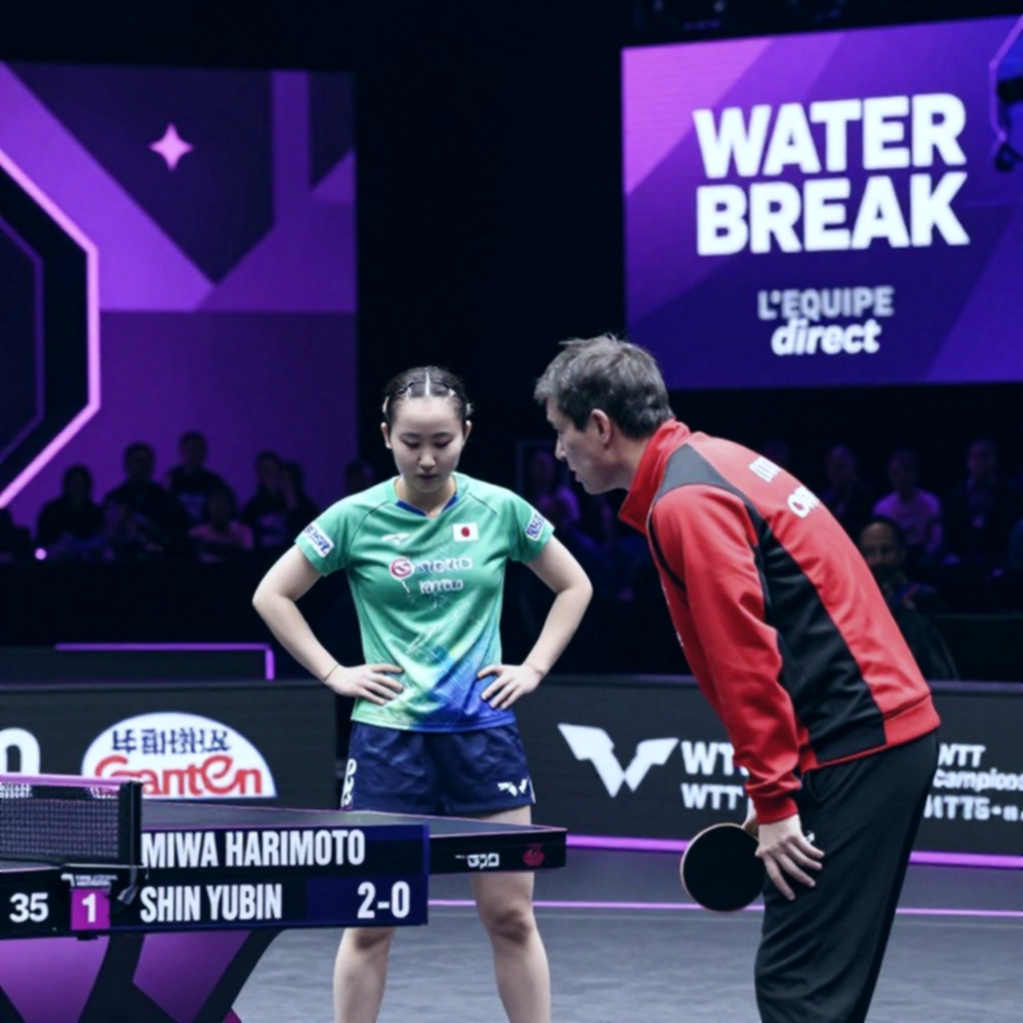
At 57, I have learned to listen for the echo of stars that never got to shine. This season, that echo came from a small league in northern England.
Let me rebuild the backdrop so the reader doesn't get lost in a maze of team names. The SBCL — Senior British Clubs League — is England's national club competition, run in a weekend block format: each weekend teams play multiple rounds, some playing two matches a day on Saturday and Sunday. The Premier Division is the top tier. This is not an ITTF or WTT stage. No world ranking points are at stake. No prize money is published. This is the semi-professional tier — the lung of English table tennis, where national-team players, youth prospects and European table-tennis migrants meet every weekend.
Opening weekend of the new season closed with eight clubs: BATTS, Ormesby, Fusion, Ormeau, North Ayrshire, DHS Hurricane Kingsway, Nottingham TTC and eBaTT. Of these, DHS Hurricane Kingsway and Nottingham TTC are newly promoted. eBaTT — the youngest-average side — was noted as one of the youngest teams in BCL Premier Division history, with four players totalling 71 years, about 17.75 each.
Structurally, the presence of foreign players is not the exception but the pillar. Guillaume Alcayde (France) plays for DHS Hurricane Kingsway. Edouard Valanet (France) joined BATTS. Oriol Monzo (Spain) plays for Ormeau. A Japanese name, Rikuto Morota, appears in a South London club's squad. This is the key to the rest of the article: the league operates as a miniaturised European table-tennis labour market, where English clubs buy anchors from the continent and fill the rest with domestic strength.
Two technical details matter for anyone tracking club table tennis. First, teams play two matches a day each weekend — a high match load, making fatigue management a real coaching variable. Second, standings are decided by match points, with sets for (total individual games won) as the tiebreak. This is the league's own scoring rule, distinct from the WTT system. The English don't just play table tennis; they administer it their own way.
I start with the weekend's strongest individual signal: Guillaume Alcayde. The Frenchman kept a 100% record across the entire weekend — not one match, but every match he played. He also contested doubles and remained the driving force behind DHS Hurricane Kingsway sitting third after two rounds. This is what I call an anchor slot — a player a club deploys to bank steady points in first singles and doubles. Alcayde is the clearest anchor in the Premier Division this weekend, and his record is a more sustainable signal than any single win.
But the more interesting story is the reverse: Edouard Valanet. BATTS's Frenchman had a flawless debut — winning both opening matches — and was immediately described in the bulletin as a new international star. Then on Sunday he lost 0-3 to eBaTT's Nahom Asgedom. One weekend. Two wins. One whitewash. This arc — perfect debut, then collapse against a home-grown youth player — is a completely normal adaptation wobble for a player in a new market. Years ago, following a young player at a national U17 tournament, I got swept up by one beautiful match and wrote a long piece calling him a rough gem. It never ran. A scout from another club made contact — then a cruciate injury arrived, and everything I wrote became a promise I could not keep. One weekend cannot establish a level; the new-star label on Valanet is a rushed conclusion, promotional rather than analytical.
The highest-volume figure in the bulletin is Ormesby's Ben Piggott. He dragged his match with Sawyer to a fifth game and won 12-10; he came back from 2-0 down; he won two fifth games. But he also lost to Johnson 3-1 and to Shilton 12-10 in a fifth. This is a high-variance profile: plays a lot, wins many tight matches, loses many tight matches too. For a title-chasing side, that is a double-edged sword — but also the kind of player every champion needs at some point in a season. Watching Piggott, I remembered what I learned in Kazan in 2026, standing by the touchline timing a young Frenchman's run at 38 km/h. That night I opened my notebook and saw a note on a young player I had tracked, whose top speed was 34 km/h, and realised the difference was not the number. It was how they read space and managed moments. Piggott may have had the moments. The question is whether he holds them in April.
Then the story I want to dwell on longest: eBaTT. The side of Vlasov, Asgedom, Radiven and Piwowar, aged 71 combined. They beat Ormeau — champions in 2026/23 — 4-3. Within that, Nahom Asgedom beat Valanet 3-0, and Max Radiven claimed his first-ever Premier Division win, 12-10 against Kingham, a teammate at England youth level. A youth side beating a former champion on opening weekend. This is the clearest talent-pipeline signal English club table tennis has sent in years: the young players are not merely participating; they are winning. And they won in the moments experience is supposed to decide — a 12-10 decider, a 3-0 over an imported professional.
In the middle tier, other details stand out. North Ayrshire's Billy Shilton — a Paralympic medallist — forced his matches into deciders, yet his side still lost. Ormeau's Oriol Monzo (Spain) took both a singles and the doubles, but fell in a decider to Webb-Dixon and lost to Larry Trumpauskas. This is the familiar pattern of mid-table sides: one anchor plays well, but the rest of the line-up cannot convert it into match points.
Alongside, Fusion unveiled a father-son pairing, Larry and Lorestas Trumpauskas. Larry led, Lorestas levelled and came back in his match; both lost to Sawyer 0-3. A father and son playing in the same line-up in the top tier. In many table-tennis nations, this is almost unimaginable. A generational gap is not a barrier; it is a stratum not yet read. In this league, those strata sit together in one squad: a father, a son, four teenagers, and a Paralympic medallist or two.
On doubles tactics — a scoring unit often underweighted in Asia when discussing clubs — the bulletin shows Fusion's Mendes & McBeath described as combining as usual, meaning they are a fixed unit. North Ayrshire's Shilton and Johnson are another fixed pair. That clubs build fixed pairings rather than rotating shows doubles is a strategically weighted scoring slot in this format — something Asian club leagues, Vietnam's included, tend to overlook. When a club keeps one pair fixed across weeks, it is not tactical laziness; it is an investment in a rapport that cannot be built in a single training session.
And one small but telling industry detail: the team name DHS Hurricane Kingsway. DHS — Double Happiness — is the Chinese equipment manufacturer; Hurricane is its flagship inverted rubber line. An English club carrying a Chinese equipment brand's name is a signal that Asian equipment brands are not only sponsoring elite stars — they are buying brand presence at grassroots level, in the English market. This is an industry-transmission direction few analysts track. The season's first livestream is another small signal: the league is investing in broadcast, meaning it is commercialising at the base.
Now to the part where I must reflect on myself — something I have treated as mandatory in every piece since the 2026 empty-arena article.
There is a strong temptation, looking at the standings after opening weekend, to paint a story of BATTS and Ormesby dominating while the rest learn on the job. It is easy to say this league has a dominant tier and a weaker one. But the data does not support that linear reading. The density of deciders at 12-10, 13-11, 15-13 — across different pairings, between different clubs — shows that at match level the gaps are far narrower than the 7-0 margins. A side can win all seven matches with four of them decided by two points in the final game. The standings are flatter than they look. The gems are not on the surface; they lie beneath the dust of time.
The second point needs saying plainly: this is an import-dependent league. BATTS have Valanet. Kingsway have Alcayde. Ormeau have Monzo. At the top of the table, the anchor slots — the steadiest points-scoring roles — are held by foreign players. That is a structural weakness. If import supply shifts — visas, continental schedules, injury — the leading clubs become fragile. English club table tennis runs on an engine whose most important cylinders are imported from the continent; this is the truth no results bulletin ever states. Seen this way, the rise of a domestic youth side like eBaTT is not merely good news — it is a signal that if imports dry up, the domestic base must be able to fill in.
Third, and this is my self-warning: eBaTT may be a breeze, or may be a shooting star. A win over a former champion on opening weekend is a beautiful signal, but the sample is far too small to say anything about a whole season. Youth sides that shock in the first two weeks and crumble when fitness and depth are tested — I have seen that more than a few times tracking youth sport. The worst outcome would be English domestic media turning Asgedom and Radiven into a golden generation after one weekend — and that pressure itself breaking them. The only suspense worth holding is whether eBaTT can last to mid-season. Four wins over Ormeau predict nothing about the next fixture.
And the most honest warning: the source text I analysed ends mid-sentence, at Phillippines natio... Meaning the original article carried one more thread — possibly involving a Filipino player — that was cut. I do not permit myself to speculate about the missing part. This is the archaeologist's discipline: when a stratum is broken, mark it, don't fill it.
So what does opening weekend of the SBCL Premier Division say to an observer in Chengdu, eight time zones from Sheffield?
To me, it says table tennis does not exist only where the big lights are. A league nobody in Asia mentions is still producing 17-year-olds who beat former champions, father-and-son pairings who play side by side, imported anchors who keep leading clubs standing, and an East Asian equipment brand carving its name onto a club in northern England. Each of those strata is a story about an ecosystem running on its own terms, needing no permission from the big tours.
I do not know how long Alcayde keeps his unbeaten record. I do not know whether eBaTT lasts to April. I do not know whether the cut Philippines thread opens a new direction. But I know I will be watching. That is the job of a youth-archaeologist: not to judge the topmost layer, but to read the layers beneath.
The question I leave for myself and for the reader: when this league reaches mid-season, will the thin dust of the opening day blow away what we just saw — or will that dust thicken into a stratum that, ten years from now, someone will excavate and call the beginning of a generation.