
Worthing TTC Launches Junior Team 1 Star Event: The Gap Beneath the Base of England's Table Tennis Pyramid
**Core answer:** Worthing Table Tennis Club tổ chức giải đồng đội trẻ Junior Team 1 Star vào thứ Bảy ngày 10 tháng 10, thể thức hai vận động viên một đội, loại trực tiếp tiến bộ. Giải lấp khoảng trống cho các đội trẻ không vào được YouthBCL, với các suất đăng ký xác nhận từ Worthing, Jersey và Guernsey. **Key facts:** - Ngày thi đấu: thứ Bảy 10 tháng 10; mỗi đội hai vận động viên, thể thức loại trực tiếp tiến bộ. - Hạn đăng ký JuniorBCL: thứ Tư 16 tháng 9; hạn CadetBCL: thứ Tư 28 tháng 10. - Đăng ký xác nhận: Worthing TTC, Jersey (một đội nam và một suất nữ), Guernsey. - Đầu mối được nêu tên: Matt Porter, Lisa De Poerck, Neil Rogers và John Mackey. - Cấu trúc giải trẻ Anh gồm ba tầng: YouthBCL, JuniorBCL/CadetBCL và các giải bổ trợ cấp câu lạc bộ. **Source attribution:** Nguồn: thông báo của Table Tennis England về giải Junior Team 1 Star, dựa trên thông tin do câu lạc bộ và các bên tham dự cung cấp. Năm dương lịch của sự kiện không được ghi rõ trong văn bản nguồn. | Cross-checked: VuaBong.vn **Related Q&A:** - Q: Giải Junior Team 1 Star có ảnh hưởng tới bảng xếp hạng thế giới không? A: Không, đây là giải phát triển nội địa tại Anh và không cấp điểm xếp hạng ITTF/WTT. - Q: Vì sao Jersey và Guernsey tham dự? A: Hai đội không vào được YouthBCL năm nay và rào cản chính của họ là chi phí di chuyển qua eo biển Channel. - Q: Giải có trở thành sự kiện thường niên không? A: Chưa được xác nhận; ban tổ chức bày tỏ kỳ vọng nhưng chưa có cam kết chính thức trong văn bản nguồn.
The entry list for 10 October in Worthing contains one detail worth pausing over longer than its surface suggests: Jersey and Guernsey. Two islands in the middle of the English Channel, a few dozen miles off England's south coast, entering one boys' team and an extra girls' place in a junior table tennis event run by a local club off its own back. No international trophy, no world-ranking points, no sponsorship deal mentioned anywhere. Just a head coach named Matt Porter, a few phone calls, a few emails, and one question he asked before anything started: what about the teams that did not get into YouthBCL?
An empty hall is never empty; it is only that the echo has changed hands. A small event in Worthing did not appear by itself. It appeared because somebody counted the teams left behind.
To understand why an administrative announcement deserves dissection, you have to read England's junior competition structure again. Table Tennis England runs a three-tier system. At the top sits the Youth British Clubs League, YBCL, gathering the strongest teams, played across national weekends, with long travel and high cost. Below it sit JuniorBCL and CadetBCL, more localised, less travel, lower cost, more flexible formats, split by the Junior and Cadet age bands. And at the bottom, until October of this year, there was a hole.
The new event is called Junior Team 1 Star and takes place on Saturday 10 October. The format is the notable part: two players per team, in a progressive knockout, meaning a loss does not send you home. Teams keep playing, keep accumulating matches, keep accumulating minutes at the table. The JuniorBCL entry deadline is Wednesday 16 September; the CadetBCL deadline is Wednesday 28 October. The 1 Star event sits neatly between the two, on 10 October.
Worthing Table Tennis Club does not hide its ambition. The club won its division last season and describes a commitment to developing junior players both at and away from the table. Behind the scenes, Table Tennis England and an entity abbreviated as TAP supported the staging, with two named contacts: Neil Rogers and John Mackey. Matt Porter states his motive plainly: his team did not get into YBCL, and he wanted to do something for his own players and for other teams in the same position.
Reading the format closely, three design decisions stand out.
Two players per team is not accidental. A full YBCL-style squad requires four or five players of comparable standard, compatible schedules and comparable travel capacity. For a small club or a thinly populated region, that is a problem with no solution. A two-player team lowers the participation threshold to something almost any club can reach. It trades competitiveness for accessibility.
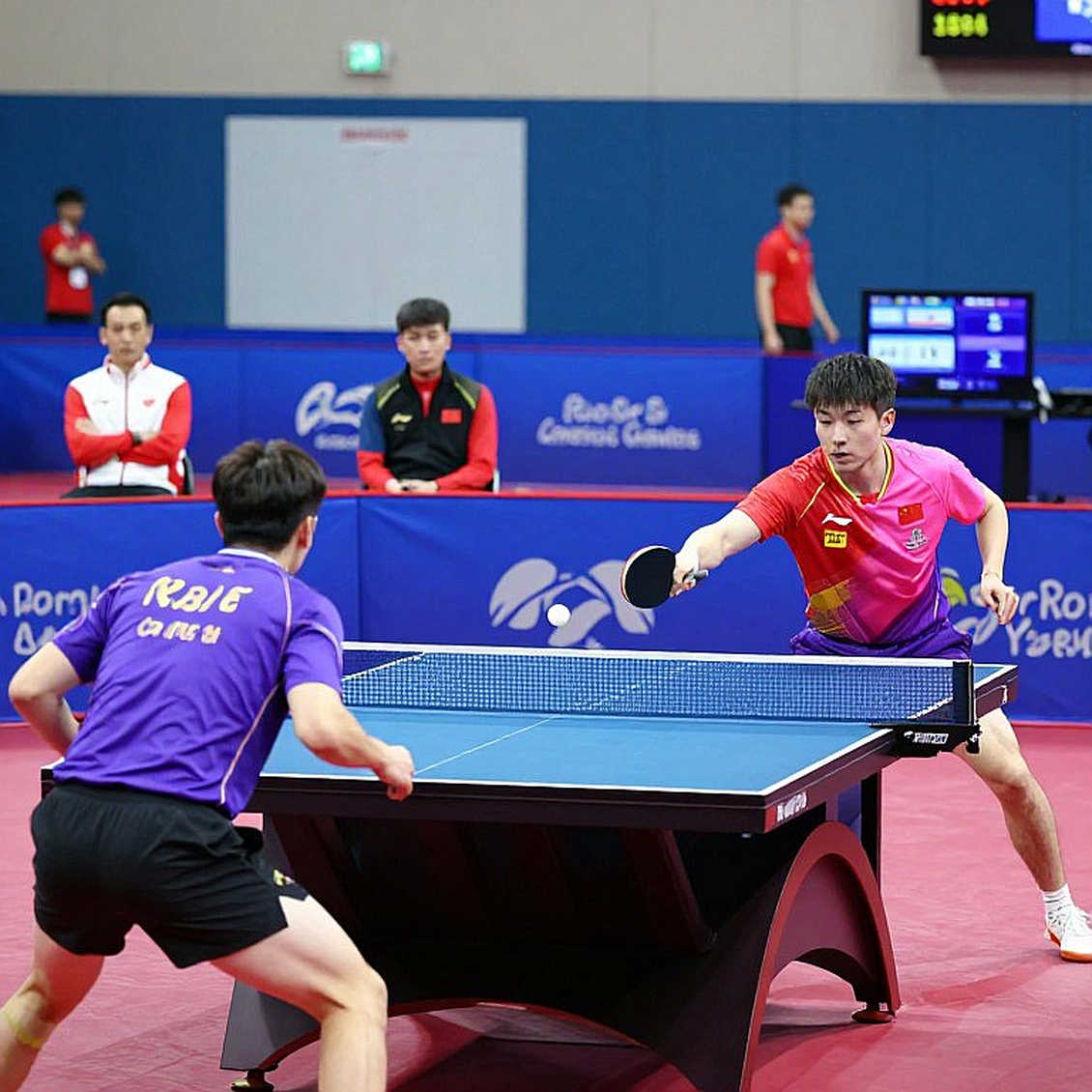
The progressive knockout is the clearest signal that the organisers understand who they serve. At the grassroots tier, value does not lie in who gets eliminated; it lies in how many matches each team plays. A twelve-year-old who travels three hours, loses one match and goes home will not come back. A twelve-year-old who travels three hours, loses the opener and then wins two will tell that story at school. The format is built to maximise playing minutes, not to identify the most deserving champion.
The calendar position is calculated too. 10 October falls between the JuniorBCL deadline of 16 September and the CadetBCL deadline of 28 October. A team that already knows it missed the JuniorBCL cut still has the whole of October to enter. A team still weighing up CadetBCL gains a cheaper option to test first. The appearance of a self-organised event at the base of the pyramid is evidence that demand outstrips supply at the bottom tier, not the top.
Looking to Jersey and Guernsey, the picture sharpens. Jersey Table Tennis, through Lisa De Poerck, says its boys' team did not make it into YBCL this year and that this event partly offsets the sense of being left out. But separate geography from standard. These two islands are not weak. Their problem is the English Channel. To play YBCL they must move an entire squad across water for national weekends. For an island club, the barrier is not the table; it is the ferry timetable.
Based on my own experience watching junior fixtures, there is a category of decision that never makes the minutes: the decision a parent makes on a Sunday evening, adding up fuel, ferry fares, meals and lost sleep, then asking whether their child is worth continuing. The 1 Star event does not solve that equation. But it lowers the first term. Travel cost is the largest hidden variable in every youth sports development model, and almost nobody puts it in the spreadsheet.
On governance, the notable thing is Table Tennis England's role. The governing body did not stage the event. It permitted it, offered technical support, assigned contacts, and left the club to do the main work. Matt Porter says the turnaround from idea to scheduled event was very short. The model has a name: co-production between federation and club. Low central cost, high local ownership. The advantage is speed. The risk lies elsewhere.
Here is what the press release does not say. A club having to create its own event to fill a hole in the official system is good news about people and less good news about the system. One fact, two readings. The first: English table tennis has coaches willing to act. The second: the official pyramid is not absorbing all demand for junior team play.
People call me sceptical; I am only reassembling the pieces others skimmed past. Piece one: the 1 Star label is not clearly defined in the published information. It is a grade within the domestic system, but where it sits among the grades, who awards it, what the criteria are, nobody says. Piece two: what TAP stands for is not explained either. Two initials appear as though the name were already familiar, a sign of a system run on relationships more than on public documents. Piece three: dependence on a handful of named individuals. Matt Porter thought of it, Neil Rogers and John Mackey backed it. When those people move on, does the event survive?
The press room taught me that not every answer deserves to be heard, and it also taught me that the absence of an answer is data. The question nobody asked here is: why must the lowest tier of the junior system wait for a local club to improvise? Co-production is an effective short-term fix. But if it becomes the default, it can mask a capacity shortfall at the national level, and that shortfall only becomes visible the moment nobody can carry it any more.
I am not saying the event is wrong. I am saying it is right in the way a patch is right.
On 10 October, a small hall on England's south coast will host a few two-player teams, among them children who crossed the sea to be there. They will play more matches than an ordinary knockout would give them, because somebody did the arithmetic so they would not be eliminated too early.
Sixty-four is not the touchline; it is the corner flag from which I can see the whole pitch. From there, I see a much larger question than one event in Worthing: if the base of every sporting pyramid must always patch itself, how many children quietly left the game before anyone thought to count?