
Trang chủTable TennisLAINE and PINTO Claim U21 Titles at Belgium Open 2026: Lessons from Portugal’s Double for Vietnam’s Youth Table Tennis
LAINE and PINTO Claim U21 Titles at Belgium Open 2026: Lessons from Portugal’s Double for Vietnam’s Youth Table Tennis
Core answer: Tại Belgium Open 2026 ở Pepinster, Bỉ, Clément LAINE và Matilde PINTO của Bồ Đào Nha vô địch đơn U21 nam và nữ. Tuy nhiên, PINTO thua Anaïs SALPIN 1-3 ở bán kết đơn nữ chuyên nghiệp cùng giải, cho thấy khoảng cách U21-senior vẫn còn nguyên. Key facts: - LAINE thắng GEVERS 3-1 với tỷ số 11-6, 7-11, 11-4, 11-9 trong trận chung kết U21 nam tại Bỉ. - PINTO thắng SILCOCK 3-0 với tỷ số 11-8, 11-9, 11-4 ở chung kết U21 nữ. - PINTO thua SALPIN 1-3 ở bán kết đơn nữ chuyên nghiệp cùng giải đấu. - Không có đại diện châu Á tham dự, nên giải chỉ phản ánh hệ sinh thái bóng bàn châu Âu. - Giải đấu được ETTU đăng tải ngày 26/02/2026 | Nguồn: ETTU | Cross-checked: VuaBong.vn Related Q&A: - Belgium Open 2026 có phải giải WTT Feeder? Chưa xác minh chính thức; giới phân tích xếp nhóm giải mở khu vực châu Âu, có thể tương đương Feeder hoặc thấp hơn. - LAINE và PINTO có đủ cơ sở để coi là tài năng hàng đầu châu Âu? Chưa đủ, vì họ cần chuyển hóa thành tích tại cấp WTT Contender trở lên. - Ý nghĩa với bóng bàn Việt Nam? Không nên dựa vào một danh hiệu U21 để kết luận; cần theo dõi lộ trình chuyển tiếp lên chuyên nghiệp trong 12-24 tháng.
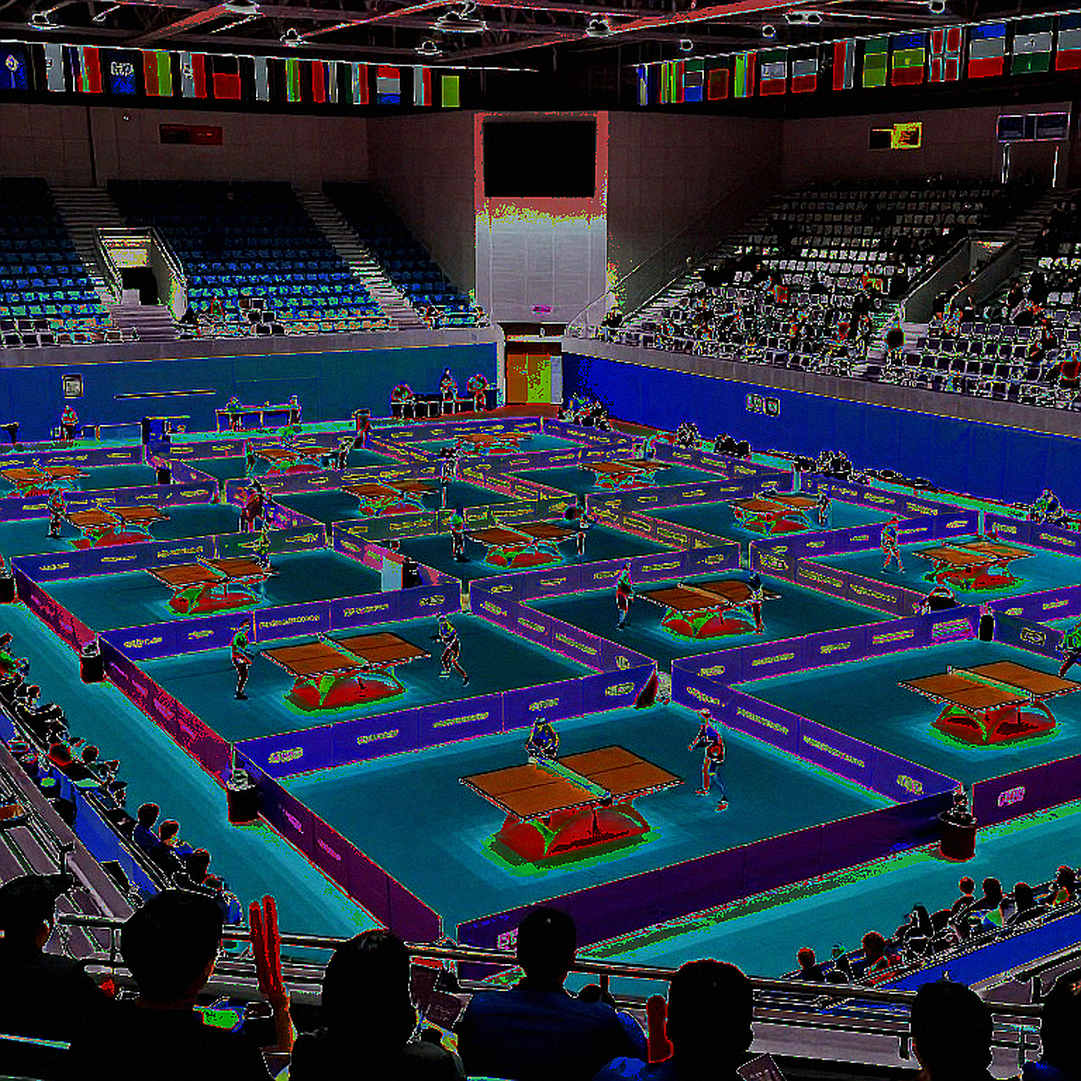
Pepinster, a small town in Belgium, is not on the map of Europe’s great table tennis centres. But in the final week of February 2026, it recorded a notable Portuguese double: Clément LAINE won the U21 boys’ singles by beating Per GEVERS 3-1, while Matilde PINTO took the U21 girls’ singles by defeating Hannah SILCOCK 3-0. The result appeared in a short bulletin from the European Table Tennis Union (ETTU), with no video and no technical data. For anyone working in youth development, though, the bulletin carried a signal more valuable than any headline: at the same event, the U21 women’s champion later lost in the senior women’s singles semifinal. That is the moment the empty arena exposed the real boundary between the age-group level and the senior level.
Belgium Open 2026 was held in Pepinster, with U21 and senior singles categories. Preliminary classification places the event among European regional opens, possibly WTT Feeder level or below, but the bulletin did not state the sanctioning body or points allocation. The field included associations from Portugal, Belgium, Denmark, Switzerland, England, Lithuania, Ukraine, Belarus, France, Czechia and Germany. No Chinese, Japanese, Korean or other Asian players entered. Therefore, this event cannot measure the China-versus-world balance. More importantly, it falls in the second year of the Los Angeles 2028 Olympic cycle, the period when associations start giving players born between 2026 and 2026 international match volume.
LAINE’s final was 11-6, 7-11, 11-4, 11-9. He lost the second game 7-11, then immediately won the next game 11-4 and closed a tight fourth game 11-9. Without data on stroke quality, the only defensible signal is his ability to reset after losing a game. In the semifinal he beat HAVSTEEN 3-0. LAINE’s path was cleaner than PINTO’s: he played only two deciding matches and did not drop a game in the semifinal. Still, a regional U21 title should not be upgraded into proof of technical superiority.
PINTO offered more signals. In the U21 semifinal she needed five games to beat JUCHNAITE 3-2. In the final she beat SILCOCK 3-0, but the first two games were close at 11-8 and 11-9 before a dominant 11-4 third game. That means the final was tighter than the scoreline suggests. She entered both the U21 draw and the senior women’s draw. After winning the U21 title, she lost 1-3 to Anaïs SALPIN in the senior semifinal. This is the most important detail in the whole bulletin.
Why does that detail matter? It exposes the junior-to-senior conversion problem. A player can win her age group, yet struggle against senior opponents at the same tournament. Speed, pressure, experience and physical endurance all change when the opponent is no longer in the same age bracket. PINTO did not lose a final; she lost a senior semifinal. That is a miniature portrait of a familiar rule: continental youth champions do not automatically become senior stars.
The ETTU bulletin also showed that both senior men’s semifinals ended 3-0: SIP beat VOGLER, and ULLMANN beat SHUTOV. That suggests the men’s semifinals were one-sided, while the final might be more balanced. In the senior women’s draw, BARAVOK beat VASYLENKO 3-0, and SALPIN beat PINTO 3-1. Those numbers do not allow technical commentary, but they do show uneven competitiveness across rounds.
Media might quickly run with the phrase “Portuguese double.” But the sample is too small. A U21 title at a regional open has weak predictive power for senior elite status. European history shows many continental youth champions who never reached the world top 30. More importantly, the same event saw the U21 women’s champion fail to win a senior semifinal. That does not erase the U21 title, but it reminds us that the bridge from junior to senior is the real challenge.
The bulletin also named Belarusian athletes Katsiaryna BARAVOK and Nikon SHUTOV. In the ITTF framework after 2026, their official neutral-status participation should be verified before drawing any conclusion about national representation. This is an administrative point, not a judgment about playing strength. Federation bulletins often use national labels out of editorial habit, which may not reflect the official flag or status.
For Vietnamese table tennis, the Belgium Open 2026 bulletin features no Vietnamese players, but it is still a useful mirror. If we look only at the two U21 trophies, we can become overoptimistic. If we look at PINTO’s senior semifinal defeat, we see the real problem: introducing young talents to senior competition early, tracking their senior win rate, and reassessing after 12-24 months. Vietnamese youth training centres need clear transition pathways, not just age-group success.
The event data also reminds us to verify information. The ETTU bulletin did not publish world rankings, prize money, or seedings. Therefore, any conclusion about LAINE’s and PINTO’s ranking or commercial value lacks evidence. The only verifiable fact is their performance inside this specific event.
Portugal’s double should be seen in structural context. A small association can produce two U21 champions at a European open by investing in the right cohort, but that does not mean they have overtaken the major powers. The presence of many countries in the semifinals shows the breadth of Europe’s youth layer, but not concentrated depth. The absence of Asian representatives means this event reflects only Europe’s internal development ecosystem.
The next step is to track LAINE and PINTO at WTT Feeder or Contender events. If they go deep at those levels, their U21 titles at Belgium Open 2026 will look like a genuine conversion step. If they exit early, that will confirm the junior-to-senior gap remains. Scouts should also remember that any assessment based on one event carries a high margin of error.
Another issue is match load. PINTO competed in both the U21 draw and the senior women’s draw at the same tournament. Playing the U21 final and then stepping into a senior semifinal may affect physical condition. However, the bulletin does not provide the schedule, so no causal conclusion is possible. This is a warning for youth athlete management: track the total number of matches, not just single results.
From a media perspective, the story of Portugal winning both U21 titles is attractive but misleading. It creates a sense of systematic superiority, while the reality is two individuals succeeding at a low-tier event. Vietnamese sports media should also be careful when reporting on young international prospects, avoiding hype based on a small sample. The lesson from 2026 is that data only has value when placed beside real observation and full context.
What can Vietnamese youth table tennis learn from the Portuguese model? The main point is to give young players early and frequent international competition, across both youth and senior events. However, Vietnam’s conditions differ from Portugal in budget, number of tournaments, and opponent density. The approach must be flexible. A practical solution is to increase short training camps in Europe, combined with friendly matches against youth centres in Germany, France and Portugal.
Another important point is to distinguish between age-group results and professional competence. A 17-year-old who wins an U21 title will not necessarily succeed at the senior level. Therefore, when evaluating young talents, we should look at the speed of development across seasons, the ability to adapt to stronger opponents, and the response to defeat. These are factors that ordinary statistics cannot fully express.
The Belgium Open 2026 bulletin also shows that European table tennis still operates a layered tournament system, from regional opens to WTT Feeder, Contender and Grand Smash. Lower-tier events have an important role in giving young players experience. But their point values and prize money are very small. Therefore, results at these events rarely change world rankings in a significant way.
The question is whether small European associations can sustain the hosting model represented by Pepinster. A small town hosting an international event is common in Europe, but travel and operating costs may rise over time. If lower-tier events shrink, the opportunities for young European players will decrease. This is a structural issue, not a problem for any single person.
Returning to LAINE and PINTO, both deserve recognition for beating opponents from many countries in their age group. But their true value will be tested over the next 12-24 months. If they continue to improve and compete at senior level, specialists may speak of a new generation of Portuguese table tennis. If not, these titles become just a short bulletin on the ETTU website.
Vietnam was not represented at this event, but Vietnamese table tennis can learn a major lesson: build clear pathways for young talents, combining domestic and international competition. At the same time, it is necessary to patiently follow the transition from U21 to senior, instead of rushing to praise a player right after a youth title. The empty stadium in Pepinster revealed a boundary: success at one’s own age group is necessary, but not sufficient to prove a system. The remaining question is: how many U21 champions today will still stand when they step onto the senior court?
Cầu thủ liên quan
Bài nổi bật
The World Table Tennis Ranking Measures Attendance, Paris 2026 Measured Strength2026-10-17
TT Kidz returns: How English table tennis is filling the pyramid's base with two webinar slots2026-10-16
When the Table Tennis Analysis System Returns an Empty Set2026-10-15
Table Tennis and the Discipline of Re-Watching: An Analysis Only Stands When It Has Data2026-10-15
Cracks in the Giant: Chinese Table Tennis and the Gaps the Rankings Never Tell2026-10-14
2026 European Table Tennis Championships: ETTU Redraws the Broadcast Map and the Territorial Question Behind It2026-10-11
Footwork Beneath the Dust: Youth Table Tennis and the Unmeasured Gap2026-10-11
Bài đề xuất
Vietnamese Table Tennis: When the Table Moves Faster Than the Notebook2026-10-13
England Hopes Challenge: Prasanna Kumar and Xiao Xu win U11 titles, earn ITTF World Hopes Week spots2026-09-15
Worthing TTC Launches New Junior Team '1 Star' Event: Filling the Gap at the Base of the Pyramid2026-09-30
ETTU Locks Broadcast Rights Through 2028: Seven Cameras, Four Cameras, and the Visibility Tier in European Table Tennis2026-09-25
10-Year-Old Nathan Bloom and Table Tennis Magician Leon Thomson on CBeebies: England's Grassroots Seeding Strategy2026-09-23
LAINE and PINTO Claim U21 Titles at Belgium Open 2026: Lessons from Portugal’s Double for Vietnam’s Youth Table Tennis2026-09-21
Lowri Hurd, Rob Davies and Two Golds in Murcia: While Britain Celebrates, I Look at the Razor-Thin Sets2026-10-08
Bài đề xuất
The WTT points race and the defence trap: when the calendar shapes a player's career2026-10-09
In-Depth Table Tennis Analysis: When Input Data Is Empty2026-09-12
Table Tennis England tightens child protection: DBS becomes mandatory for supervised roles from September 1, 20262026-09-09
Texas Smash and the 21-20 Card at MLTT: When the Scoreboard Tells a Bigger Story Than the Score2026-10-13
WTT Feeder Chennai: World No. 48 as Top Seed and India's Launchpad at the Lowest Tier2026-10-05
Bài đề xuất
An 11-1 Game and a Wasted 10-6 Lead: Europe's Table Tennis Power Map Emerges in Ljubljana2026-10-17
2026 JOOLA Europe Youth Series – Czech Open: Pilsen Welcomes Europe's Rising Table Tennis Talent from 7 to 11 October 20262026-10-08
Elizabeta Samara at 37: When the Medal Table Is No Longer a Form Table2026-10-11
Notice: Unable to Produce Sports Article Due to Empty Source Data2026-09-09
URSU completes triple crown in Sarajevo: Moldova steps into the light and the tactical data gap2026-09-23
Footwork Beneath the Dust: Youth Table Tennis and the Unmeasured Gap2026-10-11
Table Tennis England launches its Technical Officials Academy: the invisible infrastructure beneath every ranking table2026-09-24
Bài đề xuất
Footwork Beneath the Dust: Youth Table Tennis and the Unmeasured Gap2026-10-11
Table Tennis and the Nine Layers of Data Behind a Claim2026-09-26
Gangneung: Eleven European Paddles and Ten Days of Relearning How to Breathe2026-09-28
The First Three Shots and Points-Defense Pressure: Where Elite Table Tennis Is Actually Decided, Out of the Camera's Eye2026-09-30
VBCL Returns to Derby Arena: Two Champions, Two Levels of Competition and an Underrated Market2026-10-01
WTT Feeder Chennai: World No. 48 as Top Seed and India's Launchpad at the Lowest Tier2026-10-05
SBCL Premier Division Weekend 1: The 15-13 Deciders and the Real Gap Between English Club Sides2026-09-29