
More Than Xuan Son: Vietnam's Attack Is Losing a Whole System
Tóm tắt: Theo chuyên gia Đoàn Minh Xương, tuyển Việt Nam thua Thái Lan 0-2 tại Bandung vì thiếu Nguyễn Xuân Sơn; hàng công mất điểm tựa, cầm bóng vô hại và chỉ dứt điểm xa. Nguồn: Tuổi Trẻ. Key facts: Việt Nam thua 0-2 Thái Lan ở bảng B ASEAN Cup 2026 và mất ngôi nhất bảng. Xuân Sơn chấn thương từ trận ra quân nên không thi đấu. Sarach Yooyen mở tỉ số bằng cú sút xa, Thái Lan sau đó chơi khối thấp phản công. Một bàn thắng của Việt Nam bị VAR từ chối vì việt vị. Q: Không Xuân Sơn, Việt Nam yếu thế nào? A: Hàng công mất khả năng giữ bóng, kéo giãn hàng thủ và tạo khoảng trống, dẫn đến bế tắc trước khối thấp của Thái Lan. Q: Lỗi thuộc về ai? A: Không chỉ thiếu cầu thủ, mà còn do thể trạng kém, lực lượng thiếu và không có phương án B cho vị trí trung phong. Q: Bài học lớn nhất là gì? A: Một đội bóng không thể phụ thuộc vào một ngôi sao duy nhất; cần chiều sâu đội hình và hệ thống dự phòng.
The ball rolled slowly toward Vietnam's goal, but no one could stop it. Sarach Yooyen had chosen the exact space between the midfield line and the defensive line, where a Thai player usually did not appear. The shot from outside the box went into the far corner, and Vietnam's goalkeeper could only watch. Bandung, Indonesia, a night called the "early final" of Group B, had already tipped toward the away side from the opening minutes. If you only look at the 0-2 scoreline, everything seems simple: Thailand were stronger, Vietnam were worse. But anyone watching closely will notice a blind spot. Thailand's win was not about creating more chances. It was about Vietnam no longer having enough structure to turn ball possession into pressure.
Expert Doan Minh Xuong, in his analysis published by Tuoi Tre, said it directly: without Xuan Son, Vietnam's attack is clearly much weaker. That statement is true, but it is only half true. The issue is not just one missing player. The issue is an entire attacking system built around that player, and when the system loses its physical anchor, everything around it collapses as well.
Before the match against Thailand, Vietnam had just earned a narrow 1-0 win over the Philippines. That result hid many problems. Doan Minh Xuong listed them: the squad was not complete, many players were not in their best physical condition, captain Hoang Duc had just returned from injury, and Xuan Son had been injured since the opening match. Coach Kim Sang Sik was forced to rotate, experiment, and finally choose Dinh Bac as the central striker.
Look at the space, not the position. Dinh Bac had the position of Xuan Son, but not the space Xuan Son used to create. A real centre-forward does not just score goals; he holds the ball with his body, stretches the opponents' centre-backs, and acts as a wall for the third and fourth passes. Without that, Vietnam's midfield had to face a Thailand side that dropped deep, stayed compact, and only needed one touch to launch a counter.
Thailand arrived in Bandung with a clear plan. Sarach Yooyen opened the scoring; after that, the whole team retreated into their own half and gave the ball to Vietnam. The Thai coach deployed Chanathip Songkrasin as a "false nine" — a striker who did not stay in the box but dropped deep to receive the ball, pulling Vietnam's centre-backs out of position. That flexibility confused Vietnam's midfield. They did not know who to mark, who needed cover, or who should step out.
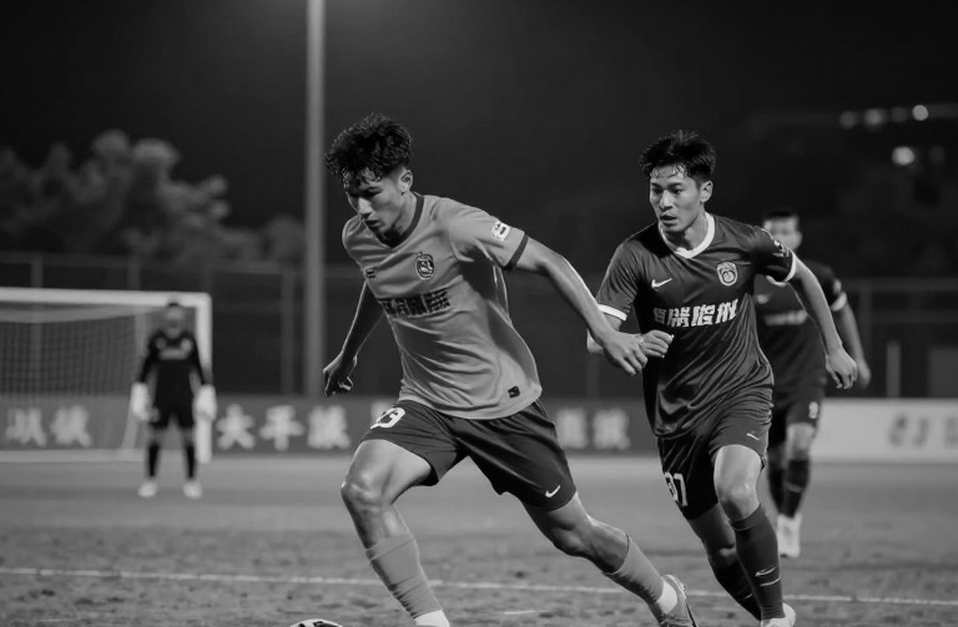
Vietnam had plenty of possession, but the possession was sterile. Most shots came from outside the box. One Vietnam goal was disallowed by VAR for offside. That moment could have changed the match, but it did not hide the deadlock. Look at the space, not the position. Vietnam had the ball on the wings, had it in the middle, but never had it in the spaces a real target striker usually occupies. With Xuan Son absent, the whole team passed the ball around the edge of the box, as if waiting for a miracle that never came.
This was suffocated football. No one challenged the second ball, no one blocked the long pass, no one created space behind Thailand's centre-backs. Dinh Bac was lonely. He ran, he moved, but every pass that reached him was a pass without rhythm or acceleration. When the whole world trusts the table, I trust the data. But the worst part is that we do not have the data to trust. No xG, no PPDA, no touches in the box. The only thing left is a feeling of helplessness, and that feeling is enough to say everything.
I have followed Vietnamese football for years, from the AFF Cup era to the ASEAN Cup. I have never seen the attack look so disjointed. Not because of a lack of effort; the players ran a lot. The problem is structure. A team that builds its play around a single striker collapses when that striker is missing. You do not need xG to predict that, but you do need honesty to admit it.
Kim Sang Sik switched from 3-4-3 to 3-5-2 after the break. Cao Quang Vinh, a left-back, was pushed into central midfield. At first glance, this was a tactical adjustment. But look closer: this is a signal of central-midfield shortage. A team with title ambitions cannot push a full-back into midfield in the most important group match. That proves the squad depth is insufficient, not that the coach is being creative.
The second-half changes, including Hai Long and Hoang Duc coming on, made the team more cohesive. But that cohesion was only enough to control the ball, not to create real chances. Thailand had dropped very deep, given up the pitch, given up the ball, and waited. They knew Vietnam did not have enough weapons to break down a low block. When the match ended, the score was still 0-2, and Vietnam no longer controlled their fate in Group B.
The "missing Xuan Son" story is real. But if we stop there, we will miss a more uncomfortable truth. Vietnam entered the tournament with too many problems: incomplete squad, poor fitness, thin central midfield. That is the responsibility of the whole system, not just one person. A player getting injured is a risk. A squad with no Plan B is a design flaw.
Doan Minh Xuong is right: Vietnam's attack is clearly much weaker without Xuan Son. But the question he does not answer is why the whole team became so dependent on him. Why is there no backup striker capable of stepping in? Why are the players not at their best physical level for a regional tournament? These are uncomfortable questions, but they are more worth asking than "when will Xuan Son return?".
Every tactical revolution begins with someone considered crazy. The Thai coach dared to use Chanathip as a false nine. The Thais might have been called crazy for dropping a real striker, but the result was three full points from Bandung. They have squad depth, flexibility, and a game plan designed for each match. Vietnam, on the other hand, never dared to try anything new. They only tried to patch a missing position.
Do not misunderstand me. I am not blaming Dinh Bac. He is young, given a role that does not fit his traits, then criticized for not doing what even an experienced striker would struggle to do in isolation. If you want a symbol for this defeat, it is not a player. It is the vast space in the middle, where a centre-forward used to stand. Look at the space, not the position.
Thailand did not win this match because of one player. They won because of squad depth. They could make substitutions without losing quality. They had a deep midfield, Chanathip dropping deep, and Sarach shining with a long-range strike. That is a well-prepared team. Vietnam, even with Xuan Son, would not be certain to beat a Thailand side playing this kind of low block. The answer is not guaranteed.
I was once called crazy when I wrote about Kyle Walker in Pep Guardiola's first season at Manchester City. My article said Walker was not a right-back, but the fourth midfielder. Many people objected. But two weeks later, Pep himself used the word "quarterback" to describe him. I learned a lesson: never judge a system by nominal positions. Look at the space, not the position. The defeat against Thailand is the same. The problem is not who played striker; it is that no one occupied the most important space in front of the box.
If you only look at the group table, you might say Vietnam still have a chance. But the table does not reflect tactical deadlock. When the whole world trusts the table, I trust the data. The data is not available, but what the eye sees is clear enough: a team without an anchor, without a backup plan, without the ability to adapt when Plan A collapses.
The scariest thing is not this defeat. The scariest thing is that it was not an accident. It is the result of incomplete preparation. Vietnam can talk about missing players, fitness, and bad luck. But a big team cannot rely on luck. A big team needs a system that works even when its best individual is absent.
Thailand showed that. They lost some key players, but still had their own way of playing. They are not dependent on anyone. Chanathip could play false nine, Sarach could score from distance, the midfield could control the tempo. Vietnam is the opposite. When Xuan Son is absent, the entire attacking system freezes. That says a lot about how the team is built.
The match against Thailand also exposed another blind spot: counter-attacking. Vietnam is known for being strong when defending and counter-attacking. But when they conceded first, they had to push forward and take the initiative. The match state took away their best weapon. This is not the players' fault. It is a design flaw. A team that only knows how to counter-attack will face a crisis when the opponent willingly gives them the ball.
Thailand understood that. They willingly let Vietnam have the ball, dropped deep, and forced Vietnam into a game they are not good at. That is the wisdom of an experienced team. It is also a lesson for Kim Sang Sik: you cannot rely on only one script. Modern football demands flexibility and different options for different situations.
Expert Doan Minh Xuong may be right that the attack is weaker without Xuan Son. But if we only look at the absence of one man, we will ignore deeper problems. Incomplete squad, poor fitness, thin midfield, no backup striker. These are systemic problems. They cannot be solved by one player coming back.
Every tactical revolution begins with someone considered crazy. Perhaps Vietnam also need a little madness to break the old pattern. Instead of finding a target striker to replace Xuan Son, try a system that does not need a target striker. Use mobile midfielders, attack from the wings, press with speed. Turn weakness into an opportunity to experiment. But to do that, you need time, preparation, and fit players. Right now, all of them are missing.
The 0-2 loss to Thailand is a wake-up call. It is not just three points lost. It is a warning about dependence, about lack of squad depth, about long-running preparation problems. If Vietnam does not see this, the next matches will be even harder.
I still remember a line I wrote after Germany were eliminated at the 2026 World Cup: "History does not care whether you dare to speak; it only waits for you to be right." At that time I was mocked, but later many people agreed. Football always has such moments. It rewards those who read the situation correctly and punishes those who only trust reputation.
Vietnam still have a chance in this tournament, but that chance is shrinking. Without Xuan Son, the attack will continue to struggle. With Xuan Son, is the whole team ready to play a style that does not depend on him? That question matters more than the scoreline. A championship is never a surprise for those who know how to read data. But before reading data, acknowledge a truth: Vietnam's attack is not just weak because they lost one player; it is weak because they lost a backup system.
Football is a game of space. Whoever controls space controls the match. Thailand controlled the space in front of the box by packing the central midfield. Vietnam could not create any meaningful space. When the match ended, no one could say the 0-2 scoreline was unfair. The only unfair thing was for the players who ran their hearts out, but football does not award points for effort.
The biggest lesson from Bandung is not tactical. It is about the philosophy of team building. A team cannot revolve around one star. A team needs depth, needs multiple options, needs flexibility. Vietnam has a talented generation, but if they do not solve this dependency problem, they will keep repeating defeats like this.
It is time to stop talking about missing Xuan Son. It is time to talk about the missing plan. Look at the space, not the position. Look at the central corridor, look at the box, look at the spaces the team cannot occupy. That is where the match is decided. And that is where Vietnam lost to Thailand, not only in Bandung, but in the way they prepare for the future.
Cầu thủ liên quan
Bài nổi bật
The HAGL Shock: When Vietnamese Football Must Choose Between Screaming and Silence2026-09-30
Thailand 2-0 Vietnam: The 10th-Minute Wonder Strike and the Gap That Could Not Be Patched at 90+32026-09-30
Vietnam vs Thailand: The Centre Circle, the Trap, and the Man Who Must Hold the Rhythm2026-09-29
Xuan Son's injury opens the door for Williams Minh Hoang: Kim Sang Sik's generational test2026-09-29
Indonesia Imports a Vertical Spine: Paes, Romeny and the Crack in ASEAN Identity2026-09-29
Bài đề xuất
Vietnam U23 2-0 Philippines: The 74th Minute, the Black Shirt and the Low-Block Problem2026-09-19
Vietnam await Hoang Duc return as Thailand bring back their stars: The midfield axis that defines Southeast Asian supremacy2026-09-15
Khoa Ngo, the Three-Matches-in-Seven-Days Math and Vietnam's No-Semifinal Structure2026-09-19
Nguyen Xuan Son receives 600 million VND SUV for helping defend ASEAN Cup 2026 title2026-09-08
Three Identical Matches: U23 Vietnam and the Gap That Possession Cannot Fill2026-09-22
Vietnamese Football and the Data Void: When V.League Speaks But No One Verifies2026-09-14
Vietnam U23 2-0 Philippines U23: The Lucky Black Shirt and the 45 Minutes the Headlines Forgot2026-09-19
Bài đề xuất
U23 Vietnam vs U23 South Korea at Asian Games 20: Nine Europe-Based Players and the Truth We Keep Ignoring2026-09-26
Huynh Tan Sinh, the 78th-Minute Yellow Card and V-League's Double Sanction2026-09-23
Vietnam Women's Team vs Japan: When the Storm Comes, We Choose to Stand Firm2026-09-18
Vietnam and Thailand share three points, but the real gap lies elsewhere2026-09-27
Olaha Manh Duc and Vietnam's Fourth Naturalization Pipeline Case2026-09-19
Hanoi Police Club's 4-1 Defeat to Gamba Osaka in the AFC Champions League Elite: An Anatomy of a Loss Through Data2026-09-16
Vietnam National Team's Double Striker Dependence: Lessons from the Asian Cup2026-09-09
Bài đề xuất
National Cup: Becamex TP.HCM Beat Thanh Hóa and the Widening Gap Between Division and Resources2026-09-20
Cannot Create 1086 Word Article Due to Insufficient Analysis Data2026-09-10
Important Warning: Lack of Information Prevents Creation of Sports Analysis2026-09-09
Nguyen Xuan Son receives 600 million VND SUV for helping defend ASEAN Cup 2026 title2026-09-08
Vietnam U20 Relegated: The Missing Rung Between the U17 and U20 Cohorts2026-09-10
Vietnam U23 2-0 Philippines: The 74th Minute, the Black Shirt and the Low-Block Problem2026-09-19
Vietnam vs Thailand at Asiad 2026: A Decider Named After Two Generational-Transition Models2026-09-21
Bài đề xuất
Vietnam U16 Lose 2-4 to Australia U16 at CFA Team China 2026: Three Goals, One Mechanism2026-09-24
The Empty Analysis Report: A Wake-Up Call for Football Media2026-09-08
When the Longest Analysis Returns Only N/A: A Data Lesson for Vietnamese Football2026-09-08
Dong Nai FC vs Hanoi Police: One Match, Two Opposite Fates in the V-League2026-09-21
Big Tournaments Compress Emotion: Three Times the Crowd Mispriced the Game, and What It Cost2026-09-11
What FIFA Named in 2026, and What Vietnamese Football Had to Answer by 20402026-09-25
How Do Adou Minh and Williams Minh Hoang Supplement the Vietnam National Team?2026-09-19