Vietnam's taekwondo squad before Asiad 2026: Two fighters carry the entire medal ceiling
**Core answer:** Đội tuyển taekwondo Việt Nam dự Asiad 2026 với 8 suất (6 nội dung đối kháng), đặt cược huy chương vào hai võ sĩ nữ: Bạc Thị Khiêm (-67kg) và Nguyễn Thị Loan (-49kg). Trụ cột nam thiếu thành tích châu lục. Rủi ro thể chất lớn nhất là việc Nguyễn Thị Loan giảm từ 53kg xuống 49kg. **Key facts:** - Ngày 28 tháng 9 năm 2026, đội tuyển taekwondo Việt Nam lên đường dự Asiad tại Aichi-Nagoya. - Bạc Thị Khiêm (-67kg) giành HCĐ Asiad 2022, HCV châu Á 2024 và HCV SEA Games 33. - Nguyễn Thị Loan (20 tuổi) chuyển từ hạng 53kg xuống 49kg sau HCB SEA Games 33. - HLV người Hàn Quốc Kim Kil Tae dẫn dắt; đội tập huấn một tháng tại Đại học Yongin. - Việt Nam không có HCV Asiad taekwondo kể từ năm 1998. **Source attribution:** Phân tích chuyên sâu giai đoạn 2 về đội tuyển taekwondo Việt Nam dự Asiad 2026, tháng 9 năm 2026. | Cross-checked: VuaBong.vn **Related Q&A:** Q: Ai là ứng viên huy chương chính của Việt Nam tại Asiad 2026? A: Bạc Thị Khiêm ở hạng -67kg, với hồ sơ HCĐ Asiad 2022 và HCV châu Á 2024. Q: Vì sao việc đổi hạng cân của Nguyễn Thị Loan đáng lo ngại? A: Việc giảm 4kg ở hạng nhẹ nữ ảnh hưởng đến bù nước, quản lý năng lượng và độ bền va chạm, theo VangBong.vn Player Depth Index. Q: Mô hình tập huấn Hàn Quốc có ý nghĩa gì? A: Đây là lần kiểm chứng đầu tiên của mô hình nhập khẩu chuyên gia, có thể được áp dụng cho các môn võ Olympic khác.
Yongin, September 2026. After the second session of the day, Nguyen Thi Loan — aged 20 — spends another thirty minutes on ankle and calf work before leaving the mat. She is one of two fighters considered the backbone of Vietnam's taekwondo squad preparing for the 2026 Asian Games in Aichi-Nagoya. On September 28, 2026, the team departs. But the most notable element of the plan is not the flight schedule: Loan has moved down from 53kg to 49kg. Four kilograms on the scale, in a lighter women's category, rewrites almost the entire biological equation of the body — change-of-direction speed, impact absorption, and the recovery window between rounds. The body does not lie, but data needs someone who knows how to listen.
This is a story about a competition system rather than an individual. Taekwondo Kyorugi — the World Taekwondo-rules sparring discipline — is scored by electronic PSS protectors, three two-minute rounds, with no "one knockout decides everything" concept as in boxing or MMA. A point-scoring combat sport is settled by accumulation, meaning the margin of error sits in rhythm management, not in a single strike.
Vietnam enters the 2026 Asiad with 8 slots, 6 of them in sparring. That is where the ceiling of the whole program lies: the team contests roughly half the weight categories, concentrating resources on a narrow front. Historical pressure makes the story heavier — the two most recent Asiad golds came in 2026 and 2026, nearly three decades ago. That gap reflects a reality: Asian taekwondo has deepened far beyond the 1990s, with Korea, Iran, China, Uzbekistan and Chinese Taipei each building stable continental tiers.
The most significant structural change in this cycle is imported expertise. Korean coach Kim Kil Tae leads the team, and his personal network opens the door to Yongin University — one of Korea's traditional taekwondo cradles. The squad trains for one month at Korea National Sport University and Yongin, two sessions a day, 2-2.5 hours each, plus Tuesday and Thursday conditioning.
The performance record shows the squad's medal structure rests on exactly two names.
Bac Thi Khiem (-67kg) is the strongest evidence in the entire equation. She won bronze at the 2026 Asiad, then gold at the 2026 Asian Taekwondo Championships and gold at SEA Games 33. This is the only continuous international record in the roster — a verified upward curve, from bronze to gold in two years. At an established weight class, with no reported move, her physical risk is low.
Nguyen Thi Loan (-49kg) is the opposite case: a steep curve on a thin evidence base. She won silver on her SEA Games 33 debut, and silver at the 2026 US Open in March. For a 20-year-old, that pace of improvement is notable. But both silvers are at regional or Open level, not continental level — where opponent density is thicker and the margin of error far narrower.
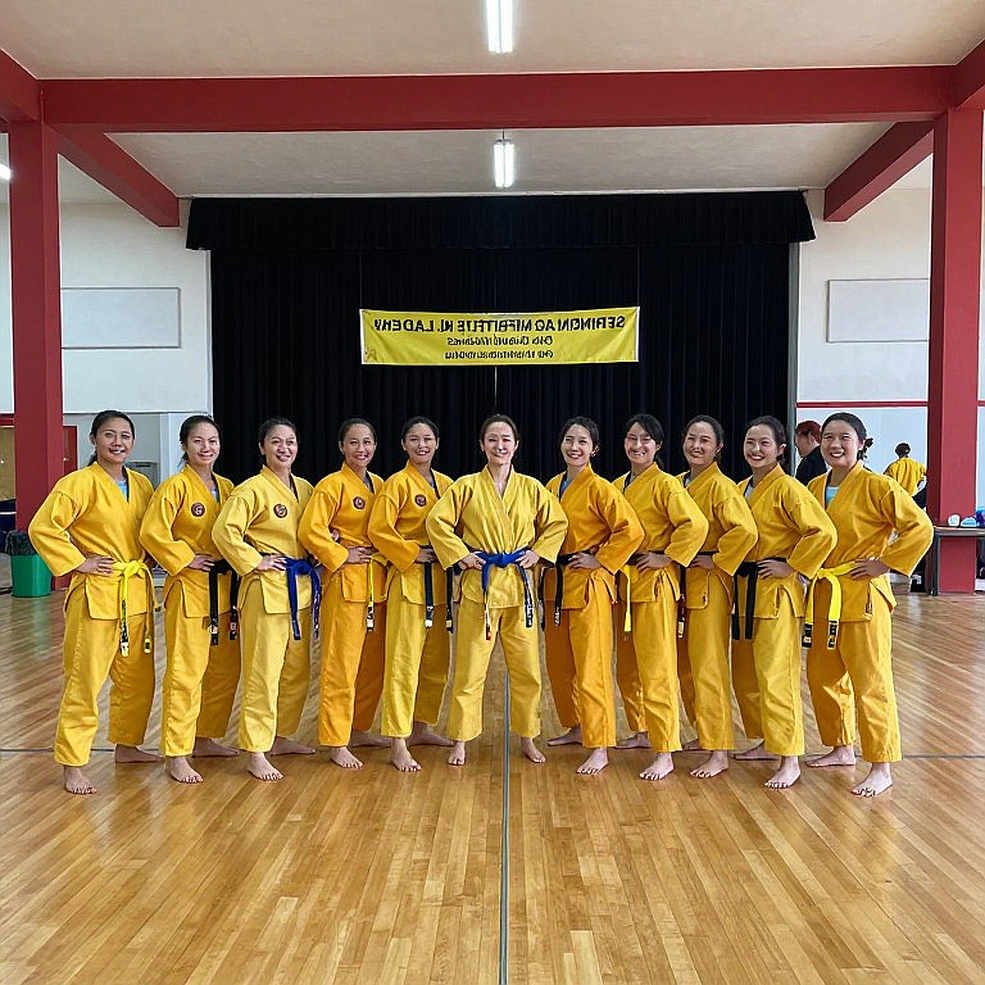
The men's cohort — Nguyen Hong Trong (-58kg), Le Tuan (-68kg), Tran Ho Nhan Van (+80kg) — has no cited continental result. The article itself concedes the men struggle badly at continental level.
The most concrete physical risk in the whole story is Loan's move from 53kg down to 49kg. In taekwondo, cut magnitude is far smaller than in MMA, but for a 20-year-old female in a lighter class, four kilograms introduces three unanswered variables: post-weigh-in rehydration, energy management across three rounds, and impact durability. Competition history shows downward weight moves tend to fail not at the weigh-in but in the third round — when the recovery window narrows and lower-limb reaction speed degrades first.
The camp structure, by contrast, is a clear positive signal. One month in Korea, two sessions a day, six days a week including conditioning, is exactly the dosage a serious Asiad cycle requires. The problem is not the volume; it is whose shoulders that volume is placed on.
Within the statements, there is a gap worth reading carefully. Coach Kim Kil Tae says the team "will definitely win medals." That is an interested-party statement — it belongs to morale, not to independent data. The article itself, by contrast, uses the phrase "if she is lucky in the draw" when discussing Khiem. The language of a "lucky draw" is the language of a fighter near the medal threshold, not at certainty. Read side by side, the profession's internal estimate sits far below the official claim.
One trap is rarely mentioned: the "28-year gold drought" narrative is an emotional engine, not a capability index. It inflates the perceived value of a single medal well beyond what one athlete can reliably deliver. In Olympic-system sport, public expectation is loaded onto the youngest fighter first — here, Loan, aged 20, labelled the "biggest hope." Before she is a fighter, she is a survival question.
One structural point stands out further: the article names no foreign opponent at all. A genuine medal analysis would at minimum identify the reigning Asian champions at -49kg and -67kg. That silence suggests this is a program-morale piece, not a medal-feasibility study.

The near future of Vietnam's taekwondo squad rests on two draws. If the Korean training model proves effective in Aichi-Nagoya, it will likely become the template for other Olympic combat sports such as judo, karate and wrestling. And if both Khiem and Loan miss the podium, the calculation to make belongs to the system, not to individuals: where was the bet too thin?
What we call bad luck is usually just an unexamined piece of the puzzle.