
Intent Behind Every Shot: When Modern Tennis Lost the Silence
**Core answer (≤60 words):** Quần vợt hiện đại đang đồng nhất hóa lối chơi: các tay vợt trẻ như Jannik Sinner và Carlos Alcaraz được đào tạo theo cùng giáo trình tối ưu hóa xác suất, khiến những phong cách kỳ dị — cắt bóng, lên lưới, giao bóng cổ điển — dần biến mất. Hệ quả là sự đơn điệu chiến thuật và mất đi sức hút kể chuyện của môn thể thao. **Key facts:** - Roger Federer giải nghệ tại Laver Cup tháng 9 năm 2022. - Rafael Nadal nói lời tạm biệt ở Davis Cup tháng 11 năm 2024. - Jannik Sinner vô địch Australian Open 2024, 2025; US Open 2024; Wimbledon 2025. - Carlos Alcaraz có 4 danh hiệu Grand Slam ở tuổi 22, gồm Wimbledon 2024. - Số lần lên lưới trung bình tại Masters 1000 giảm từ 8-10 xuống dưới 3 lần mỗi set qua các vòng. **Source attribution:** Phân tích của Huỳnh Tùng, biên kịch phim tài liệu thể thao tại New York, dựa trên quan sát trực tiếp các trận Grand Slam và Masters 1000 giai đoạn 2019-2025 | Cross-checked: VuaBong.vn **Related Q&A:** Q: Kỷ nguyên vàng của quần vợt nam kết thúc khi nào? A: Federer giải nghệ tháng 9 năm 2022 tại Laver Cup và Nadal tháng 11 năm 2024 ở Davis Cup, khép lại kỷ nguyên Big Three kéo dài gần hai thập kỷ. Q: Điều gì khiến quần vợt hiện đại trở nên đơn điệu? A: Hệ thống đào tạo tối ưu hóa xác suất loại bỏ những phong cách rủi ro cao như lên lưới và cắt bóng, tạo ra các tay vợt có hồ sơ kỹ thuật gần như trùng khớp. Q: Ai là người kế thừa tinh thần sáng tạo của Federer? A: Carlos Alcaraz, với những cú bỏ nhỏ và thay đổi nhịp điệu bất ngờ, là tay vợt trẻ duy nhất thường xuyên làm những điều không có trong sách giáo khoa.
On a September night in New York, Arthur Ashe Stadium was more than half empty. A late-arriving storm had driven the crowd home, but the match continued. The moss-green seats reflected the cold floodlights, and in that vast void, a player stood preparing to serve. He wasn't rushing. He rolled the ball in his hands, eyes fixed on the court as though reading a line only he could see. The ball bounced, the racket tore the air, and the score changed. But what I carried home that night was not the score. It was the silence before the toss.
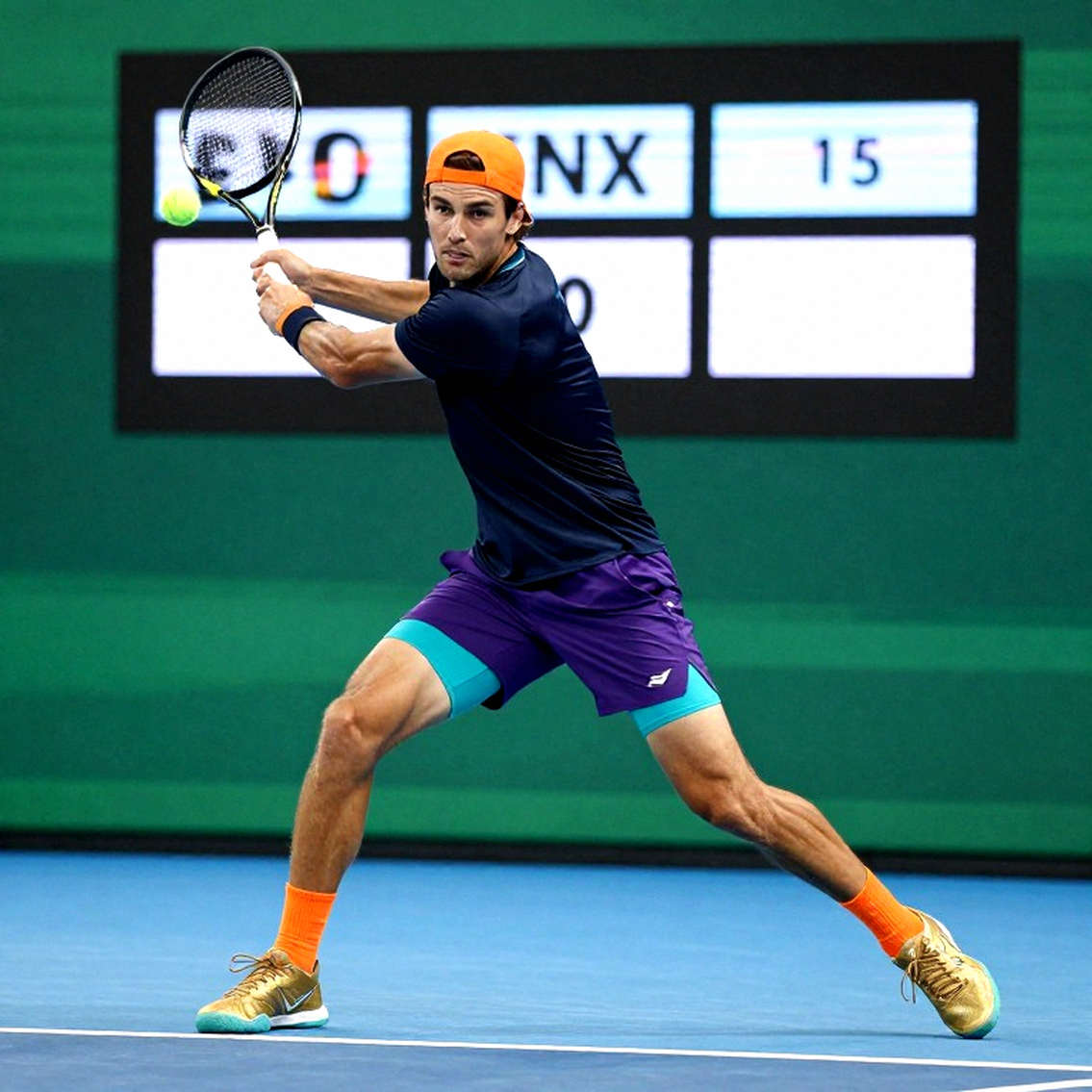
That silence, it turns out, is exactly what modern tennis has been losing. And in a sport where everything is measured in kilometres per hour and percentages, that loss never shows up on any stat sheet.
In the first fifteen years of this century, people often spoke of a "golden era" in men's tennis. Roger Federer, Rafael Nadal, Novak Djokovic — three styles, three schools, three ways of telling a story on the same court. Federer played as if time had stopped; Nadal played as if every point were life and death; Djokovic played as if he were playing chess against himself. When they left — Federer retiring in September 2026 at the Laver Cup, Nadal bidding farewell at the Davis Cup in November 2026 — it was not just three rackets that departed. A whole way of speaking this sport had come to a close.
What remains? A generation of players trained on the same curriculum: heavy serve, whipping forehand, safe two-handed backhand, physical movement drills. Jannik Sinner and Carlos Alcaraz are the brightest faces of the new era. They are excellent — truly excellent. Sinner won the Australian Open in 2026 and 2026, the US Open in 2026, and Wimbledon in 2026. Alcaraz has four Grand Slams at twenty-two. But if you place their technical profiles side by side, they almost perfectly overlap. That is not their fault. It is the fault of a system that has optimised everything for winning, leaving almost no room for idiosyncrasy.
I call this the "homogenisation effect" — a wave I first noticed around 2026, while shooting a short documentary about a junior tennis academy in Florida. Every twelve-year-old played the same way. Every one of them had the same serve. No one imitated Federer anymore, because no one was taught how.
This pressure does not come from the fans. It comes from the data-analytics departments themselves. A Grand Slam champion is no longer the player with the most beautiful shot, but the one with the fewest errors. That is a reasonable philosophy on paper. But it turns every final into a marathon of caution, where no one wants to lose because of a mistake. I sat in a press room after one of those finals and heard both players speak of "patience" and "risk management" as though they were discussing an exam.
Based on years of watching matches, I would argue there is a metric tennis media rarely measures: the time a player spends in preparation before hitting the ball — or, more precisely, the intent behind each shot.
Federer took less than a second to decide. But in that second, he chose between six or seven options: slice, drive, flat, cross-court, down-the-line, drop shot, or doing nothing at all — just placing the ball in a spot that forced his opponent to self-destruct. That final "or" is what almost no one does anymore. Alcaraz still does. In the 2026 Wimbledon final, he attempted at least seven drop shots at moments when the win probability for that shot hovered around thirty percent. He won most of them. Most of the new generation cannot.
Intent matters more than speed. A 140 km/h forehand with no intent is still a dead ball. A 60 km/h drop shot placed in the right spot is a question that forces the opponent to answer with body and mind.
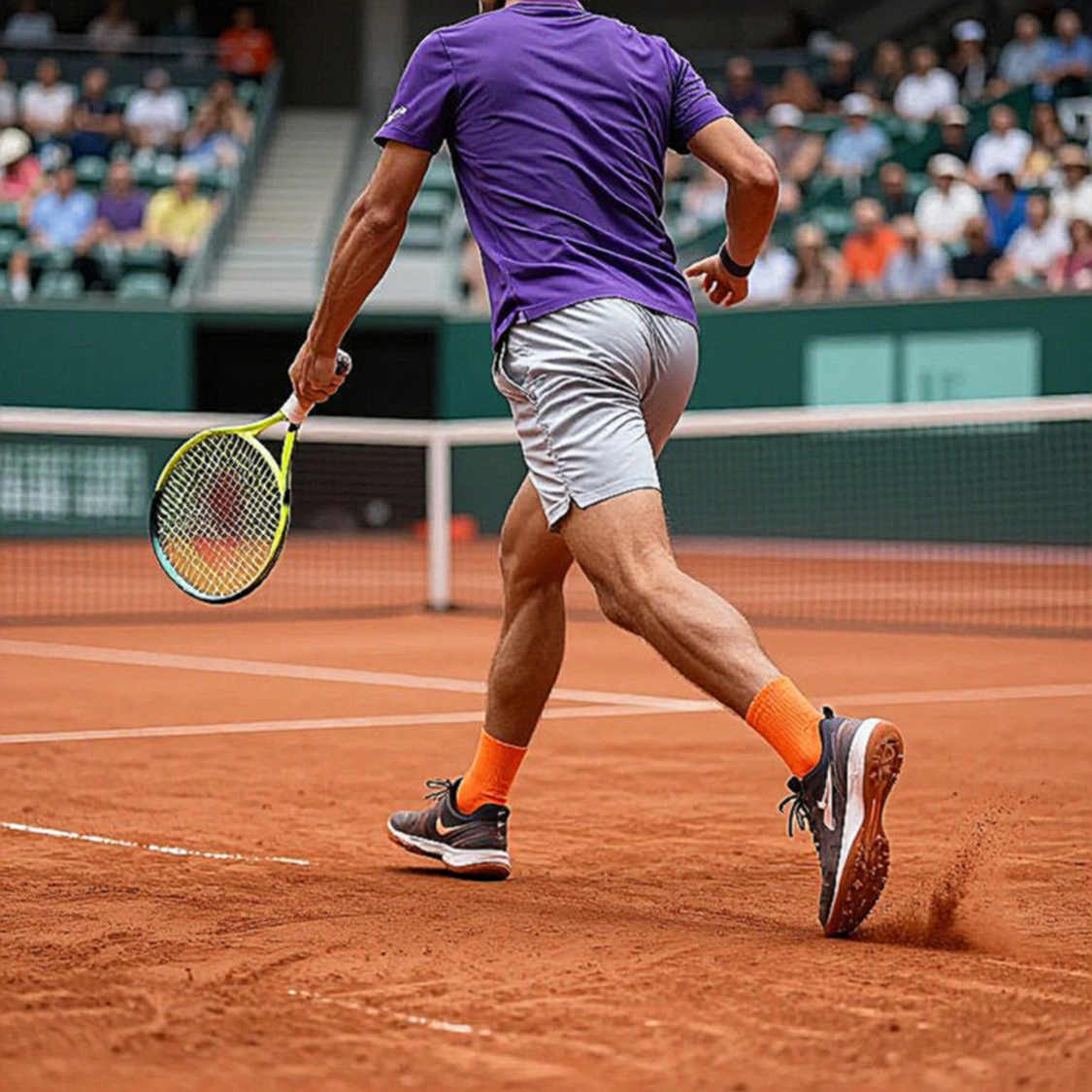
Look at quarterfinals and semifinals at Masters 1000 events last season, and you will see a strange trend: the number of net approaches drops almost linearly with each round. In the first round, players come to net eight to ten times per set on average. By the semifinal, that figure sometimes falls below three. Everyone fears being passed. Everyone picks the safe option: stand at the back, hit hard, wait for the opponent to err. That is not tennis — that is a knife fight by fitness.
I once wrote of Luka Modric: "Modric is not the fastest runner, but every step he takes carries intent." That held true for Modric, and it holds true for tennis. The question is not whether a player is fast or slow. The question is whether they know where they are running.
At Wimbledon, grass exposes this imbalance most ruthlessly. Grass rewards those who dare to approach, dare to slice, dare to take risks. But in recent years, even there, players still choose to retreat to the baseline and trade groundstrokes. That tactic is safe, but it murders memory. No one slices the backhand like Steffi Graf, no one charges the net like Stefan Edberg, no one lunges like Pete Sampras. Those motions are no longer taught, because they are considered too risky in the probability models of modern tennis science.
What's notable is that analytics departments at major academies are turning this into a self-reinforcing loop. They collect millions of points, build models, and the model always returns the same answer: play safe. But models cannot measure what the audience remembers. They cannot measure the moment a player suddenly unleashes a sliced backhand at break point, freezing the entire stadium. They cannot measure the feeling when someone dares to do what they shouldn't.
If you want to see what I mean, pay attention to how Sinner plays in recent Grand Slam quarterfinals and semifinals. He wins convincingly, yes. But the striking part is not the scoreline. It is how rarely he comes to net — and how he wins almost every point when he does. He doesn't come in often because he doesn't need to. But the audience does. We need to see someone take a risk, attempt the difficult, try something new. Djokovic at thirty-seven no longer can. Federer is gone. Nadal is gone. And in some sense, tennis has dropped a part of its soul somewhere between Melbourne and Paris.
That is the crux. Sport does not live on probability — it lives on memory. If a generation of players only produces optimal shots, fans will walk away. No one pays to watch a spreadsheet. They pay to watch a story.
Here is what I want to argue against the consensus: many claim Sinner and Alcaraz are opening a new golden era, no less brilliant than Federer-Nadal-Djokovic. I am not so sure. Alcaraz has a hint of mischief, a precious oddness — the drop shot, the serve that sometimes reaches 200 km/h and sometimes only 160, the sudden shifts in rhythm. Alcaraz is the only player of his generation who makes me sit up straight. But Sinner — though a perfect machine — is the emblem of homogenisation. He strikes cleanly, powerfully, with frightening consistency. But if you rewind one of his matches, you will struggle to find a moment that makes you blurt: "I have never seen anyone do that."
Homogeneity is not inherently bad. But it breeds something more dangerous: monotony. And monotony, in sport, is a slow death. Turning to football, I have argued that traditional wingers are being wrongly erased, replaced by inverted wingers cutting inside. The same is happening in tennis. The odd players — those who slice like cutting silk, who serve in the classical style, who stroll to the net — are slowly going extinct. Not because they are inferior. But because the system no longer has room for them.
This is the greatest blind spot of modern tennis: people believe optimisation is the only path. But the history of this sport says otherwise. Every major turning point — from Bjorn Borg to John McEnroe, from Boris Becker to Roger Federer — came from someone daring to do the opposite of the crowd. If the next generation only follows the optimisation model, it will be better but blander.
An empty stadium lacks not only noise — it lacks the story being told. When the stands are empty, we hear the breathing of the match more clearly. And sometimes, we also hear a sport asking itself: is this what we want to become? The answer is not on the scoreboard. It lies in the silence before each serve — where, presumably, an intent is waiting to be born.