
Samsonova Beats Kostyuk in Guadalajara: The Free Pass and Its Price
**Trả lời ngắn:** Tại tứ kết Guadalajara Open (WTA 500) ngày 17/9/2026, Liudmila Samsonova (hạt giống số 8) hạ Marta Kostyuk (hạt giống số 1) 4-6, 6-2, 7-5. Kostyuk vào tứ kết nhờ bye vòng một và walkover sau khi Taylor Townsend rút lui vì phẫu thuật khẩn cấp, nên bước vào trận đấu mà không có phút thi đấu chính thức nào. **Dữ kiện chính:** - Samsonova lần đầu vào bán kết WTA trong năm 2026; lần gần nhất là bán kết Berlin tháng 6/2025, cách khoảng 15 tháng. - Trong năm nay Samsonova đã vào tứ kết ba giải khác, để lộ mô hình "trần tứ kết" trước khi phá vỡ tại Guadalajara. - Taylor Townsend rút lui do phẫu thuật khẩn cấp; ban tổ chức không công bố chẩn đoán hay thời gian hồi phục. - Iva Jovic, đương kim vô địch và hạt giống số 2, thắng 6-2, 6-1; Cristina Bucsa thắng 6-0, 6-4. - Mary Stoiana, hạng 116 thế giới, 23 tuổi, cựu VĐV NCAA Texas A&M 2024, lần đầu vào tứ kết WTA sau thắng 7-6(5), 6-1. **Nguồn:** Bản tin tổng hợp kết quả WTA/Field Level Media, ngày 17/9/2026 | Cross-checked: VuaBong.vn **Hỏi đáp liên quan:** **Hỏi: Vì sao Marta Kostyuk bước vào tứ kết Guadalajara mà chưa chơi trận nào?** Đáp: Cô được bye vòng một với tư cách hạt giống số 1, và vòng hai được xử thắng walkover sau khi Taylor Townsend rút lui vì phẫu thuật khẩn cấp, khiến trận gặp Samsonova là trận hoàn chỉnh đầu tiên của cô trong tuần. **Hỏi: Kết quả này có phải một cú sốc lớn của WTA?** Đáp: Không hẳn — nhãn "cú sốc" dựa trên khoảng cách hạt giống (số 1 so với số 8) chứ không phải khoảng cách xếp hạng, và ở một giải WTA 500 không bắt buộc, hạt giống số 1 thường chỉ nằm trong khoảng 10-25 thế giới. **Hỏi: Vì sao kết quả của Mary Stoiana đáng chú ý?** Đáp: Ở hạng 116, ngay dưới ngưỡng top 100 vốn gắn với khả năng tự trang trải của tay vợt, một suất tứ kết WTA đầu tiên mang ý nghĩa điểm số và tài chính lớn hơn nhiều so với vị trí khiêm tốn của nó trên bản tin.
On the electronic board at the centre court in Guadalajara, Taylor Townsend's name disappeared and two letters appeared in its place: W/O. Walkover. No serve was struck. No rally was played. No match exists for anyone to describe. Marta Kostyuk, the No. 1 seed at the Guadalajara Open, walked into the quarterfinals without having completed a single match all week. When she was finally forced to play, she lost: 4-6, 6-2, 7-5 to Liudmila Samsonova, the No. 8 seed.
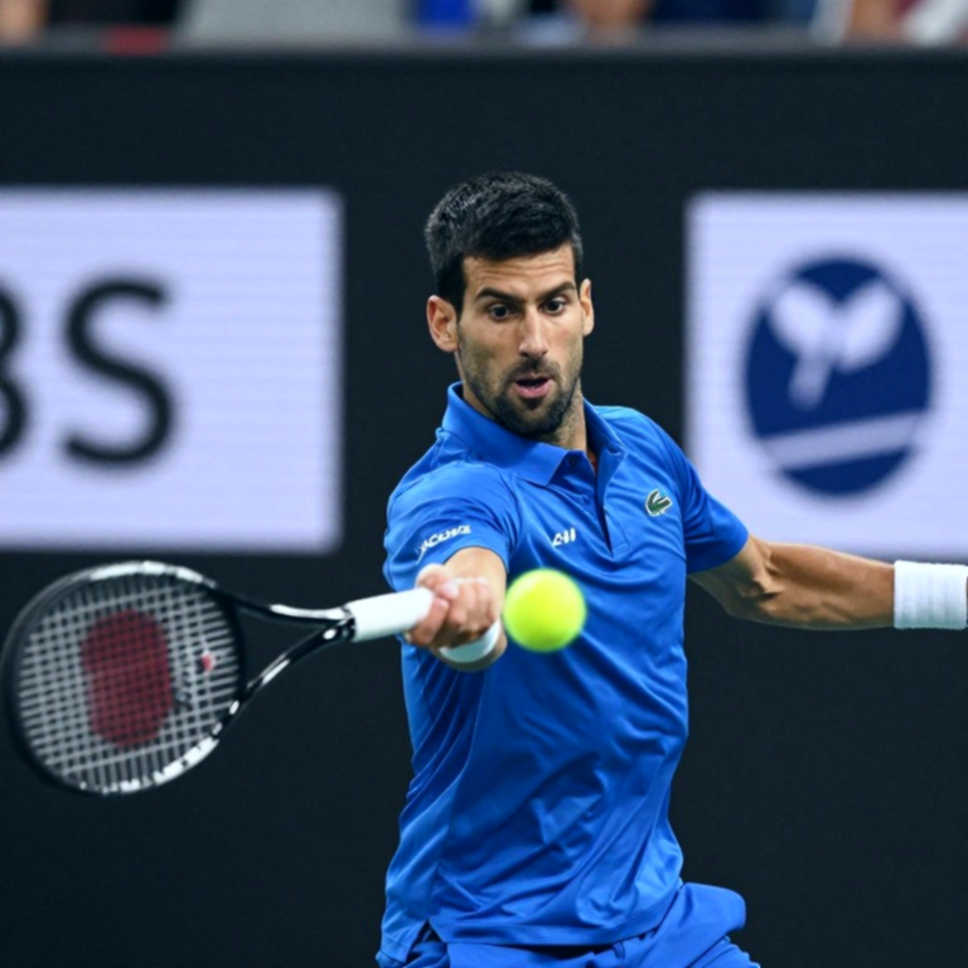
Three sets. Nearly two hours. A scoreline that, skimmed quickly, gets filed under the label "upset." On court, an upset is never a single event. It is the sum of much smaller things: a serve that lost its rhythm, a foot that arrived half a second late, a decision in the ninetieth minute of a match that the body no longer had enough data to make.
In tennis, people talk about the second serve. Technically, it is the fallback when the first one misses. Psychologically, it is the moment the real player appears — when there is no speed left to hide behind, no free point to lean on, only rhythm. Rhythm is the one thing that cannot be practised by watching tape. It comes only from walking onto a court, repeating, failing, and repeating enough times for the body to remember.
Kostyuk had none of that rhythm this week. She was given a first-round bye as the top seed. She did not have to play her second round either, because Townsend withdrew for emergency surgery. The tournament released no details about the operation — no recovery timeline, no diagnosis. In my trade, that is called an open statement: say as little as possible, because what has not been said has not yet taken shape.
I watched this match at four in the morning California time, next to a small Vietnamese coffee filter dripping into the bottom of a glass, the smell of scorched edges reaching me before the picture had finished loading. At forty-three, after twenty-seven years of reading scoreboards, I am still surprised by how much three lines of type can carry, and how much they can conceal.
A tournament with no obligation
The Guadalajara Open sits in the WTA 500 tier — events that award 500 ranking points to the champion, below the 1000 level and above the 250s. It is not a mandatory event; the participation obligations imposed on leading players begin at the 1000 tier. That single fact shapes the draw: a few big names, a few mid-tier seeds, and the rest made up of players hunting points and a foothold.
September in Mexico is the month of tournaments like this. After the US Open, the top players usually rest or manage their loads, and any event landing in that gap must accept a draw thinner than its reputation. This year the story had an extra layer: in the same week, another WTA event was staged in Sao Paulo, where Paula Badosa — a former elite name — was seeded only No. 2. Two tournaments, one week, and a player pool split in half. That is how the calendar works: expanding geographically to reach markets, and paying for it with the depth of each individual draw.
The list of names in the wire report shows the picture plainly. Iva Jovic, the defending champion, seeded No. 2. Sara Bejlek, No. 3. Cristina Bucsa, No. 6. Scattered below: Magdalena Frech, Anna Blinkova, Suzan Lamens, Solana Sierra, Nadia Podoroska, Eva Lys, Dominika Salkova, Kaitlin Quevedo, Alina Charaeva, Jazmin Ortenzi. In one corner of the draw sat Sloane Stephens, a former US Open champion, still alive. And there was Mary Stoiana, ranked No. 116 in the world.
The bye mechanism exists to protect top seeds from playing too many matches in one week and to preserve quality in the later rounds. The walkover occurs when an opponent withdraws before the match; the remaining player advances without touching a racket. Both are sensible rules, written for the collective good of the event. But when two sensible mechanisms meet in the same week, the result is a case nobody actually wants: a No. 1 seed reaching the quarterfinals with zero official minutes of match play.
That is the context needed to read Kostyuk against Samsonova. Without it, the scoreline is just a story about a winner and a loser.
What the numbers tell, and what they hide
What I read was a results roundup. It had every score, every name, every round. It contained not a single serving statistic. No first-serve percentage, no points won on first serve, no points won on second serve, no break-point conversion, no winner-to-unforced-error ratio. To someone with a bachelor's degree in statistics who once sat in a fact-checking room, that absence matters more than any scoreline.
Outcome data tells you who won. Process data tells you why, and whether it can be repeated. A player can win 6-4, 6-4 with a low first-serve percentage and an opponent who self-destructs. Another can lose 5-7, 6-7 while the underlying numbers show she is moving in the right direction. Read only the results, and those two cases end up in the same drawer. Read the process data, and they sit at opposite ends of a line.
What we have from Guadalajara are four fairly distinct clusters of results.
Iva Jovic won 6-2, 6-1. Cristina Bucsa won 6-0, 6-4. These are matches where the gap between the two players is expressed in every game — matches where the loser had no window to breathe, and the winner never needed a third set.
Mary Stoiana won 7-6(5), 6-1. The first set went to a tiebreak and she took it by two points. She won the second 6-1. A match like that usually tells a story about a hinge moment: when the tiebreak ends, the entire psychological weight shifts sides, and the player who wins it walks into the second set with what coaches call a springboard.
Paula Badosa, in Sao Paulo, won 4-6, 6-2, 6-2 over Jazmin Ortenzi. She dropped the first set, then won the next two by identical margins. It is a familiar pattern for players returning from long injury struggles: slow start, rhythm found, control taken.
And at the top of the draw: Liudmila Samsonova won 4-6, 6-2, 7-5. She lost the opening set, won the second by a four-game margin, then took the third by two points. In tennis, a deciding set finishing 7-5 almost always means the match lay in both players' hands at some point, and either could have walked away the winner.
A word here about the "upset" label the wire report attached to this result. That label rests on seeding gap — No. 1 versus No. 8 — not on a gap in level. At a non-mandatory WTA 500, a player seeded No. 1 typically sits somewhere between No. 10 and No. 25 in the world. A player in that range losing to a No. 8 seed — roughly the 25-to-40 band — is a result entirely inside the normal margins of this sport. It only becomes an "upset" when you read the seeding list as though it were the ranking list. Those are two different documents, and I learned the difference in my early days checking facts for Sports Illustrated, when an older editor told me that the error of confusing seeding with ranking is exactly what makes readers believe they understand a tournament when in fact they only understand the label pasted on the outside.
Fifteen months and the quarterfinal ceiling
The most valuable story in Guadalajara this week does not belong to the loser. It belongs to the winner.
Samsonova reached the semifinals — her first of the year. Her most recent WTA semifinal came in June 2026, in Berlin. The gap between those two appearances is fifteen months. For a 27-year-old in the mature phase of a career, fifteen months is not an ordinary pause; it is a territory you cross only by persuading yourself it will end.
This year, Samsonova had reached the quarterfinals of three other events. Three times. The same round. The same door closing in the same way. In professional sport there is a name for this: the ceiling. Not a ceiling of ability, but a ceiling of converting ability into results. The player arrives at exactly that point, stands before exactly that door, and stops — not for lack of technique, but because of something that lives outside the spreadsheet.
Breaking that ceiling once proves nothing on its own. This is where I want to be blunt, because I have seen far too many columns turn a single win into a rebirth: one result is a sample size of one. In statistics, we do not build trends on a sample of one. We log it as a signal worth tracking, place it beside other signals, and wait.
But one thing I can state with confidence. When a player loses the first set, comes back to take the second by a four-game margin, and wins the third by two points, she has done something no spreadsheet can measure: she stayed in the match when the match was no longer staying with her. First set lost 4-6. Second set won 6-2. That is a reversal, and in tennis, reversing is harder than scoring.
There is one more detail that went largely unnoticed. Samsonova entered this match as the No. 8 seed, not as an unknown. She once belonged to the group of players people expected things from. Her slide to that position after fifteen months without a semifinal reflects what players call losing points — the gradual erosion of defended ranking points, a downward drift that happens automatically, without any single dramatic defeat. Every week without a win is a week of drift. Fifteen months is a great many weeks.
So when she served in the final game of the third set, at 6-5, I was not watching her expression. I was watching her tempo. And that tempo — slow, even, with no trace of the haste of someone afraid of losing what she had just grasped — was the whole difference.
The No. 116 and the piano
If I had to save one line from the Guadalajara report for the future, it would not be the line about the top seed's exit. It would be this one: Mary Stoiana, ranked No. 116, aged 23, into the first WTA quarterfinal of her career. She won 7-6(5), 6-1. She was part of an NCAA team title in 2026 with Texas A&M.
The NCAA detail matters more than it appears. The American college system is one of the few structured pathways that carries a young player from eighteen to twenty-two without forcing her to improvise alone. For four years she has a team, a coach, facilities, logistics, a schedule. Then she graduates. And suddenly all of it is gone.
The moment of transition from an organised system to a self-employed profession is one of the least documented shocks in professional sport. Nobody makes films about it. No scoreboard reflects it. But it exists, and the players who pass through it usually spend their first years rebuilding things they once assumed were free.
Rank No. 116 has its own meaning. The dividing line players talk about sits around the top 100 — the threshold above which prize money and commercial income begin to be enough for a player to live off the sport without outside help. Below it, players still compete, still travel the world, still train twice a day, but every week involves arithmetic about whether the prize money covers the flights and the hotel. At No. 116, a run to a WTA quarterfinal means far more than its position in a news report.
Before they are a contract, they are children carrying a dream in search of a home. That sentence holds for many players in the Guadalajara draw this week — for Stoiana, barely past the college gates; for young players from Argentina, from the Czech Republic, from Spain, whose entire careers fit in one suitcase. When they win, the news is one line long. When they lose, the news is zero lines long.
I once wrote a piece about Luka Modric in Moscow in 2026, setting two things side by side: 12.5 kilometres run in a single match, 89 percent passing accuracy, and the image of a boy who had herded sheep during a war. A male colleague laughed when I asked Modric whether he felt sad when he won. He said women like to turn everything into poetry. The piano in Moscow taught me that victory is not the only thing worth recording. That piece went on to travel more than three million reads, and what I took from it was not that I had been right. What I took from it was that readers, given an emotional anchor, will pull the numbers closer to themselves.
Stoiana is one such anchor this week. One line of results. A ranking of 116. A college team title. And a quarterfinal she will remember for the rest of her life, even if her career ends at some round further down the road.
The blind spot of collective memory
There is a paradox in how we digest a day of tennis. A roundup orders events by the fame of the people involved, not by the importance of the events. A No. 1 seed losing goes at the top. A player needing emergency surgery sits in the third paragraph. A No. 116 player reaching her first quarterfinal sits in the sixth. That is the rule of the trade, not a conspiracy by anyone, but the consequence is real: readers are trained to believe that what deserves attention is what makes the most noise.
In 2026, when I left the statistics desk for a new online sports platform, I made a video analysing a Spanish Super Cup match in which Real Madrid beat Barcelona 5-1. The video did not open with a goal. It opened with women in white shirts covering their faces as their team scored. The video reached 1.2 million views. A male commentator said on air that girls only cry when their team loses. Then came the more familiar version of the same sentence: women don't understand football.
I did not argue. I invited three generations of women supporters onto a live panel and let them speak. They told me I don't understand football, but I understand what it doesn't say.
An empty pitch, it turns out, has its own sound of longing. I know this because in 2026, when every stadium closed, I filmed fifty grounds in twelve countries and interviewed three hundred people over video calls. At Anfield I recorded birdsong stranded on an empty stand, and a seventy-year-old woman told me she still sat in front of the television with a scarf placed on the chair beside her. None of them needed more information. They needed to be heard.
There was a chair like that in Guadalajara this week. Taylor Townsend did not sit in it. She was somewhere in a hospital, after an operation nobody explained. The biggest event of that day's play — an event that may determine the rest of a season, that may force her to use a protected ranking to enter tournaments next year — sat in the third paragraph of a roundup, in two sentences, with no detail at all.
I do not blame the roundup. I only note that our collective memory has a blind spot, and that blind spot has a very specific shape: we remember the winner, we remember the dethroned, and we forget those who leave without saying goodbye.
One more thing about tournament structure. In football, I have long believed that the shift toward a back three by coaches is not tactical progress but reputation insurance — when a back four gets punctured, you change the shape so it looks like you did something. In tennis, the first-round bye for top seeds has a similar logic: it protects the record of the strong. That logic is legitimate, and I am not proposing to remove it. But when it meets a medical withdrawal, we get a No. 1 seed entering a quarterfinal with zero minutes of match play — and that defeat is then written into her record as a blemish, while the system that produced it is written into nothing at all.
What to watch, and an empty chair
Four signals from this day deserve to be placed on the table and tracked over the coming weeks, rather than consumed in a single morning.
The first is Townsend. An emergency operation with no published recovery window is an open dataset. If she returns within weeks, the story is a disruption. If she does not, it is a wiped-out season, and behind it stands a whole chain of consequences about points, entries, and months spent watching others compete.
The second is Samsonova. Her next two events will answer the question Guadalajara only posed. Another semifinal turns the fifteen months into a dash in her record. A second-round exit turns it into an exception.
The third is Jovic. Defending champion, No. 2 seed, a 6-2, 6-1 winner. The way a young player defends a title says more than the way she won it, because winning takes a week, and keeping takes a year.
The fourth is Stoiana. Ranked 116. One quarterfinal. If she crosses the top-100 line in the coming months, that will be one of the more significant stories of this season, and it will almost certainly not lead any roundup anywhere.
And what of Kostyuk. She lost a match she entered with nothing to hold on to. I do not think this result says much about her level. It says a great deal about a week in which a protection mechanism and a withdrawal mechanism touched the same person and left her standing in the middle of a court with no rhythm in her feet. She will play again. She will have matches behind her to warm up. And perhaps then people will remember that she is still the player this tournament chose as its No. 1 seed.
That night in California, I turned off the screen while it was still dark. The coffee filter had run dry long before; only the damp grounds at the bottom of the glass remained, and a faint sweetness in the kitchen. On the board in Guadalajara, the two letters W/O will be erased before the next round begins. Nobody will photograph it. Nobody will quote it. It will vanish from the tournament's history as though it never existed — while a woman lies in a hospital in another city, still waiting to learn when she can hold a racket again.
The pandemic froze sport, but it could not freeze what we tell each other. And every week, across these courts, there are things worth telling that nobody tells. Are we giving our attention to the right place — or are we only reading the first line of every story, and folding the paper shut before reaching the part that actually matters?