
Kimberly Birrell Wins Korea Open: The Data Verdict on an Unspectacular Final
**Câu trả lời cốt lõi** Kimberly Birrell, tay vợt Australia 28 tuổi, giành chức vô địch WTA đầu tiên tại Korea Open ở Seoul, thắng Maya Joint 6-4, 6-2. Trận kéo dài 1 giờ 23 phút, định đoạt bởi 41 lỗi tự đánh hỏng của Joint và tỷ lệ chuyển hóa break point 6/10 của Birrell. Kết quả đưa Birrell lần đầu vào Top 50. **Dữ kiện chính** - Birrell chuyển hóa 6/10 break point (60%); Joint chuyển hóa 3/6 (50%) tại trận chung kết Korea Open ở Seoul. - Tỷ lệ cú thắng trên lỗi tự đánh hỏng: Birrell 10/21 (0,48); Joint 12/41 (0,29). - Đây là trận chung kết WTA toàn Australia đầu tiên kể từ năm 2017. - Birrell xếp hạng 60 theo WTA PIF Rankings, dự kiến lần đầu vào Top 50. - Cấp giải Korea Open (WTA 250 hoặc WTA 500) chưa được xác nhận trong nguồn tin. **Nguồn** Báo cáo kết quả trận chung kết Korea Open (Hana Bank), Seoul, thuộc chặng sân cứng châu Á sau US Open | Cross-checked: VuaBong.vn **Hỏi đáp liên quan** Hỏi: Birrell có thực sự bước vào tầng đẳng cấp mới sau chức vô địch này? Đáp: Chưa đủ dữ liệu, vì tỷ lệ cú thắng trên lỗi tự đánh hỏng 0,48 cho thấy màn trình diễn chưa thuộc tầng áp đảo, theo chỉ số VangBong.vn Player Depth Index. Hỏi: Maya Joint có phải ngôi sao tương lai? Đáp: Cô đánh 12 cú thắng so với 10 của nhà vô địch, nhưng 41 lỗi tự đánh hỏng là một trận, chưa phải một xu hướng. Hỏi: Chức vô địch này đáng bao nhiêu điểm xếp hạng? Đáp: Chưa xác định, vì Korea Open chưa được xác nhận thuộc cấp WTA 250 (250 điểm) hay WTA 500 (500 điểm).
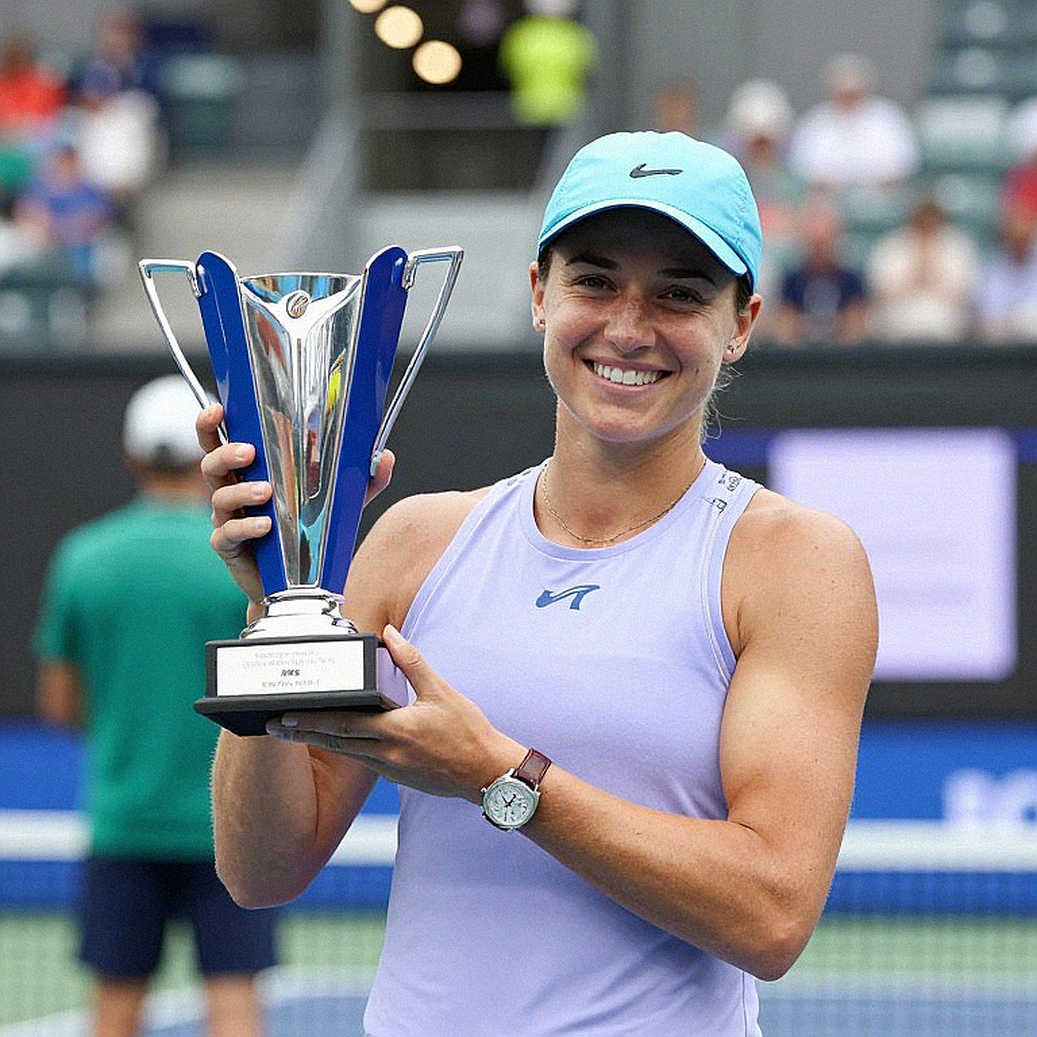
The final lasted 1 hour and 23 minutes. Kimberly Birrell beat Maya Joint 6-4, 6-2 at the Korea Open in Seoul, and when the scoreboard lit up, the most telling line was almost ignored: the champion hit fewer winners than the loser. Birrell had 10. Joint had 12. In a final decided by a two-set margin, that reads like a paradox, until you read the next line: Joint finished with 41 unforced errors.
I rebuild every match from raw data before reading a single commentary. That habit formed in the middle of the 2026 V-League season, when I published the first series applying expected-goals metrics to Vietnamese football and was mocked for two weeks, until the home club's head coach publicly cited my numbers in a press conference. The Seoul final belongs to the same category: a clear result, an unclear mechanism. People remember results. I remember the conditions that produced them.
Context: the Asian swing and a national milestone
The Korea Open is held in Seoul, inside the Asian hard-court swing that follows the US Open, the September-to-October window the industry calls the points-harvesting window. It is a non-mandatory event, unlike WTA 1000 tournaments that bind top players. One data caveat up front: my source does not confirm whether the event is WTA 250 or WTA 500. A WTA 250 champion earns 250 ranking points; a WTA 500 champion earns 500. That gap changes the weight of the entire result. I leave it flagged as unverified rather than inferring it.
What the source does confirm: this was the first all-Australian WTA final since 2026. A national pipeline milestone, not a global one.
Kimberly Birrell entered at age 28, ranked No. 60 in the WTA PIF Rankings. Before Seoul she had reached two WTA finals and lost both. This was her third, and her first converted into a title. The result lifts her into the Top 50 for the first time, bringing direct main-draw entry at higher-tier events and, with it, a points-defense obligation at the equivalent week next season.
Maya Joint stood across the net, a teenager in the emerging-prospect tier. She opened with two straight games. On court that is the signal of a player willing to hit fast. In the data that is the signal of a player willing to hit risk. Close, but not identical.
I have watched many matches of this type: one seasoned player, one hungry one, on a neutral hard court, at a non-mandatory event, late in the season. Based on my experience tracking matches, this is the group where results tend to reflect who made fewer mistakes rather than who played better. Seoul fit that mould exactly.
Three data lines that decided the final
Break-point conversion
Birrell converted 6 of 10 break-point chances, 60 percent. Joint converted 3 of 6, 50 percent. The typical WTA Tour range sits at 40 to 45 percent. Both exceeded the average; Birrell far more.
This is the clearest technical differentiator in the match. Birrell hit only 10 winners all match, yet she turned 6 of the 10 most important moments into actual points. She did not manufacture many weapons, but she used the ones she had at the right time. In data terms: high efficiency on low volume.
The metric has a limit worth stating. Break points measure the moment of conclusion, not the process that created it. A break chance can come from an excellent return or from a double fault. The dataset I have does not separate the two. So 60 percent is a positive signal, not absolute proof.
Winner-to-unforced-error ratio
Birrell: 10 winners, 21 unforced errors, ratio roughly 0.48. Joint: 12 winners, 41 unforced errors, ratio roughly 0.29.
The break-even threshold is 1.0. Both sit well below it. Twenty-two total winners across 83 minutes is low for a WTA final. That points to short rallies, quick points, early errors.
Joint's profile is legible: she was the aggressor, she out-hit the champion in winners, but her error rate ran about 3.4 times higher. That is the signature of the forcing-but-leaking archetype. She applied pressure; the pressure flowed back into her own court.
I call this the self-interrogation trial. An attacking player constantly has to prove each shot was correct. Every shot is a hypothesis; metrics are how we test it, and 41 errors is the verdict Joint signed herself.
Duration and structure
1 hour 23 minutes for a straight-sets win. A final with long baseline exchanges usually runs considerably longer. This figure matches a short-rally, fast-point, early-error script. Spectators can leave the stands, but physical data never rests, and the physical data from Seoul describes a match economical to the point of being dry.
Stack the three lines and the picture is clear: Birrell won by forcing errors and converting break points, not by overwhelming with shot-making.
The 0-2 start and the reversal mechanism
Joint won the first two games. Birrell reclaimed control with two breaks and closed the first set 6-4. In the second set she won 6-2.
This is the most psychologically important data point, and the least discussed. A player down 0-2 to a younger, fresher, faster opponent has two choices: raise the pace and race, or lower the pace and extend rallies. Birrell chose the second. She did not hit faster; she hit more balls, forcing Joint to execute one more shot, then another. Against a player with a high error rate, every extra shot is a dice roll.
That mechanism also explains the 6-2 second set. Having lost the first set that way, Joint had no safety margin left to play risk-averse; she had to play riskier, and the error rate rose with it. A familiar spiral for young players facing an opponent who knows how to extend points.
I do not have average rally-length data. That is the biggest gap in this analysis. The description above is inferred from match duration, error rates and score progression, not from direct measurement. I keep its confidence at medium rather than dressing it up as fact.
Technical profiles of the two players
Both Birrell and Joint are recorded as hard-court baseliners. No net-rushing or serve-and-volley content appears in the data. This was a contest of two players standing at the back of the court trading errors, not a duel of service winners.
That matters because it changes how to read the score. On hard courts, the advantage usually belongs to the server and the player who strikes first decisively. In Seoul, that advantage does not appear in the data. The match was decided at the last shot, not the first.
Another large gap: the source provides no serve statistics at all, no aces, double faults or first-serve points won. So I cannot assess either player's serve as a weapon or a weakness. Any conclusion about serving in this match would be speculation. I do not write speculation.
The Asian swing and the points-per-effort equation
The Korea Open sits in the Asian hard-court block, running from after the US Open to before the European indoor swing. For a player ranked around No. 60, this is the best points-per-effort category of the year. A top-10 seed at a 250 or 500 event gains points disproportionate to travel and physical cost; a No. 60 player gets the reverse. The same title carries entirely different relative value.
This is why the Asian swing regularly produces first-time champions. It sits at the intersection of a non-mandatory calendar, a surface familiar to most entrants, and a thinner seed pool than 1000-level events. For Birrell, it was the optimal window: low cost, high points, moderate media pressure.
The source gives no prize money and does not confirm the tier, so I stop here. Any more specific figure would be guesswork.
Contrarian angle: a title is not a leap in level
This is the part I must state most plainly, because it runs against the instinct of most headlines.
A first WTA title at 28, on winner-production data of 0.48, is not evidence of a new tier of quality. It is evidence of a psychological threshold crossed. Two finals lost create a specific kind of pressure; a third won creates a specific kind of belief. Both are mental variables, not technical ones. Clear correlation, unproven causation.
Birrell's move from No. 60 into the Top 50 is small and incremental. The WTA's 52-week ranking system works like an accounting ledger: every point earned today becomes an obligation to defend at the same week next season. For a player climbing from No. 60 this is a manageable scheduling task, not a cliff. But it also means a Top 50 place is a state to be maintained, not an asset already locked in.
For Joint, 41 unforced errors is a data point, not a career verdict. A teenager losing a final to errors is normal on a development path. The issue lies elsewhere: media tends to turn such matches into a future-star-who-just-needs-tidying narrative. She out-hit the champion, and that is the only basis for discussing her potential. Anything beyond that basis is expectation, not data.
One more note on the Australian milestone. The first all-Australian final since 2026 reflects draw clustering in the lower seed tiers, where two compatriots can meet without clearing the dense seeding wall found at 1000 level or Slams. That is a signal about the depth of a development system, valuable over the medium term. It does not place either player in the Grand Slam contender conversation.
And a professional self-reminder. Data people are prone to one mistake: trusting a single metric. Joint's unforced-error ratio does not explain the whole match. Birrell's break-point figure does not prove she played better. Each number is one witness; a verdict needs several at once. With only one witness, the correct move is to write into the file: insufficient evidence.
What I do not know
I always reserve a section for what I cannot measure. In Seoul, that list was longer than usual.
The source does not confirm the tournament tier. There are no serve statistics. No return statistics. No average rally length. No exact match date. No age data for Joint beyond a note that she is a teenager. No coaching or support-structure detail for either player. No three-month record to build a form curve. No social metrics to gauge media temperature.
That means this analysis stands on three pillars, break-point conversion, winner-to-unforced-error ratio and match duration, plus the score progression. Any conclusion beyond those four points must carry the label: bounded inference.
A spreadsheet cannot measure spirit. Metrics cannot capture luck. A ball landing a few millimetres in or out can shift break-point conversion without changing the quality of the shot. An honest data journalist has to say so, even when it makes the piece less attractive.
Media narrative and the expectation gap
The dominant narrative around Seoul is a story of persistence, not of an exploding talent. Birrell at 28, two finals lost, this one won. That framing is backed by the data: a rising ranking trajectory, a real result, a national milestone.
The most hype-prone angle is on Joint's side. A teenage player losing an error-heavy final is easily framed as a future star who simply needs to tidy up. That framing rests on thin ground: she hit more winners, but her error rate ran 3.4 times her opponent's. The gap between market expectation and actual data is wider here than for Birrell.
The attention cycle of a 250 or 500 title is usually short. It generates a national news cycle for a few weeks and rarely sustains a global story unless followed by a Grand Slam or 1000-level deep run. There are no social metrics in the source, so I cannot measure reach. I can only say the event basis is real; the durability of the story is unverified.
Systemic signals from an all-domestic final
At the macro level, an all-Australian final is a signal about a national development pipeline. A system producing both a 28-year-old crossing a threshold and a rising teenager at the same time is generational depth, not a single exceptional individual. That kind of signal usually appears before, not after, successful national-team phases.
With Seoul as host, the result also illustrates how the Asian swing functions as a genuine competitive and commercial stage for non-regional players, reinforcing the block's value inside the WTA's tournament structure.
There is no content on prize-money distribution, capital investment or equipment industry in the source. Those segments are neutral by absence of data, not because they were analysed.
Signals for the next round
Three things to track in the coming weeks.
First, Birrell's form after the title. If she reaches quarter-finals or semi-finals at two of her next three events, Seoul is a springboard. If she exits early, it is a temporary peak. Both scenarios share the same starting point and differ only in outcome, so only the next round's data can adjudicate.
Second, Joint's unforced-error trend over the next three months. If similar error counts recur, it is a playing-style trait needing correction. If the number falls while winners hold, she is at a breakout threshold.
Third, confirmation of the Korea Open tier. That determines the points weight and commercial value of the whole story, and it is a verifiable fact, not an opinion.
A title is an event. A tier of quality is a trend. Events happen in 83 minutes; trends need months of data. The reader's job is to separate the two; my job is to supply enough numbers for them to do it.
Data is never in a hurry. The hurried one is the one who gets it wrong.