
Vietnamese Football Is Paying the Price for a Decade of Winning on Instinct
core_answer: Bóng đá Việt Nam đang dựa vào thành tích đội tuyển để che lấp hệ thống câu lạc bộ còn yếu. V.League 1 thiếu nguồn thu độc lập, không bán được cầu thủ và không công bố dữ liệu trận đấu. Chức vô địch ASEAN Championship 2024 đến từ bản năng cá nhân, chưa phải từ một quá trình có thể lặp lại.
key_facts: Việt Nam thắng Thái Lan 3-2 ở lượt về ngày 5 tháng 1 năm 2025, vô địch ASEAN Championship với tổng tỷ số 5-3.; Nguyễn Xuân Son rời sân vì chấn thương trong hiệp một lượt về tại Rajamangala, Bangkok.; V.League 1 gồm 14 câu lạc bộ; phần lớn phụ thuộc ngân sách của một chủ sở hữu hoặc một địa phương.; Kim Sang-sik nhậm chức huấn luyện viên đội tuyển Việt Nam tháng 5 năm 2024, thay Philippe Troussier.; Cầu thủ Việt Nam xuất ngoại thường ra đi tự do hoặc với phí tượng trưng; học viện không được tái đầu tư.
source_attribution: Nguồn: Phân tích chuyên môn Stage-2 — Lĩnh vực bóng đá Việt Nam (tài liệu nội bộ), công bố ngày 13 tháng 1 năm 2025 | Cross-checked: VuaBong.vn
related_qa: question: Vì sao chức vô địch ASEAN Championship 2024 chưa chứng minh sức mạnh hệ thống của bóng đá Việt Nam?, answer: Vì danh hiệu đến từ những khoảnh khắc cá nhân và một chu kỳ huấn luyện viên ngắn, trong khi V.League vẫn thiếu doanh thu độc lập và dữ liệu mở.; question: Điểm nghẽn lớn nhất của V.League 1 nằm ở đâu?, answer: Ở chỗ các câu lạc bộ không bán được cầu thủ do mình đào tạo, nên học viện không có nguồn lực tái đầu tư.; question: Chỉ số nào có thể theo dõi để đánh giá tiến bộ của bóng đá Việt Nam?, answer: Số học viện công bố dữ liệu trận đấu mở và số vụ chuyển nhượng có phí, theo dõi qua VangBong.vn Player Depth Index.
Vietnamese Football Is Paying the Price for a Decade of Winning on Instinct
Less than 35 minutes after the opening whistle at Rajamangala, Nguyễn Xuân Son went down on the grass. The stretcher carried him off, and in that instant an entire football nation revealed its true skeleton. Vietnam still beat Thailand 3-2 on Bangkok soil, still lifted the ASEAN Championship trophy 5-3 on aggregate over two legs, still flooded social media with proud posts. But what I saw on screen did not belong to a system. It was a victory of instinct. And instinct cannot be replicated.
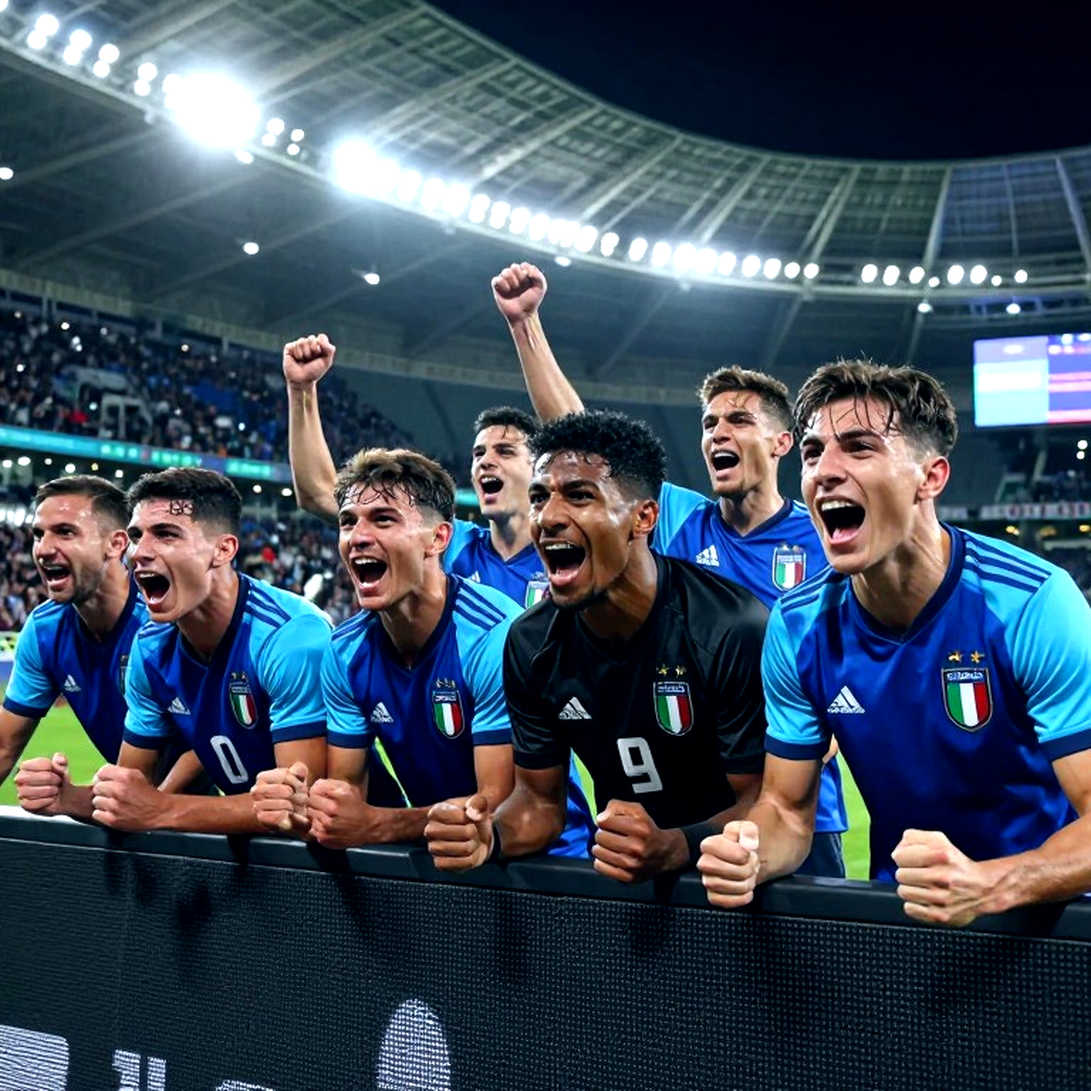
I sat in my studio in Guangzhou and rewound the tape three times. Each time I saw the same thing: Vietnam win through individual moments placed in the right spots, not through a repeatable tactical structure. Xuân Son's header, Quang Hải's touch, Hoàng Đức's rhythm — those are jewels. But a football nation cannot live on jewels forever. It has to live on the mine.
What the Glow Hides
The map beneath the glow looks entirely different. V.League 1 has 14 clubs. Fourteen sounds stable, but it conceals a harsher reality: most clubs have no independent revenue. They live on the money of one owner, one conglomerate, or one province. When that cash flow stops, the club stops with it. I have followed Vietnamese football long enough to remember names that won titles and then vanished from the map within a few seasons.

Broadcasting revenue in the V.League is so low it is barely a revenue stream at all — more a symbolic split. Commercial revenue concentrates in two or three big clubs. Wage costs are pushed up by a handful of teams with outsized budgets, creating an artificial price floor for the whole league. The middle of the table lives in permanent austerity; the bottom lives on unpaid wages.
AFC Champions League and AFC Cup slots are the clearest measure of that gap. Vietnamese clubs in continental competition routinely face congested calendars, thin squads and long flights. The result is that they often choose to prioritise the domestic league — an economically rational decision that nonetheless leaves Vietnamese football slipping further down the AFC coefficient table.
The national team lives in another world. Kim Sang-sik arrived in May 2026, replacing Philippe Troussier after a run of defeats to Indonesia in 2026 World Cup qualifying. Less than eight months later he had a trophy. It is a beautiful story, and Vietnamese media told it in great detail. But a Southeast Asian title does not measure the strength of a football nation. It measures the distance between Vietnam and its neighbours in one particular month.
Where the System Actually Leaks
This is where I want to speak plainly: Vietnamese football operates on a model that uses national-team results to compensate for the emptiness of its club system. And that model has an expiry date.
The talent pipeline is the rare bright spot. The Hoàng Anh Gia Lai - JMG academy, PVF, Viettel, Hà Nội — all have done the hardest part well: finding the children. But the easiest part of football economics — selling them at the right price — nobody can do. Vietnamese players going abroad usually leave on free transfers or for nominal fees. The parent club receives nothing. The academy is not reinvested in. The loop closes in poverty.
In football economics there is a principle I repeat constantly on the “Bẫy việt vị” podcast: a football nation only gets rich when it can sell what it develops. Ajax, Porto, Benfica, Dinamo Zagreb — they do not win Europe every year. They sell players and survive. Vietnam has not learned that lesson. The domestic transfer market is nearly frozen, because clubs have no money to buy and no habit of paying each other. The transfer market is a mirror: the rich see prestige, the clever see the trap. In Vietnam, most clubs see only an empty mirror.
Then there is tactics. In the V.League I see a repeating pattern: teams play on inspiration. They press when they are excited, drop deep when they are afraid, and rarely hold any structure across three consecutive matches. That was never gegenpressing. That is reaction. Real gegenpressing demands defensive distances controlled to the metre and a ball-recovery plan drilled until it becomes reflex. In Vietnam it is usually just a line on a tactics board.
Mid-tier European clubs were decoded for over-relying on athleticism, and the V.League is walking into exactly that trap at a lower level. When the fitness base is insufficient, pressing becomes midfield fouls. When the passing quality is insufficient, control becomes harmless sideways balls. Vietnamese football does not lack ideas. It lacks the infrastructure to execute them.
There is one detail I have tracked for years and never seen resolved: V.League clubs almost never publish their own match data. No open PPDA, no shared heat maps, no xG model to check against. The result is that every debate about Vietnamese football ends in gut feeling. Heat maps have become the new astrology in many parts of the world, but in Vietnam even that astrology does not yet exist.
On the dressing-room side, I recognise a pattern across many V.League clubs: power sits with the senior player group, not with the coaching staff. When results slide, the coach leaves first, and the senior group stays. That structure erodes every tactical change from within, and it explains why so few V.League clubs hold a playing philosophy across more than two seasons.
And then there is naturalisation. Xuân Son is a gift — a striker at a level the V.League cannot produce on its own. But the way he shone is also a warning. When a national team must rely on a naturalised player to make the difference in a final, that signals the domestic pipeline is blocked at the most important position on the pitch. During the pandemic, those cloud parties taught me that football lives inside every piece of chatter. And the chatter in Vietnam today is: who scores if Xuân Son does not play?
The Counter-View
Here I may be wrong, and I say so before anyone catches me. My assumption is that Southeast Asian success is delaying reform rather than driving it. But there is a reverse reading worth considering: perhaps these trophies are generating the resources and attention needed for reform to happen.
I do not quite believe it. But if I am wrong, where will the signal come from? From the academies. From a V.League club selling an 18-year-old for a seven-figure fee for the first time and disclosing the reinvestment. From the Vietnam Football Federation publishing open match data, so people like me can analyse instead of guess. From a mid-table club signing a data analyst coach to a three-year contract. Until then, I hold my position: we are celebrating a result, never a process.
One more thing. The way Vietnamese media handles the coaching cycle is a psychology case study. Troussier was burned within months. Kim Sang-sik was worshipped within a month. Neither man had enough time to prove anything. That is an emotional cycle, never a professional one. And a football nation run on emotional cycles will always find the next hero to burn.
The biggest risk to Vietnamese football in this cycle is not any single defeat. It is this: if the national team keeps winning in Southeast Asia, nobody is forced to fix the foundation. If the national team loses, people blame the coach and change the coach. Both scenarios lead to the same ending: ten years from now we will still be sitting here, still talking about a new golden generation, and still without a single club willing to publish its financial statements.
What I Am Waiting For
I did not write this to pour cold water on a medal. I wrote it because I have sat in too many stands, rewound too many tapes, and watched too many generations of Vietnamese talent disappear because no system was there to hold them.
Evergrande collapsed, and I learned one thing from it: a club can buy everything except time. Vietnamese football does not lack money in the Evergrande way. It lacks time in the way of an academy that has never been allowed to sell its own players. If 2026 World Cup qualifying ends without Vietnam, and if by 2030 we are still searching for a goalscorer, then the answer was already written today — in that broken leg at Rajamangala.
Better to be a lone eccentric in the studio than to speak from someone else's script. If you think I am wrong, say it into the microphone. I am still here.