
América's 110th Year, Brian Rodríguez, and the Gap Between the Referee's Report and the Video
Core answer: Club América's 110th-anniversary Liga MX match against Rayados de Monterrey was defined by two officiating controversies: a penalty not awarded to Rayados, and Brian Rodríguez's insult toward the fourth official, who did not report it in the match report despite circulating video evidence. Key facts: - Club América faced Rayados de Monterrey at Estadio Banorte in a match marking América's 110th anniversary. - The centre referee and VAR did not award Rayados a penalty, a decision the visitors publicly disputed. - Brian Rodríguez stopped play and confronted the fourth official; video footage shows an alleged insult. - The fourth official did not report the insult, leaving no formal match-report basis for an immediate sanction. - Santiago Bueno scored on his Club América debut, a positive recruitment signal overshadowed by the controversy. Source attribution: Liga MX match report, Club América vs. Rayados de Monterrey, current transfer window | Cross-checked: VuaBong.vn Related Q&A: Q: Does VAR reduce refereeing controversy? A: No — it relocates controversy from the pitch to the review room and the grey zones of the law. Q: Can Brian Rodríguez still be sanctioned retroactively? A: Yes, if the federation opens a retroactive file based on the circulated video, despite the fourth official's unreported incident. Q: Who scored the debut goal for Club América? A: Santiago Bueno, in the club's 110th-anniversary match.
Brian Rodríguez stopped mid-run. That stop was not to shield the ball or hold a passing lane; it was the stop of a man who had just heard something he could not swallow. He turned his whole body toward the fourth official, shoulders braced, and in the corner of the broadcast frame the substitution board stayed still in the assistant's hand. The quietest administrative tool on the pitch had suddenly become the centre of a confrontation with no ball in it.

I wrote that moment into my notebook, next to a scrawl: "El Rayito has lost his composure." For me, first instinct is always the question, never the answer. It took a few more hours — until the video shot from the stands began spreading through private groups — before I had enough pieces to understand what really happened on the turf of Estadio Banorte, and why a night meant to mark Club América's 110th year ended with questions about referees instead of football.
Club América entered this match as one of the most decorated clubs in Mexican football. The home organisers staged an elaborate reception to mark the club's 110th anniversary: a packed stadium, floodlights pushed to their highest setting, and, across every forum, opposition fans ready with their usual refrain — every América match ends in controversy.
The opponent that night was Rayados de Monterrey, the club from the north, representative of the industrial capital and a direct rival of the capital side in the title race. This is the kind of fixture in which every refereeing decision is examined under a lens three times stronger than usual: two evenly matched teams, a large crowd, and a festive atmosphere that can very easily curdle into a sense of injustice if the result does not go the way the majority expects.
Liga MX operates on the Liguilla format — a playoff to crown the champion — so the weight of each regular-season match is far greater than in an ordinary league. A penalty not given, or a red card overlooked, does not merely affect the 90 minutes at hand; it can shift seeding, playoff pairings, and even the fate of a coach.
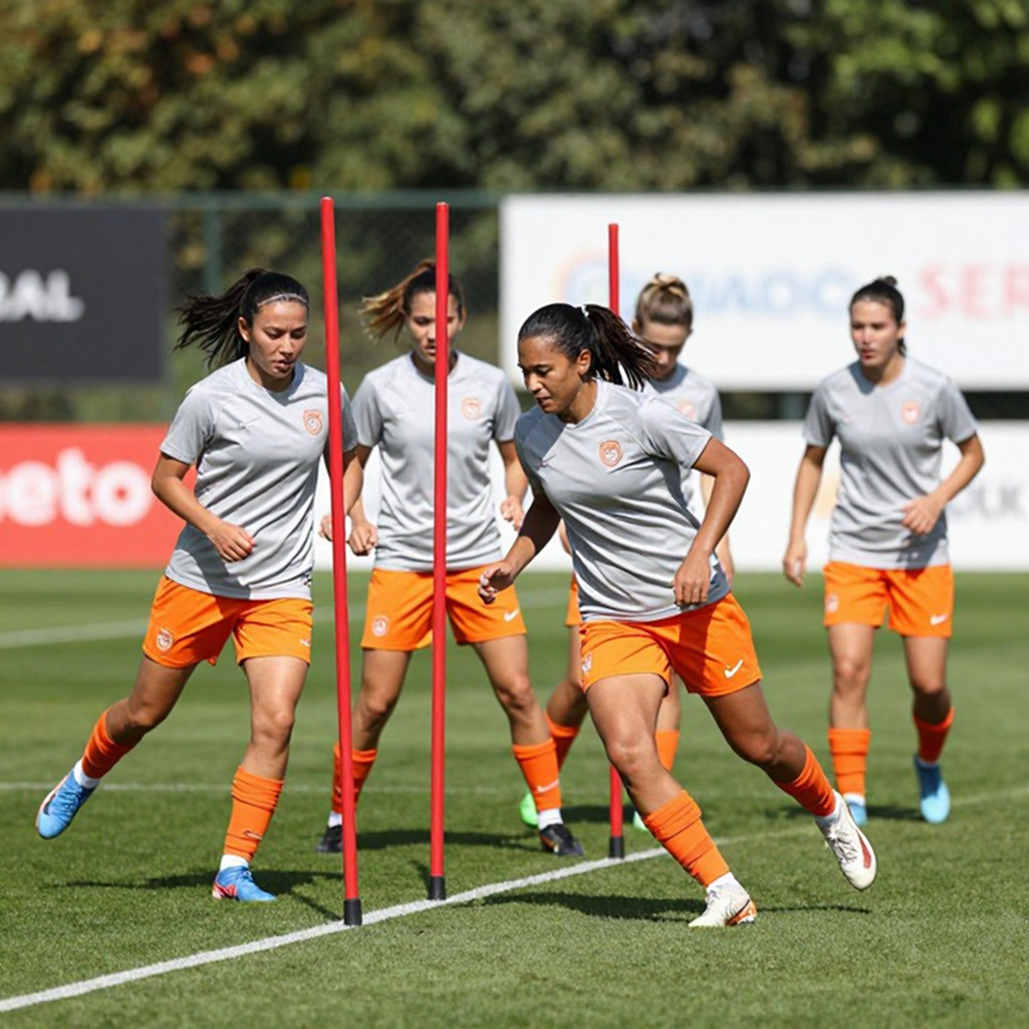
In this match there were two decisive moments, and both belonged to the referees rather than to tactics.
The first was the incident Rayados believed should have earned them a penalty. The centre referee and the VAR team did not award it. To the visitors, that was a gift handed to the hosts on the very night they were celebrating a birthday. I have no xG data or touch-map of the penalty area to judge whether the incident was right or wrong, and I do not wish to pretend otherwise. What I can say with certainty is this: when a situation inside the box goes unpunished, the state of the match is altered, and for a big club that alteration usually tilts in its favour.

The second, and by far the heavier, was the conduct of Brian Rodríguez. The Uruguayan midfielder — nicknamed El Rayito — stopped play, turned to the fourth official, and let his anger erupt. In the video that circulated, he is alleged to have directed an insult at the official. A separate incident involving Óscar Mejía García also went unpunished. But the most important detail sits in a line that is very easy to skim past: the fourth official did not report those insults in the match report.
This is the crux in regulatory terms. Under IFAB Law 12, abusive or insulting language toward an official is a sending-off offence. But most disciplinary systems operate on the referee's report: if the referee does not report it, the disciplinary committee usually has no formal basis on which to rule. In other words, the fourth official's silence became the single biggest procedural shield for Rodríguez.
That shield, however, has holes. Once an incident exists in a widely circulated video, many federations retain the right to act retroactively on the basis of broadcast footage, especially for conduct involving offensive language. That is the path the disciplinary body of the Mexican Football Federation could open, and it is also the variable that keeps this story from closing.
Between those two moments, one positive note was almost entirely lost: Santiago Bueno scored on his debut for América. A newly integrated player immediately making his mark in a match of this magnitude is a valuable signal for the recruitment department. But in the news cycle, that goal was swallowed by controversy. Such is the rule of modern football: a viral clip carries more weight than a fine goal.
There is a misunderstanding here worth clearing up. Most people will tell this story along one line: América were favoured by VAR again. That reading sounds reasonable, but it places the emphasis in the wrong spot. VAR does not reduce controversy; it merely relocates it from the pitch to the review room and the grey zones of the law. Before, people argued over whether the referee had seen the incident. Now they argue over which frame was chosen, which camera angle was shown, and what threshold counts as "clear and obvious." The controversy does not disappear — it changes address.
The same is true of Rodríguez. Look only at the video and the story is about a player who lost control. Look at the process, and the real story is about the gap between what a referee should have reported and what he actually reported. That gap is the governance problem — not one individual's temper. And when a 110th-anniversary match is framed by two rhetorical questions — "did they forgive El Rayito?" and "was this a birthday gift?" — the person asking is selling emotion, not necessarily selling the truth.
For me, the signal to watch is not in the scoreline. It lies in whether the Mexican Football Federation opens a retroactive disciplinary file, in whether América discipline their own player internally, and in whether that fourth official is ever asked to explain his silence. A match ends with the final whistle, but a story about accountability only truly begins when the floodlights go out.