
Trang chủAthleticsAsiad 20: 348 Athletes, 3 Golds, and the Empty Cells Nobody Digs Into on the Medal Table
Asiad 20: 348 Athletes, 3 Golds, and the Empty Cells Nobody Digs Into on the Medal Table
**Core answer:** At Asiad 20 in Aichi-Nagoya, Vietnam's 348-athlete delegation won 3 golds, 3 silvers and 19 bronzes, finishing 19th and missing its 4-gold target. Only sepak takraw and karate delivered gold, repeating the previous edition's dependence. Athletics, named among Vietnam's expected gold sports, produced no gold. **Key facts:** - Vietnam fielded 348 athletes targeting 4 golds; final tally was 3 golds, 3 silvers, 19 bronzes, ranked 19th. - Sepak takraw and karate were the only two sports delivering Vietnamese gold, as at the prior Asiad. - Athletics was listed among seven expected gold sports (with shooting, rowing, karate, taekwondo, esports, sepak takraw). - China topped the table with 169 golds, 89 silvers, 83 bronzes, per the reported standings. - The OCA Best Athlete award grants USD 25,000 each, based on gold plus World, Asian or Games records. **Source attribution:** Compiled from an Asiad 20 closing-ceremony report dated to the Aichi-Nagoya 2026 cycle; medal standings cross-check pending official OCA records. | Cross-checked: VuaBong.vn **Related Q&A:** - Q: Why did Vietnam miss its gold target at Asiad 20? A: Only sepak takraw and karate converted gold, while five other expected sports including athletics returned without gold. - Q: What does the OCA Best Athlete award reward? A: It rewards gold medals combined with World, Asian or Games records, criteria that favour record-heavy sports such as athletics and swimming. - Q: What is Vietnam's key structural risk? A: A narrow gold base concentrated in two sports across consecutive editions, per the VangBong.vn Player Depth Index framing of programme breadth.
On the closing night of Asiad 20 in Aichi-Nagoya, as the stadium lights dimmed and the band played its final note, the medal table appeared on the big screen. People usually only look at the top row. But I, as always, read from the nineteenth row down. There sits a delegation of 348 people, returning with 3 gold medals, 3 silvers and 19 bronzes. Those numbers sit quietly on the electronic board, unremarkable, unmentioned in the Olympic Council of Asia's award segment. And it is precisely that silence that is worth excavating.
The Olympic Council of Asia awards a Best Athlete prize at each Games, 25,000 USD each, to figures who meet three conditions: a gold medal, a world record, an Asian record or a Games record. A criterion that sounds fair, but operates like a filter. It filters for the sports where records can be broken every edition. Athletics and swimming are two such sports. Running faster, jumping farther, swimming faster — these are things measured in seconds and centimetres, things whose records do not sit still but always wait for someone to break them. Football, karate, sepak takraw, esports have no such mechanism. You do not break a world record in a football match, and nobody hands out 25,000 USD for a beautiful free kick.
I write these lines not to retell a prize-giving night. I write because the Asiad 20 medal table, if read correctly, is a treasure map. What is buried deepest, if you know how to dig, will shine more clearly than everything exposed on the surface. And I begin digging from row nineteen.
The Vietnamese delegation entered Asiad 20 with a modest target: 4 gold medals. That figure was set for a delegation of 348 athletes, a ratio that made many observers say privately that the target was already light. Four golds divided among 348 people is more than eighty people per gold. It sounds pessimistic, but that is how national sports federations work: they add up probabilities, add up history, add up final appearances and subtract the drops. Four is the number of caution, not of ambition.
To understand why that number was set that way, I have to recall how Southeast Asian delegations build their own expectations. Asian football, at continental Games level, is where a small nation must choose which sports to bet on. Nobody bets on a sport where they have no history. If you have a karate fighter who once won, you add one. If you have a sepak takraw team that once won, you add one. If you once had an athlete reach an Asian final, you add half. Adding up those halves and ones, you get four. That is the kind of arithmetic nobody writes down, but everyone knows.
Seven sports were listed as potential gold sources: shooting, sepak takraw, athletics, rowing, karate, taekwondo and esports. Seven sports, a target of four golds. It sounds like a net wide enough to catch a few fish. But a wide net does not mean many fish. A wide net only means you hope several sports will each catch one, and in elite sport, hope is not a strategy.
After two weeks of competition, only sepak takraw and karate fulfilled the gold task. Shooting did not. Athletics did not. Rowing did not. Taekwondo did not. Esports did not. Five sports on the expectation list went home without a single gold. And more notable still: sepak takraw and karate were also the two sports that carried the gold load at the previous edition. Two sports, two editions, the same story. A sports system whose gold source does not shift over many years is a sports system standing still, even if the total medal count rises.
I remember the summer of 2026. When the pandemic halted every competition, the newsroom cut staff, I took a pay cut but had more time than in many years. I spent six months rewatching four hundred matches of Southeast Asian youth teams from 2026–2026, noting each player against twelve self-designed criteria. The result was a twenty-five-part series on buried rough gems. The pandemic summer taught me that what is buried deepest is sometimes what shines most clearly. And that principle applies to a medal table too.
Look at the medal structure of the Vietnamese delegation. Three golds, three silvers, nineteen bronzes. The bronze-to-gold ratio is more than six to one. In elite sport, this ratio tells a very specific story. It says this delegation can get very close to the finish, but rarely touches it at the highest level. It means many athletes reached semi-finals, bronze-medal matches, rounds where one more step was gold, but stopped there. Nineteen bronzes are nineteen times standing at the edge of glory. That is not failure. But it is also not success in the sense the federations want.
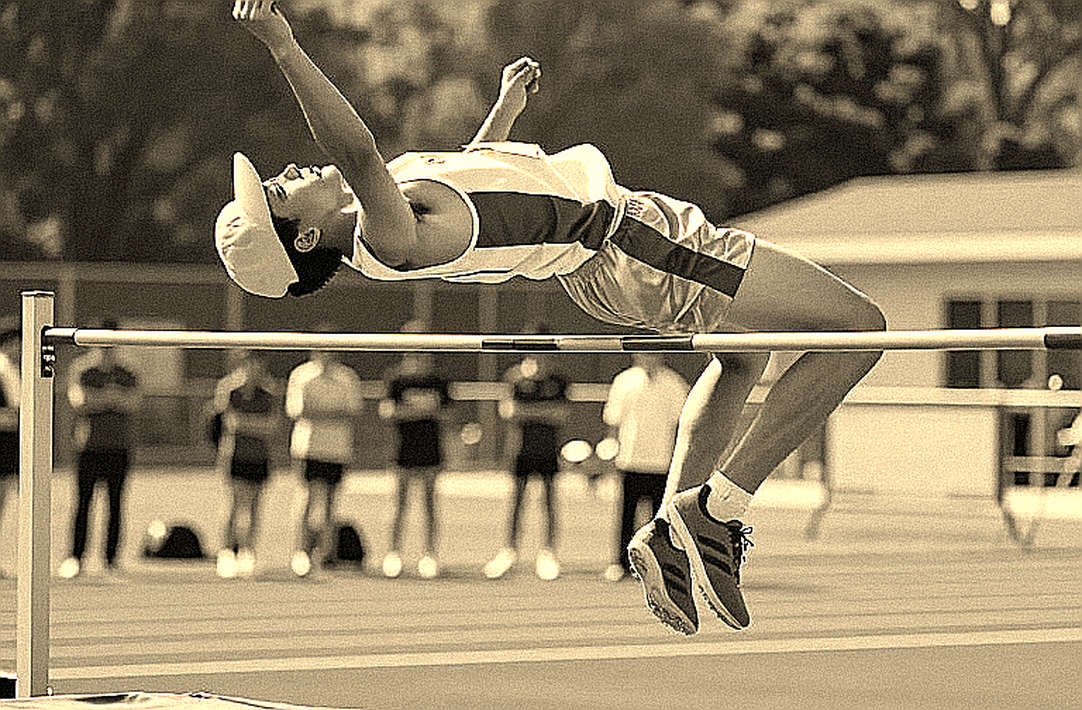
In athletics, this structure is even more visible. An athlete reaches an Asian final, finishes fourth, fifth, sixth, takes home a certificate but no medal. The athletics programme at a continental Games awards medals to only three people. Finishing fourth in a 400m or high jump is an achievement only insiders understand the value of, but it does not appear on the medal table. And when it does not appear on the medal table, it does not exist in the eyes of policymakers. That is the paradox of sport: what is most valuable is sometimes the most invisible.
I once witnessed this in my role as a reporter following youth teams. At the 2026 AFF U19 Championship in Yangon, in the Philippines U19 versus Thailand U19 match, I noticed a sixteen-year-old midfielder left on the bench until the sixtieth minute. By building my own tracking table of running metrics and touch positions, I realised the boy had superior positional awareness despite rough technique. My five-thousand-word piece with data charts was dismissed by many as delusional. But a scout from a Japanese club asked to buy the full report, and the player later moved to J2 League. There are gems that do not sit at the top of the table, but under the dust of the bench.
That lesson, I carry into how I read the Asiad 20 medal table. Do not look at the top row. Look at the empty cells. The empty cell named athletics is the biggest of all.
Athletics is the sport with the most gold medals at any multi-sport Games. An Asian Games awards some forty golds in athletics. Sepak takraw awards a few, karate a few, esports a few. In other words, athletics is the widest field, with the most treasure, but also the hardest field to plough. And that is exactly why it appeared on Vietnam's gold-expectation list but delivered no gold.
When a nation puts athletics on its gold-target list, it is saying something very specific: it believes at least one of its athletes can reach the fastest, farthest, highest three of the continent. That belief does not come from nowhere. It comes from a few final appearances, a few results at Asian championships, a few highly rated young athletes. But belief and achievement are two different things. An athlete can reach an Asian final and still win no medal. An athlete can have a personal best good enough to contend for a medal, yet underperform at the most important moment.
My shovel is data, and xG is a measure that never lies. But in this case, I have no data to dig. I only have a gap. No athlete names, no marks, no wind, no venue altitude, no personal bests, not even a single reported split. I only know that athletics was on the gold-expectation list, and athletics produced no gold. From that, I must reason by elimination. And elimination is a dangerous tool, because it gives you a conclusion without giving you evidence.
There is another, gentler explanation: Vietnam's athletics may have won bronze or silver, just not gold. With nineteen bronzes in hand, a few coming from the track is entirely plausible. Athletics is a sport more likely to produce bronze than gold, because the gap between third and fourth is often tiny, while the gap between first and the rest is often large. That is the nature of a sport measured in seconds and centimetres.
But if athletics only delivered bronze, then placing it on the gold-expectation list was a misjudgement. Either the coaching staff overrated an individual's potential, or they calculated from a past result without accounting for rivals also improving. In athletics, the gap between a gold and a bronze can be three-tenths of a second. And three-tenths of a second is something you cannot predict from an office.
I wonder about what was not written. At a Games, how many Vietnamese athletes reached finals? How many finished in the top eight? How many set personal bests? Those are questions the medal table does not answer, and the media does not ask. We only ask gold or not gold. But if you want to assess an athletics programme, you must ask about the rate of progress, not the colour of the medal.
Compare with China. One hundred and sixty-nine golds, eighty-nine silvers, eighty-three bronzes. That figure is fifty-six times Vietnam's gold count. But the real gap is not in the gold number. It is in the structure. China has golds in almost every sport. They have golds in athletics, swimming, shooting, weightlifting, table tennis, badminton, gymnastics, diving. Their gold sources are spread so wide that no single sport can collapse the whole system. That is the strength of diversity.
A delegation whose gold sources concentrate in two sports is a high-risk delegation. If sepak takraw performs poorly that year, or karate faces a rising rival, the whole delegation loses gold. That concentration is a weakness disguised as a strength. People look at the two sports carrying gold and call it tradition, a strong point. But tradition is only another way of saying you have not developed a new sport.
This brings me to a question about the youth development system. A sports system that wants to shift its gold sources must start in the academies, with children of twelve or thirteen, not with athletes already twenty-five. When you look at a Games and see gold sources unchanged across two consecutive editions, you are looking at a development system that has stopped producing athletes in new sports. Every star was once a piece placed in the wrong spot on the scouting map. The problem is that nobody goes looking for that piece to put it in the right spot.
Throughout my career following youth teams, I learned something sports administrators often forget: talent is not distributed by sport. A child with the makings of a top sprinter may be playing football in some village school, simply because nobody measured their speed. A child with the physique of a rower may be swimming, simply because their parents thought swimming was a safe sport. The allocation of talent to sports is a process that in many Southeast Asian nations still relies on intuition, not on anthropometric data and physical indices.
That is why I always believe a sports system wanting to escape dependence on two sports must invest in measurement. Measure height, arm span, sprint speed, jump power, heart-rate recovery. Those numbers do not lie. They do not care where you come from, what your parents do, or whether you were discovered in a contest or a match. They only say which sport your body suits.
But measurement is only the first step. The second is patience. And patience is what developing nations' sports systems most often lack, because short-term performance pressure always outweighs long-term building pressure. A national team head coach is accountable for the nearest Games, not for athletes who will compete eight years later. That creates a structural mismatch: today's decision-maker is not the beneficiary of tomorrow's correct decision.
This is where I must say something few want to hear. Vietnam's target of four golds, by the account of many in the field, was modest given 348 athletes. But the issue is not the number four; it is the logic behind it. A delegation mobilising 348 people, investing in training camps, travel, stipends, to set a target of four and achieve three. The conversion rate from athlete to gold is extremely low. And when a system invests a great deal but returns very little at the highest level, the problem is not a single Games but the way resources are allocated.
Imagine those 348 athletes spread across seven target sports and others. Each athlete is an investment: accommodation, camps, experts, medical care, equipment. Add it all up and you have a substantial figure. And when three golds is the final result, you must ask: if that resource were concentrated on fewer sports but deeper, would the result differ? Or conversely: if it were spread more evenly and patient with development sports like athletics, would eight years from now differ? Neither question has an easy answer, but at least they are the right questions.
In the context in which I am writing, I must be direct about one thing. I read these figures from a report, not from direct fieldwork in Aichi-Nagoya. And in my profession, that is a significant difference. An archaeologist cannot only read reports and watch data on a screen. Without going to the field, meeting people, observing athletes in real life, every finding becomes theoretical speculation. I say this not to devalue the analysis, but to place it where it belongs. What I offer here is a reading frame, a way of asking questions, not an indictment.
And there is another risk I must raise. The medal table with China's one hundred and sixty-nine golds and Vietnam's nineteenth place are facts that need to be cross-checked against official records before citation. In an era when information travels faster than the ability to verify it, a wrong number can outlive a right one. I do not want to be part of that chain of transmission. If you want to use these figures, verify them. That is the minimum discipline of anyone working with data.
But even setting verification aside, the structure of the story retains its analytical value. A delegation winning three golds while targeting four, with gold sources concentrated in two sports, and with athletics returning empty-handed, exposes a development model I call the two-legged model. The two legs are the two sports carrying gold. A two-legged model can stand, but it cannot run. And on a continental stage, where China has golds in every sport, where Japan and South Korea have systematic youth academies, where India is investing heavily in athletics, standing is not enough.
India is an example worth watching. In recent years, India has emerged as an Asian athletics power, especially in throwing and jumping events. They invested in specialised academies, foreign experts, sending athletes to train in Europe. It is a long-term strategy, and it is beginning to yield results. When a neighbouring nation in your region is improving in exactly the sport you are leaving empty, that emptiness is no longer a neutral gap. It becomes a widening distance.
I recall the words of a Dutch scout I met at the 2026 World Cup in Russia. His name was Pieter de Vries, working for AZ Alkmaar. Thanks to my 2026 piece on the Filipino boy, I was sent to Russia to work, but was not granted access to the big match zones like senior colleagues. I was assigned to watch the training grounds of national teams. There, he pointed at his iPad and explained Expected Goals: you cannot just watch a shot, you must watch the shooting angle, the defender's position, the type of pass. I realised my spreadsheet was still too crude. I sat three nights in the hotel, rewatching seventy AFF U19 matches I had saved, then developed a simplified xG formula for the region. When I returned to Manila, I had a new analytical framework.
The lesson from de Vries applies to reading a medal table too. You cannot only look at the gold count. You must look at the structure behind it: where the medals came from, in which sport, at what level, under what conditions. Vietnam's three golds and China's one hundred and sixty-nine are two numbers on the same board, but they belong to two different worlds. And if you only compare the two numbers without looking at the structure, you will learn nothing.
What I mean is not that Vietnam is weak. What I mean is that Vietnam has an overlooked opportunity. That opportunity lies in athletics. A sport awarding forty golds, where talent can be found through physical data, where a small nation can compete in a few specific events if it chooses the right ones. Athletics does not require an eleven-man line-up. It requires the right individual. And finding the right individual is the work of an archaeologist, not an administrator.
I do not go looking for treasure where the light is brightest. I shine my lamp into the dark corners others forget. In the Asiad 20 medal table, that dark corner is the row of sports without gold. The empty cell of athletics. The gap between three golds and four. The question nobody asks about why two sports still carry gold after many years. Those dark corners do not glitter, but they hold more information than the brightest rows.
And I think of the stands. The stands are not just a place where cheers ring out. They are a sedimentary layer recording how a generation loves sport. When a Games ends, the cheers fade, but the sediment settles. It settles in how a nation remembers its victories, in how it retells the story, in how it invests in the next edition. A nation that remembers three golds will invest differently from a nation that remembers missing athletics. The difference between those two memories is the difference between standing still and progressing.
In the sports-data world, we have a joke that is true: the medal table is a photograph, not a film. A photograph tells you who is where at one moment. A film tells you where they are heading. The media usually gives the public photographs, because photos are easier to understand than films. But if you want to understand a sports system, you must watch the film. You must see where it has come from over ten years, and where it is heading over the next ten.
Seen that way, Vietnam's three golds at Asiad 20 are not a conclusion. They are a point on a graph. And what matters is where the next point lies. If the next point is still sepak takraw and karate, the graph is moving sideways. If the next point appears in athletics, rowing, shooting, the graph is moving up. If the next point falls, the question will no longer be about targets, but about the survival of an entire model.
I have no data to predict the next point. Nobody does. But I have a principle for reading data when it arrives: do not look at the colour of the medal, look at its origin. A gold from a new sport is worth more than ten golds from an old one, because it proves the system is producing something new. A sports system that only reproduces old successes is a system living on memory.
And this is what I want to leave with readers, those who follow Vietnamese and regional sport: start asking the hard questions. Do not only ask how many golds the delegation won. Ask how many athletes reached finals. How many set personal bests. How many improved on last year. Those questions will not give you sensational headlines. But they give you a real map. And in an archaeologist's work, a real map is worth more than a good headline.
In the world of sport, reflexes can be measured in milliseconds, but vision must be measured in years. Asiad 20 has closed. Three golds, three silvers, nineteen bronzes, nineteenth place. Those numbers will sit in the record books. But the real story is not in the record books. It is in the decisions to be made in the coming months: how to allocate resources, which sports to invest in, which to be patient with. That is where the real treasure is buried, and it is the only place a shovel can reach.
If there is one thing I am certain of after sixteen years observing the sports industry, it is this: change does not come from a single Games. It comes from small, patient decisions, repeated over many years. A nation does not become an athletics power after one season. It becomes an athletics power after a decade of measurement, selection and training. And that decade must begin with a decision. The only question is: has that decision been made, or is it still lying under the dust of an empty cell on the medal table.

Cầu thủ liên quan
Bài nổi bật
32:32.40 in Karachi: Sindh's First Gold and the Ceiling of a Shortened Distance2026-10-22
A Track Without a Wind Gauge: How Vietnamese Athletics Misreads Itself2026-10-21
VPIM 2026: The Six Minutes and Five Seconds Behind a Course Record, and What It Doesn't Say2026-10-19
The Empty Cells in Athletics Data: Where Money Fills What the Numbers Leave Behind2026-10-17
Coe says Kenya doping fight improving ahead of 2029 World Championships2026-10-15
The Kiss at Mile 18 and the Cardiac Screening Gap in Mass-Participation Marathons2026-10-11
Collapse at Mile 20 of the Portland Marathon: The Cardiac-Screening Gap in Mass Running2026-10-10
Bài đề xuất
Puripol Boonson and the 9.90 Code: What Thailand's Legs Wrote Before Anyone Read2026-09-27
155 Hours 44 Minutes 51 Seconds for 42 km: When 'World Records' Lack Verification Bodies2026-09-13
Kaçkar by UTMB: Two Thousand Runners, Sixty Countries and a Void Where the Data Should Be2026-09-13
Naomi Korir, a fifth place in Glasgow and the question of how to measure an athlete2026-10-03
20 Athletes, 9 Sports and 8 Debutants: Singapore Heads to the 2026 Asian Para Games in Aichi-Nagoya2026-09-16
Quach Thi Lan: Farewell and the Legacy of Vietnamese Women's Athletics at the Asian Games2026-10-01
The Silence After Jakarta: Vietnamese Athletics and the Succession Problem2026-10-01
Bài đề xuất
World Athletics Ultimate Championship: Everything you need to know about new global competition2026-09-11
Global Gate Ha Long ESG++ Marathon 2026: Three Distances, a 15,000-Runner Target and an Unverified Record2026-09-19
USD 75,000 for a Silver in Budapest: When Athletics Re-prices Its Own Stars2026-10-04
Shanti Pereira's 11.43 Seconds: A Calculated Semifinal Ticket and an Unresolved Double-Event Equation2026-09-25
Singapore and 20 People Before the Aichi-Nagoya Games: When a Flag Does Not Need a Medal to Carry Weight2026-09-13
Wind, Altitude and Sole Thickness: Three Questions to Answer Before Trusting an Athletics Mark2026-10-21
Global Gate Ha Long 2026 opens registration: 3 km, 10 km, 21 km and a 15,000-runner target2026-09-19
Bài đề xuất
Nairobi 2029 and 140+ Doping Sanctions: What Lies Behind the Claim That 'Kenya Is Improving2026-10-15
The Empty Cells in Athletics Data: Where Money Fills What the Numbers Leave Behind2026-10-17
World Athletics Ultimate Championship: Everything you need to know about new global competition2026-09-11
The 1.95m Silver in Budapest: When the Cheque Outweighs the Gold Medal2026-09-13
Kenya's 'Progress' and the Ticket to Nairobi 2029: What Lies Behind 140+ Sanctions?2026-10-15
Mother of four Van Trang wins Y Ty 42km and gives a strong reply to body-shamers2026-09-09
The Empty Wind Column: Reading Puripol Boonson's 9.91 Seconds2026-09-26
Bài đề xuất
The Silence After Jakarta: Vietnamese Athletics and the Succession Problem2026-10-01
Vân Trang at Y Tý Mùa Vàng 2026: She runs with her legs, not with the crowd's mouth2026-09-09
Singapore and 20 People Before the Aichi-Nagoya Games: When a Flag Does Not Need a Medal to Carry Weight2026-09-13
The Empty Wind Column: Reading Puripol Boonson's 9.91 Seconds2026-09-26
World Athletics Ultimate Championship: Everything you need to know about new global competition2026-09-11
Shanti Pereira's 11.43 Seconds: A Calculated Semifinal Ticket and an Unresolved Double-Event Equation2026-09-25