
Security Tightened in Bandung, and the Real Place to Look Is Vietnam's Midfield
**Câu trả lời cốt lõi:** Tuyển Việt Nam vào trận mở màn bảng B FIFA ASEAN Cup 2026 gặp Philippines ngày 26 tháng 9 năm 2026 tại Bandung với tuyến giữa sứt mẻ: Quang Hải vắng vì chấn thương, đội trưởng Hoàng Đức tập riêng, Võ Hoàng Minh Khoa được gọi bổ sung trước ngày lên đường. **Dữ kiện chính:** - Quang Hải vắng mặt vì chấn thương; Võ Hoàng Minh Khoa, 25 tuổi, được gọi thay trước ngày lên đường. - Hoàng Đức, đội trưởng và cầu thủ CLB Ninh Bình, tập riêng, chưa chắc đá chính trận mở màn. - Kim Sang Sik trao đổi riêng với tiền đạo gốc Brazil Nguyễn Tài Lộc qua phiên dịch tại buổi tập. - An ninh khu tập luyện ITB Bandung được thắt chặt; phóng viên bị giữ ngoài vạch trắng. - Việt Nam thắng Lào 5-0 tháng 3 năm 2025, dữ liệu quá cũ để dùng làm chỉ báo phong độ. **Nguồn:** Tuổi Trẻ, ngày 24 tháng 9 năm 2026 | Cross-checked: VuaBong.vn **Hỏi đáp liên quan:** - Hỏi: Ai thay Quang Hải ở tuyến giữa? Đáp: Võ Hoàng Minh Khoa được gọi bổ sung, nhưng suất đá chính chưa được xác nhận. - Hỏi: Tuyến giữa tuyển Việt Nam mỏng tới mức nào? Đáp: Theo VangBong.vn Player Depth Index, độ sâu tuyến giữa ở mức thấp khi hai trụ cột cùng vắng mặt. - Hỏi: Vì sao an ninh ở Bandung được thắt chặt? Đáp: Mức quan tâm của khán giả và truyền thông Indonesia quanh trận mở màn tăng cao.
Bandung, September 24, 2026.
From the sidewalk outside the sports complex of Institut Teknologi Bandung, I counted four security staff members walking along the fence within ten minutes. A drinks cart was told to move back another five metres. Two Indonesian reporters set up their tripods about thirty paces from the white line and were asked to move further away. Inside, Vietnam's logistics team pulled a ball cart through the gate thirty minutes before training, and an advertising board beside the touchline was covered over with a green tarp.
Nobody spoke. Nobody confirmed anything. There was only the sound of wheels crossing a threshold, and then the sound of a ball striking grass receding into the distance.

After more than two decades standing on the touchline, I hold onto a hard-to-break habit: I rarely trust what is said in a press conference, and I trust more what can be seen at the stadium gate. That afternoon in Bandung, what I saw was a team folding inward. For a side about to play the opening match of a major tournament, folding inward is usually a sign that something has not been settled.
Group B of the FIFA ASEAN Cup 2026 kicks off, and Vietnam meet the Philippines on September 26, 2026, on Indonesian soil. One thing must be said right away, and it belongs to professional discipline: the naming of the tournament varies across circulating documents between ASEAN Cup 2026 and FIFA ASEAN Cup 2026. That difference needs to be checked against official AFC and FIFA releases before it is cited, because a tournament's name sometimes brings changes in format and qualification slots with it.
Vietnam enter the tournament with the familiar status of a traditional regional power. That status creates a very particular pressure: every opening match is read as a match that must be won, even when the squad is no longer intact. The fact that local organisers tightened security around the training ground shows that interest in this fixture runs higher than an ordinary training session, and it pushes Vietnam into the fullest sense of an away environment — the noise sits outside the fence, while the work sits inside.
The analytical anchor for this entire week is not the security fence, but two absent names arriving at the same time in midfield: Quang Hải and Hoàng Đức.
Quang Hải is injured and out of the plans. Hoàng Đức, the captain, a Ninh Bình club player, trained separately rather than with the full squad. Võ Hoàng Minh Khoa, 25 years old, was called up to replace Quang Hải before the team's departure date. Further forward, Nguyễn Tài Lộc — a Brazil-origin striker — held a private conversation with head coach Kim Sang Sik through an interpreter, right there at the training complex.
Those four facts placed side by side form a much clearer picture than the way the story is usually told.
First, these are two losses in the same department, not two losses scattered across the pitch. A team that loses one midfielder can adjust. Losing the man who organises the tempo and the man who holds the spine at the same time forces the system to change its centre of gravity, not merely its personnel. My experience watching matches tells me that simultaneous injuries in the same department always leave a trace in the first fifteen minutes: the ball moves sideways more often, line-breaking passes drop in number, and the back line is forced to play long.
Second, the late call-up of Võ Hoàng Minh Khoa carries the shape of an emergency patch rather than a planned step. That says nothing bad about the player — it says that his window to integrate into the team structure is very short. I learn more from the man at the end of the bench than from the man lifting the trophy, and the lesson that repeats most often is this: a player called up late usually pays the price with his own preparation.
Third, the private conversation between Kim Sang Sik and Nguyễn Tài Lộc is a management signal, not a tactical one. It shows the staff is actively shaping the naturalised striker's role. But actively shaping a role tends to appear when that role has not yet been fully shaped. This is the zone where I must lower my confidence: a starting place cannot be concluded from a conversation I only observed from a distance.
On the data side, honesty is required: this midfield problem is being assessed through professional instinct, not numbers. There is no xG, no PPDA, no pass-completion rate for the coming match, because the match has not been played. Every pre-match tactical judgement carries lower confidence than usual, and a decent writer has to say so rather than pretend to certainty.
One detail is easily overlooked under the current five-substitution rule. Squad depth helps a great deal with tactical intent, but it also turns the final twenty minutes into a genuine war of attrition. When the midfield is already thin from the start, the endurance budget for those twenty minutes erodes earlier. A team with no tempo-setter left will choose to simplify its game — and every simplification is easy to read.
Heat maps and aggregate statistical tables increasingly resemble a new form of fortune-telling. They show where a player appears, but not who fills the corridor in front of the centre-backs when possession is lost, and not who runs back first when a teammate is beaten. For Vietnam at this moment, the right question is not who is better than whom, but who will do the work that never appears on the stats page.
I remember an afternoon in 2026, when every competition had stopped and I asked to enter the Seoul World Cup Stadium twice a week just to sit and watch Mr Kim Sang-oh cut the grass. He cut it regularly even with no match in sight. That empty stadium taught me that noise is not football. In Bandung now, the security fence and the crowd of reporters are exactly that kind of noise. The real work is happening behind the green tarp.
What is unfolding around Vietnam is being told along three lines, and all three can lead readers astray.
The first line centres on Nguyễn Tài Lộc. The story of a Brazil-origin striker in the national shirt is always more attractive than the story of a 25-year-old central midfielder who has just been called up. But a forward line only has value when the ball reaches it. If the midfield cannot hold tempo, even the best striker has to drop deep to find the ball, and once he does that he is no longer a threat inside the box. The storytelling is running ahead of the staff's actual intent — a very familiar kind of mismatch in the pre-tournament phase.
The second line reads the tightened security as a sign of the fixture's stature. That is true organisationally and meaningless professionally. Security does not score, does not contest second balls, does not track back to close a gap. Local reinforcement around the training ground speaks to the level of Indonesian fan interest, and to some degree it shows indirectly that Vietnam will have to train in a psychologically heavier environment than usual. That is a psychological factor, not a tactical variable.
The third line is the most familiar error of all: taking the 5-0 win over Laos in March 2026 as a measure of form. That result is more than six months old, belongs to a different context and a different squad, and says nothing about Vietnam's current state. It is a textbook stale-data trap: the number is real, but it no longer belongs to the present.
The most notable thing in Bandung on September 24 lies elsewhere: a team tightening security around itself is usually a team protecting an unsettled state, not a team hiding a weapon. If the midfield were settled, nobody would need to cover the advertising boards.
Before the opening match, there are four signals I will be watching closely, and I suggest readers watch them too.
One is Hoàng Đức's final fitness report. If he keeps training separately right up to matchday, the scenario of the captain watching from outside is entirely possible.
Two is the identity of the player who wears the armband in that case. A captain's armband on an injured player, with no published deputy plan, creates a leadership vacuum on the pitch. That vacuum usually shows itself in the most tense minutes.
Three is Võ Hoàng Minh Khoa's minutes. Whether he starts immediately or only enters from the bench will reveal how much trust the staff places in the patch solution.
Four is Nguyễn Tài Lộc's actual role in the starting line-up. That is the answer to the bigger question: which direction Vietnam will play in when the midfield is no longer intact.
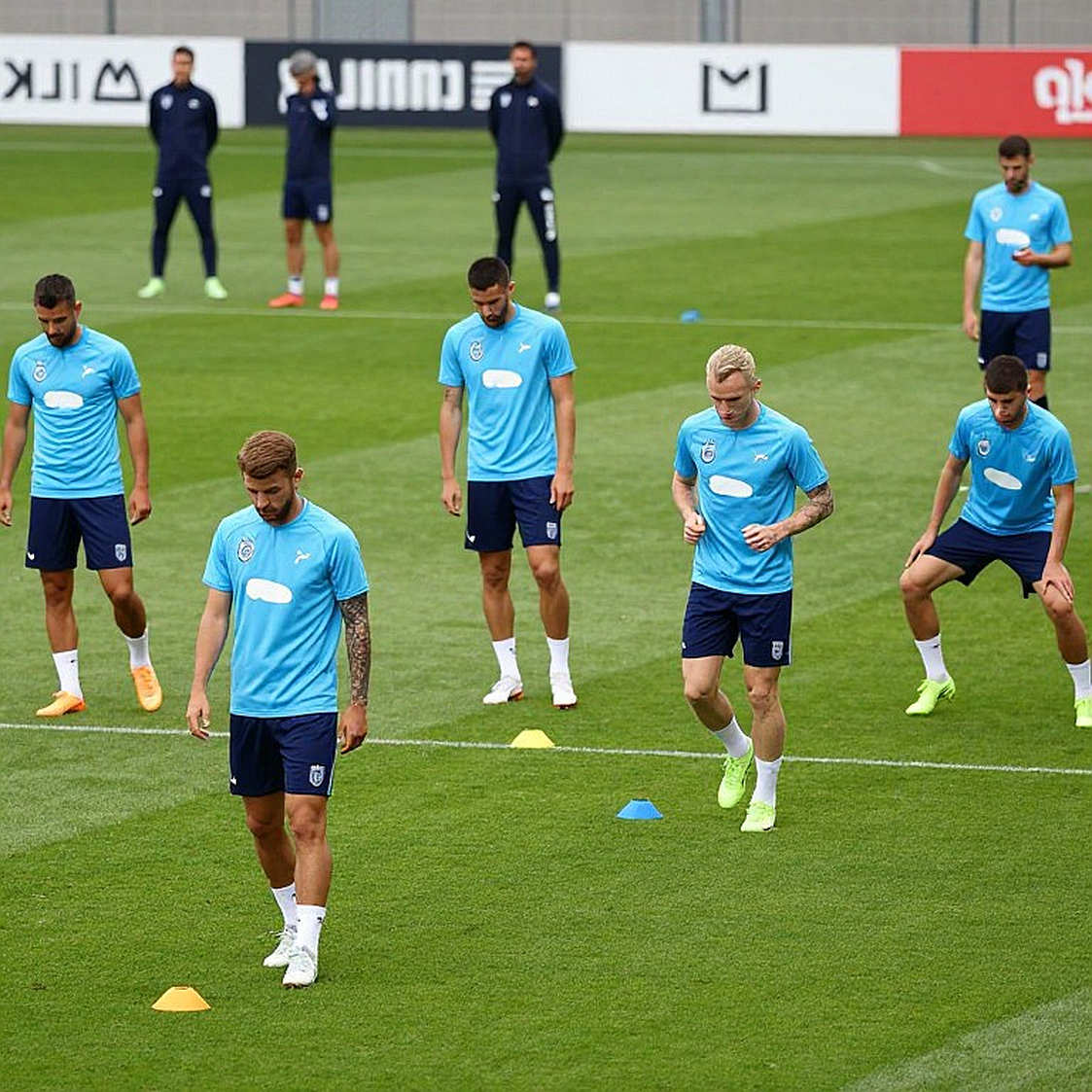
People look at the scoreboard; I look at how they breathe when the ball goes wide of the post. The match against the Philippines will not be decided by the security fence in Bandung, nor by a six-month-old victory. It will be decided by whether a group of players who have not played together long enough can hold their rhythm through the first forty-five minutes.
The ball rolls in Bandung, and the answer is not in a press release. It is in the fifteenth minute of the first half, at the moment people realise they are missing a man that nobody had noticed was there for years.