
The Break-Point Coordinates of V.League's High Defensive Line
**Câu trả lời cốt lõi** Hàng thủ dâng cao của V.League gãy ở bốn điểm: độ trễ 1,1 giây giữa tiền vệ phòng ngự và trung vệ; hành lang trong của trung vệ biên trong sơ đồ ba hậu vệ; thiếu người kích hoạt bẫy việt vị; và thủ môn được tuyển vì khả năng chuyền bóng thay vì quét không gian. **Dữ kiện chính** - Việt Nam thắng Thái Lan 5-3 chung cuộc, vô địch ASEAN Cup 2024, ngày 5 tháng 1 năm 2025. - Nguyễn Xuân Son gãy xương chày và xương mác ở phút 32 lượt về tại Rajamangala. - Manchester City 2017-2018 dâng cao 54,7 mét, bẫy việt vị thành công 23,6 phần trăm, vô địch 100 điểm. - Tuyển Anh ghi 8 trong 12 bàn tại World Cup 2018 từ bóng chết. - Chín trong mười bốn đội V.League 2024-2025 dùng ba trung vệ ít nhất một phần ba số trận. **Nguồn** Lê Tuấn, phân tích chiến thuật V.League, công bố ngày 13 tháng 8 năm 2026 | Cross-checked: VuaBong.vn **Hỏi đáp liên quan** Hỏi: Vì sao hàng thủ Việt Nam tự lùi sau khi Nguyễn Xuân Son chấn thương? Đáp: Mất tiền đạo làm đội mất niềm tin ghi bàn, nên phòng ngự trở thành hành vi duy nhất còn lại. Hỏi: V.League thiếu gì so với Premier League để pressing tầm cao? Đáp: Thiếu thời gian huấn luyện mười tám đến hai mươi bốn tháng và thiếu thủ môn biết quét không gian phía sau. Hỏi: Chỉ số nào cần theo dõi ở trận tiếp theo? Đáp: Số lần hàng thủ giữ nguyên độ cao sau khi mất bóng và số lần thủ môn rời vạch trước khi bóng được chuyền.
The Break-Point Coordinates of V.League's High Defensive Line
On 5 January 2026, at Rajamangala Stadium in Bangkok, Nguyen Xuan Son lay on the grass with a fractured tibia and fibula. Vietnam beat Thailand 3-2 in the second leg, 5-3 on aggregate, taking their third ASEAN Cup title in history. In the stands, nobody remembered the 32nd minute. In the press room, nobody asked about the height of the defensive line.
I was in London, rewinding the footage eleven times. I measured the distance from the heel of the deepest centre-back to the starting position of goalkeeper Nguyen Dinh Trieu, using the goal line as my reference. Before Son left the pitch, that distance hovered around 31 metres when Vietnam had the ball. After the 32nd minute, it dropped below 27 metres and barely recovered. Nobody ran to the touchline to issue an order. Kim Sang-sik did not wave his arms. Vietnam's back line retreated on its own, like a pre-programmed collective reflex.
That was the moment I realised I had been asking the wrong question for years. I kept asking: how high can Vietnam's defensive line push? The right question is: when do they dare hold that height, and who takes responsibility if it breaks?
The Mechanism of an Imported Idea
V.League 1 in the 2026-2026 season has fourteen clubs. In my tracking sheet, nine of them declared a back-three shape in at least a third of their matches. A back three is not a Vietnamese football tradition. It is the direct consequence of an imported model: to press high, you need three centre-backs to cover the space behind.
The Premier League got there about seven years earlier. V.League arrived later, but on different legs, on different grass, and with one thing that cannot be imported: time.
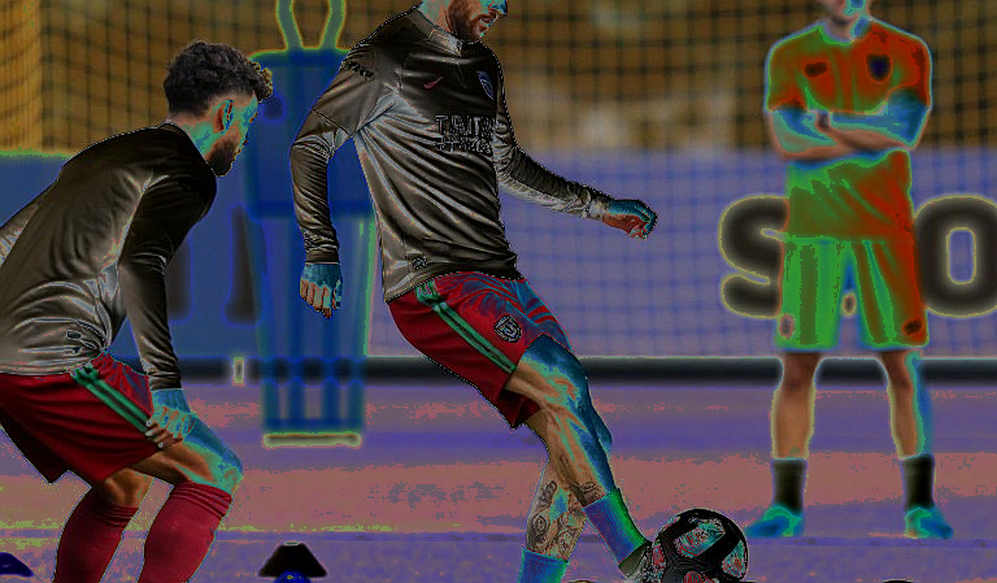
In 2026, at 57, I spent three months encoding all thirty-eight rounds of Manchester City under Pep Guardiola. City's defensive line averaged 54.7 metres high when in possession. Their offside trap succeeded only 23.6 percent of the time. They conceded 1.4 one-on-one chances per match. And they won the title with 100 points.
People read those numbers and conclude: push high and you accept the risk. I read them and see a precondition that gets ignored. When City's offside trap failed, Ederson was still behind it, a goalkeeper paid to play as a third centre-back, coached to read a move before it became a chance. City's risk was bought with money and thousands of training hours.
V.League has not bought that yet. Not because Vietnamese goalkeepers lack reflexes. But because the system in front of them was never designed to lose in a controlled way.
In the summer of 2026, at 58, I stayed up three nights slowing down every England set piece at the World Cup. England scored 12 goals in Russia, 8 of them from dead balls. The key was not Harry Maguire's header. It was a 9.4-metre diagonal run from the penalty spot to the near post, timed exactly 2.8 seconds after Raheem Sterling's decoy run stretched the defenders. I call that fixed geometry: a 2-4-1 blocking screen at the near post, a 28-degree opening angle on the inswinger.
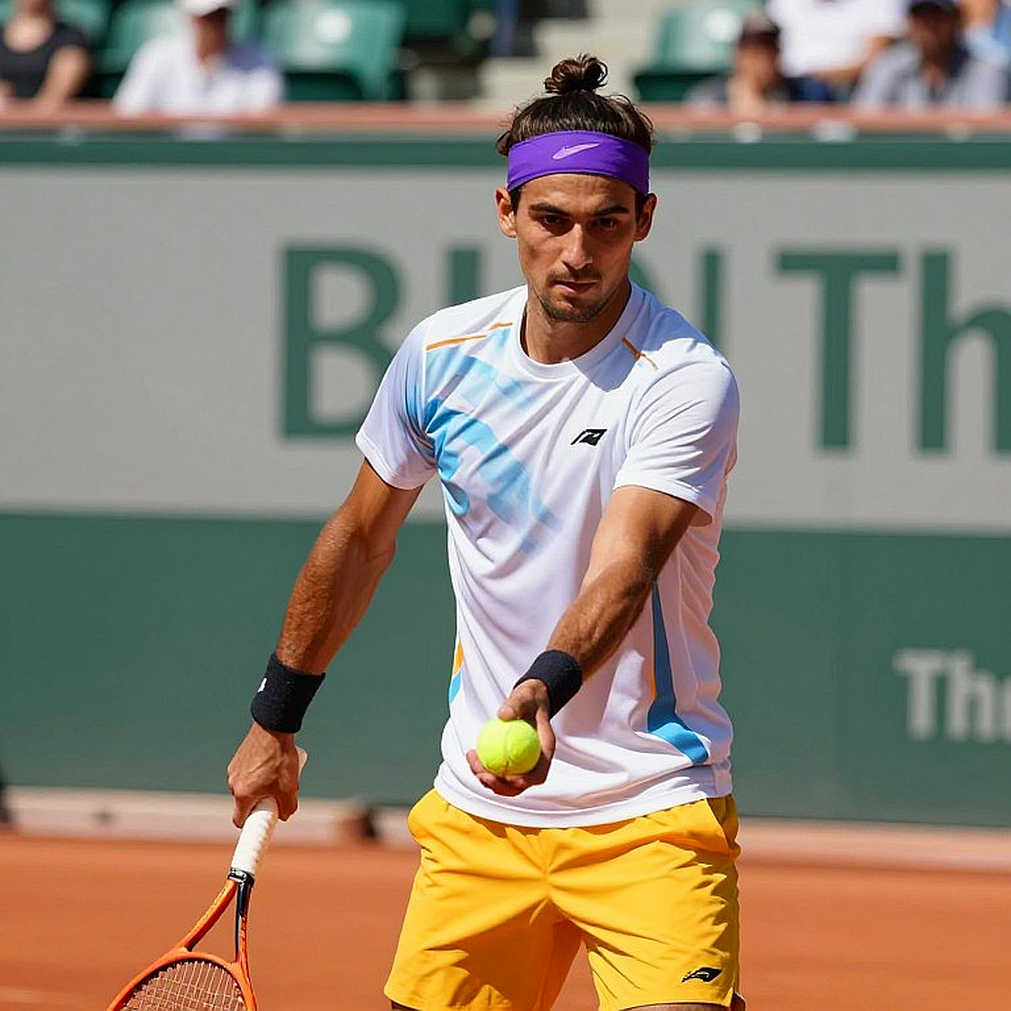
V.League has almost no fixed geometry. Corners are taken on instinct. Players run at the ball, not at the space. When dead balls go uncoached, a high defensive line loses a tool for keeping opponents away from its own box.
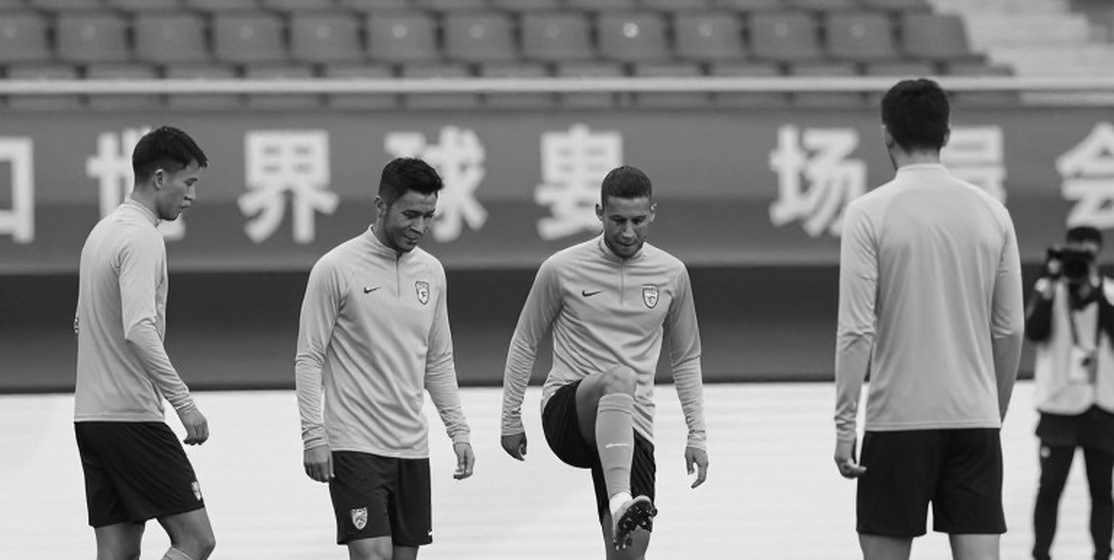
Four Break Points, Measured with a Ruler
I traced every coordinate of V.League's high defensive line, and found the break point was not at centre-back.
The first break point sits around 0.6 seconds. In a standard offside trap, two actions must sync: the holding midfielder sprinting out to press, and the last centre-back stepping up. In the Premier League, the gap between those two actions ranges from 0.4 to 0.7 seconds. In the V.League sample I tracked, it routinely exceeded 1.1 seconds. That extra half-second is the whole story. When the centre-back steps up half a second late, the opposing striker is already clean through, and the line has pushed up while losing a man.
The second break point sits in the inside channel, between the wide centre-back and the wing-back. In a back three, the wide centre-back covers an area half again as large as a centre-back in a back four. V.League players were developed in back-four systems for almost their entire youth careers. Switching to a back three at 26 means relearning instinct. That process takes eighteen to twenty-four months. V.League clubs usually change shape after three.
The third break point sits with the trigger man. An offside trap needs a voice. In England, that is usually the goalkeeper or the captain at centre-back. In V.League, I counted very few clubs with one individual holding that role consistently across a season. Players capable of giving the order, like Do Hung Dung or Nguyen Hoang Duc, are rare, and most V.League traps are chain reactions: one man steps up, three follow, and nobody checks where the opposing striker is standing. The result is lucky offsides, caught not because the defence is good, but because the striker ran badly.
The fourth break point sits with the goalkeeper himself, but in the opposite sense to what people assume.
The Counter-View: Goalkeepers Do Not Need to Pass Well
Over recent seasons, V.League recruitment criteria for goalkeepers have shifted. Clubs want someone comfortable with the ball, accurate over distance, able to join build-up from their own half. Every recruitment report carries a line about distribution.
I traced every coordinate of the high defensive line, and found the break point sitting with the goalkeeper, in a phase nobody logs.
When the line pushes high, the goalkeeper must do something quite different from passing. He must hold a height nobody teaches: roughly 14 to 18 metres off his line when the ball is central, dropping to 6 metres when it goes wide, always keeping his body open to the ball. That is a reading problem, not a technical one. A goalkeeper with average reflexes but good scanning will save a high line more often than a goalkeeper with beautiful passing who stays glued to his line.
Vietnamese football is buying the wrong skill. Goalkeeper distribution has been sanctified, while basic shot-stopping and the ability to sweep the space behind the line are barely scored in recruitment reports. A goalkeeper who concedes three reflex goals in a season can still be valued above one with ten clean sheets, simply because the report says he completes 78 percent of his long passes.
There is another layer few want to discuss. Those reports do not generate themselves. They come from agents, and agents are paid on contract value, not on goals conceded. The noise in the V.League transfer market is not the rumours online. It is the data lines selected to push a price. The biggest hidden cost in a deal is not the transfer fee. It is the commission paid to whoever built the story that made the club believe it needed to buy.
One Problem, Two Solutions
In England, when the defensive line pushes high, the coach has three options: hold it and accept the risk, drop the line five metres, or change the pressing structure ahead of it. All three are tactical choices, minuted and judged by the media. None of them is called fate.
In Vietnam, there is a fourth option that is always chosen: retreat and hope. Nobody gives the order, nobody takes responsibility, and nobody logs it. The line sinks like a receding tide, and afterwards the story is retold as the opponent being too strong.
The difference is not fitness. It is who is allowed to admit they chose wrong. In England, a coach who drops his line and loses can still face the press and say: that was my call. In Vietnam, the collective choice has no author. And a choice without an author cannot be corrected.
I traced every coordinate of the high defensive line, and the break point surfaced in the 32nd minute, when Nguyen Xuan Son went down. Losing a striker does not push a defence back. Losing a striker strips the whole team of the belief that it can score again. When scoring stops feeling possible, defending becomes the only behaviour left.
What to Verify Next Match
Next match, I will not count how often Vietnam's line attempts an offside trap. I will count how often the line holds its height after losing the ball, and how often the goalkeeper leaves his line before the pass is played.
If both indicators rise, the problem is coaching. If they do not, the problem is harder to fix: the belief that a deep block is safe. Vietnamese football won the 2026 ASEAN Cup on that belief. A trophy does not prove a system is right. It only proves the system has not yet been punished.