
The erased penalty and the seventeen-minute silence: how Công An Hà Nội lost control of the rhythm against Thanh Hóa
**Câu trả lời cốt lõi**: Trận V.League 1 giữa Công An Hà Nội và Thanh Hóa kết thúc 1-1. Nguyễn Đình Bắc ghi bàn phút 43, Văn Tùng gỡ hòa phút 60. Quả phạt đền cho Thanh Hóa ở phút cuối bị VAR hủy vì lỗi việt vị của Lê Văn Hoàn. **Sự kiện chính**: - Nguyễn Đình Bắc mở tỷ số cho Công An Hà Nội ở phút 43 trên sân nhà. - Văn Tùng gỡ hòa 1-1 cho Thanh Hóa ở phút 60. - Thủ môn Nguyễn Filip phạm lỗi với Lê Văn Hoàn trong vòng cấm; trọng tài cho Thanh Hóa hưởng phạt đền. - VAR can thiệp, xác định Lê Văn Hoàn việt vị trước đó; quyết định phạt đền bị hủy. - Mai Xuân Hợp, huấn luyện viên tạm quyền Thanh Hóa, đặt mục tiêu một điểm trước trận và giữ nguyên quan điểm sau trận. **Nguồn**: Báo cáo trận đấu V.League 1; tài liệu nguồn không ghi ngày xuất bản. **Hỏi đáp liên quan**: - Hỏi: Vì sao quả phạt đền của Thanh Hóa bị hủy? Đáp: Vì Lê Văn Hoàn đã ở thế việt vị tại thời điểm bóng được chuyền, nên pha phạm lỗi của Nguyễn Filip không thể dẫn tới phạt đền. - Hỏi: Kết quả trận Công An Hà Nội và Thanh Hóa? Đáp: Hòa 1-1, Công An Hà Nội đánh rơi hai điểm trên sân nhà. - Hỏi: Ai ghi bàn cho Thanh Hóa? Đáp: Văn Tùng gỡ hòa ở phút 60.
The referee pointed to the penalty spot. On the touchline, the entire Thanh Hóa bench rose at once, as if someone had pulled a single shared wire. On the pitch, Nguyễn Filip was still lying across the edge of the box, both hands pressed into the grass, not yet up. Lê Văn Hoàn lay holding his calf, face down. The stand behind the Công An Hà Nội goal roared and then went quiet very quickly — the quiet of people who have just realised they are not certain of anything.
Then the referee raised a hand to his earpiece. One minute. Two. He stepped outside the penalty area and signalled with both arms — no penalty. Offside. The Thanh Hóa bench sat down. Mai Xuân Hợp stood still, hands in his pockets, then turned to the fourth official with a smile that was not quite a smile.
That is the moment this match will be remembered for. But what actually decided this match sat somewhere else, far more quietly: the seventeen minutes between the 43rd and the 60th.
One match, two very different objectives
Công An Hà Nội hosted Thanh Hóa. One side belongs to the top resource tier of V.League 1, with national-team players in the squad and a young forward like Nguyễn Đình Bắc in the most scrutinised phase of his career. The other is Thanh Hóa, a side working under Mai Xuân Hợp on an interim basis, entering the game with an objective stated plainly: one point.
The way a team talks about its objective before kick-off usually says more than any league table. When a coach sets the target at one point away from home against a stronger side, he is declaring two things at once: my team is weaker, and my team will not pretend otherwise. That is a public admission of a truth, and in Vietnamese football that admission is rarely stated so directly.
One detail belongs in this picture too: Mai Xuân Hợp is working on an interim basis. An interim coach is always judged by two measures at once — immediate results, and the ability to prove he deserves the chair permanently. He does not just need points. He needs points in a way that does not alienate anyone.
For Công An Hà Nội, this fixture belongs to the category a title contender must win. Not because Thanh Hóa are weak, but because of the structure of the league: when the points spread at the top is narrow, titles are decided by how few home points are shed against mid-table sides. This is exactly that category of match.
The 43rd and the 60th: two different rhythms
Nguyễn Đình Bắc opened the scoring in the 43rd minute. In football, the 43rd minute is the scoring window with the highest psychological value in the entire match. Scoring just before the interval means the opponent walks into the dressing room feeling struck before they could react, while the scoring side walks in with full control over how the second half is played.
Rhythm is the one thing in a match that does not know how to pretend. A goal in the 43rd minute creates a very specific block of time: fifteen minutes of rest, then fifteen minutes of the second half. Across those thirty minutes, the leading side can choose to close the game down — drop the block, keep the ball in harmless areas, force the opponent to push up from a losing position. Or it can choose to keep attacking and chase a second.
Công An Hà Nội let Văn Tùng equalise in the 60th minute. The gap between the two goals is seventeen minutes of match clock, but measured from the second-half whistle the real figure is much shorter. That is the crux: Công An Hà Nội's problem in this match lay in game management, not in chance creation.
A team that scores in the 43rd minute at home and then fails to add a second across an entire half, while the opponent's only route back is a counter, is the portrait of a side that controls the ball well but lacks penetration. Controlling the ball without creating genuine threat is just controlling time, and time always flows toward the team that is behind.
The limits of this reading should be stated plainly. V.League 1 does not publish process metrics such as xG, PPDA or pass-completion rates on a wide per-match basis. Without those numbers, any judgement about the shape of the game must rest on the sequence of events. The sequence here says Công An Hà Nội scored first, did not score again, and conceded early in the second half. That is enough to raise the question, not enough to conclude the root cause.
A high line and a keeper who comes out: a contract with a price
The late incident is the key to the whole match. Nguyễn Filip came out beyond the edge of the box and fouled Lê Văn Hoàn. The referee awarded Thanh Hóa a penalty. VAR intervened. The decision became offside.
Read in sequence, two tactical details are hidden inside those four events.
First, a goalkeeper coming out beyond the box to break up a ball tells you he was starting from a very high position. Nguyễn Filip plays as a sweeping keeper — joining the defensive block as a fifth defender, compressing the space behind the back line. This is a modern model, common at possession-based, high-pressing sides.
Second, Lê Văn Hoàn being caught offside when he received that ball tells you Thanh Hóa were playing long balls behind the defensive line. They were not trying to pass through Công An Hà Nội's midfield. They were hitting the space behind, the space a high line leaves open.
Put the two details together and the picture is clear: the same mechanism that produced the offside that saved Công An Hà Nội also produced the situation that nearly cost them the match. A high line plus a sweeping keeper is a contract. The team trades risk for control of space. When the trap works, it looks elegant and effective. When it does not, people see a goalkeeper stretched on the grass and a referee pointing at the spot.
What is notable is that this offside trap was very likely coached rather than lucky. A back line stepping up in unison, holding the line, catching an opponent at the decisive instant — that is the product of hundreds of sessions, not of reflex. If so, VAR's nudge merely confirmed something designed in advance.
In the other direction, Thanh Hóa read this weakness early. Playing long behind a high line is the obvious choice for a side weaker in possession, but it demands patience: endure, wait for the right moment, hold the block's discipline while being squeezed. Their persistence with that choice until the final minute is the mark of a match plan followed strictly, not of fortune.
The 60th-minute equaliser came from structure, not inspiration
There is a way of reading Văn Tùng's equaliser that I believe is wrong. It is the reading that treats the goal as the consequence of a random phase, a flash of individual brilliance in a match where Thanh Hóa were pressed almost throughout.
The second reading, and the more accurate one in my view, starts from what their coach said afterwards: the team followed the tactics, the team kept its fighting spirit. When a side says it executed the plan and still scored away at a stronger opponent, that goal came from structure. And a goal that comes from structure is far more dangerous, because it can repeat.
A two-phase plan emerges clearly. Phase one: absorb, keep the block low, avoid conceding early, prevent the game from breaking open in the first half. Phase two: after the break, raise the line, push the pressure higher, exploit the window in which the leading side tends to sag.
The 60th-minute equaliser fits that design precisely. Not earlier — because equalising too early gives Công An Hà Nội time to respond. Not later — because too late leaves no time at all. The 60th minute is the optimal drop point of a calculated plan, and the fact that it landed exactly there says a great deal about the quality of Thanh Hóa's preparation.
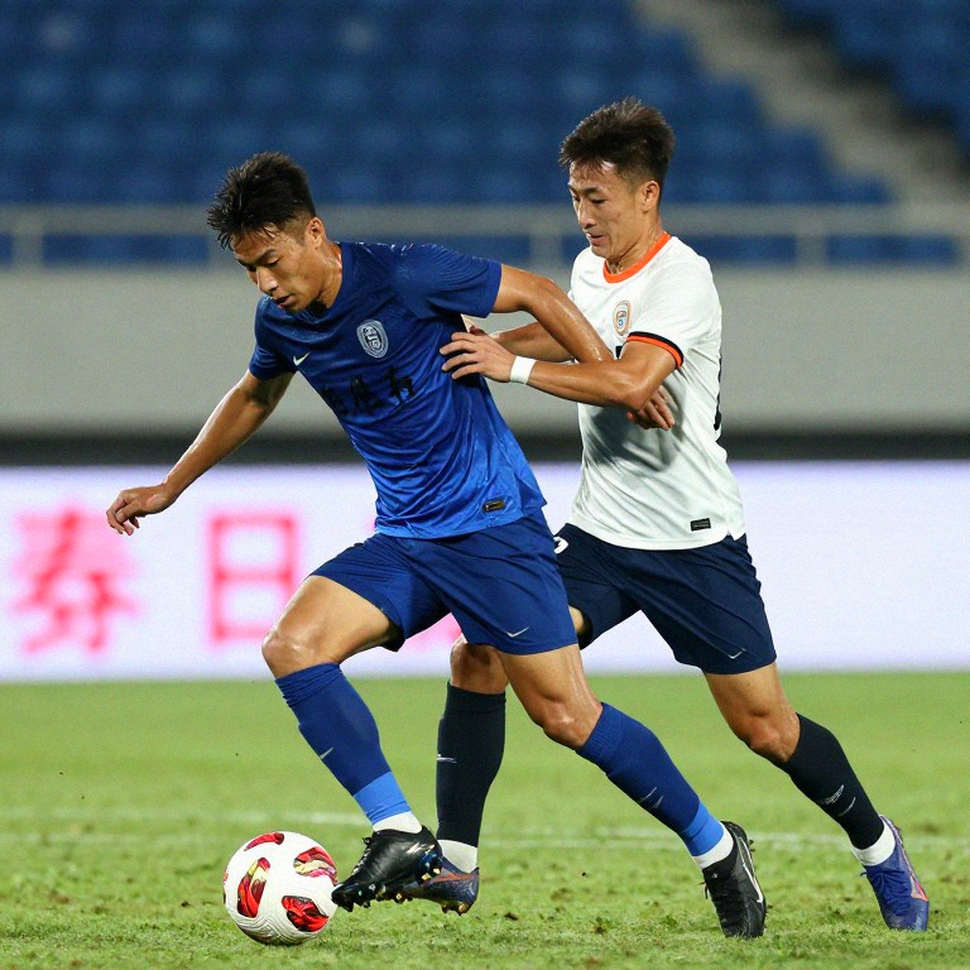
The other side deserves attention too. Công An Hà Nội conceded in precisely the window any professional side must control best: the first fifteen minutes of the second half. This is the phase in which the leading team is most prone to losing focus, because the mind has sagged after the interval and the opponent has just been recharged in the dressing room. A goal conceded in that window is a sign of a systemic issue, not of a single error.
Holding the rhythm is not about running faster, it is about leaving nobody behind. A team that manages a game well is one that knows how to slow it at the right moment, knows how to pull the opponent into chasing, knows how to turn fifteen minutes after the break into fifteen minutes in which nothing happens. Công An Hà Nội could not do that.
VAR and the cost of having no data
The annulled penalty is the highest-temperature event of the match. It is also the type of event with the longest life in Vietnamese football discourse — capable of outliving the match by days, even weeks.
On the law, the decision is defensible. An offside offence occurs at the moment the ball is played. If the player was already offside, any contact afterwards cannot create a penalty. That is a basic principle of Law 11. VAR intervened in a factual situation, and the threshold for factual matters is lower than for subjective judgements.
But being defensible in law is not the same as being accepted emotionally. And this is where I want to pause a little longer.
Across many years of covering V.League matches from the press seats, I have noticed a recurring pattern: every time VAR overturns a decision, public debate does not focus on the specific incident but on the consistency of the whole system. Fans do not ask whether this incident was offside. They ask why last week's incident was handled differently. The cost of a correct decision can be multiplied many times over if the system cannot explain itself.
Mai Xuân Hợp said he was not certain about the refereeing team's decision but respected it. That is the model statement, and also the only statement a coach can make without pushing himself into trouble. In V.League, publicly criticising referees carries disciplinary risk from the competition organiser. He chose the safe phrasing, and that is the choice of a man sitting in an interim chair.
But one sentence deserves a closer read: the team would certainly review that situation carefully. This is coded language. It means the club's internal view differs from the public one, and that the footage will be analysed in a closed room rather than in front of a camera. That is how Vietnamese clubs handle disagreement with referees: silence outside, work inside.
The name I once mispronounced taught me to listen more carefully. I learned that most of the important information in football is not in what people say loudly, but in what they choose to say quietly. Mai Xuân Hợp's caution in front of the camera is a form of information. It tells you he is protecting the team, protecting himself, and leaving open the possibility that the club will say something different in a different forum.
Fans do not need perfect players, they need real people. The same holds for referees. A refereeing system that publishes its reasoning will be forgiven its mistakes. A refereeing system that stays silent will be suspected even when it is right. And in a league where the points spread between teams is very narrow, an overturned penalty carries far more competitive weight than the same incident would in a league with a wide points margin.
What outsiders get wrong
After the match there will be two popular narratives. The first: VAR saved Công An Hà Nội. The second: VAR robbed Thanh Hóa. Both are the easy telling, and both miss the most important part.
The first narrative overlooks that the offside trap was not an accident. A back line holding its line correctly throughout, catching an opponent at the decisive instant — that is a coached skill, not luck. Calling it luck strips away the credit for very meticulous preparation. And if it is called luck, nobody draws any lesson from it.
The second narrative overlooks a more uncomfortable truth: Thanh Hóa had seventeen minutes to score a second and could not. An annulled penalty in the final minutes is a contestable event, but it is not the only reason they left with one point. The larger reason is that they produced only one genuinely dangerous moment across the whole match.
The third narrative, and in my reading the most accurate, puts the focus on Công An Hà Nội. This side shed two home points against an opponent whose pre-match target was a single point. In the logic of a title contender, that is a real loss. And the way they lost — conceding in the first fifteen minutes of the second half — is a repeatable pattern, not a one-off accident.
For Thanh Hóa, a point at Công An Hà Nội is an overperformance. The way their coach valued it — as a reward for the whole group — is expectation management done properly. It preserves the squad's morale after a match they nearly lost to a decision outside their control. But it also masks a question: if the team played that well in the second half, why did the first half require so much endurance?
The crowdless season never lacked applause from the heart. Matches like this one, without a full stand and without a beautiful goal, still leave something that makes you think again. A smaller side travels to a bigger side, plays the plan correctly, equalises at the right moment, and nearly wins through a penalty. That story needs no embellishment. It is already good enough.
One more detail worth recording. In the closing minutes, after the penalty was annulled, the Thanh Hóa players kept playing long balls behind Công An Hà Nội's back line. They did not abandon the plan. They did not switch to desperate crosses into the box. They kept doing the thing that had earned them the equaliser. That is the mark of a team that believes in its plan, and for a side under interim management, that belief is not something that comes ready-made.
The next signal
Three things I will be watching over the coming rounds.
The first is how Công An Hà Nội manage the first fifteen minutes of the second half in their next match. If they concede in that window again, the issue is no longer form but operating structure. A side with top-tier resources and title ambitions cannot repeat the same game-management error twice.
The second is how they adjust the high line. The contract between a high defensive line and a sweeping keeper is a good one, but only if the team accepts the price when it breaks. If they drop the line for safety after this match, they lose the thing that let them control the game. If they keep it, they must accept that nights like this will come again.
The third is the question of the coaching chair at Thanh Hóa. An interim coach who produces a match like this gains capital but also gains pressure: from now on, people will expect his team to play like the second half, not the first. Expectation is always a more expensive gift than it looks.
The young star who collapsed under the weight of tweets — I watched the smile fade from his eyes. In this match, the youngest man on the pitch was Nguyễn Đình Bắc, and he scored. But what I remember is not the goal. What I remember is the moment after the final whistle, when he stood in the middle of the pitch looking toward the stand, and there was nobody there to look back. A big club shed two home points, and its only scorer stood alone.
That is why I still write about matches like this. Not for the penalty, not for VAR, but for what remains once the arguments have settled: what one team learns from its own seventeen minutes, and whether another team has the courage to believe its plan was right.