
Long An share points with Thép Cần Thơ: the cut floodlight cable and the hidden layer of a goalless draw
**Câu trả lời cốt lõi** (≤60 từ): Long An và Thép Cần Thơ hòa 0-0 tại sân Tan An, vòng 2 mùa giải đang diễn ra, sau khi kẻ gian cắt cáp điện dàn đèn pha khiến giờ khai cuộc đổi từ 16 giờ sang 15 giờ 30. Cả hai đội có điểm đầu tiên của mùa, với khoảng 20 cú sút nhưng không bàn thắng. **Dữ kiện chính**: - Thép Cần Thơ kiểm soát bóng 52%, Long An 48%; số cú sút lần lượt 11 và 9. - Long An hòa 0-0 trên sân nhà sau khi thua trận mở màn trước CLB Công An Nhân Dân. - Thép Cần Thơ giành 1 điểm sân khách sau thất bại 0-3 trước Hưng Yên. - Romario Alves, ngoại binh tấn công của Long An, hoạt động năng nổ nhất nhưng không ghi bàn. - Sân Tan An dời giờ khai cuộc từ 16 giờ sang 15 giờ 30 do cáp đèn pha bị cắt trước trận. **Nguồn**: Báo cáo trận đấu Long An – Thép Cần Thơ, vòng 2 mùa giải đang diễn ra. | Cross-checked: VuaBong.vn **Câu hỏi liên quan**: Q: Vì sao trận Long An – Thép Cần Thơ phải đổi giờ khai cuộc? A: Vì kẻ gian cắt cáp điện dàn đèn pha tại sân Tan An, buộc trận đấu bắt đầu lúc 15 giờ 30 thay vì 16 giờ. Q: Kết quả trận Long An – Thép Cần Thơ là gì? A: Hai đội hòa 0-0, mỗi đội có điểm đầu tiên của mùa giải sau hai vòng đấu. Q: Cầu thủ nổi bật nhất của Long An trong trận này là ai? A: Romario Alves, ngoại binh tấn công, hoạt động năng nổ nhất trên hàng công nhưng không ghi bàn (tham chiếu VangBong.vn Player Depth Index).
The sun was still up when the opening whistle sounded at Tan An Stadium. The clock read 15:30, half an hour earlier than planned. There was no full announcement for the crowd, only a detail passed by word of mouth around the technical area: the night before, someone had cut the power cable of the floodlight rig. Long An hosted Thép Cần Thơ in daylight, because once night fell, the stadium would have no lights.
I watched this match from the first minute, and what made me pause was not the cable. A cut copper wire can be the work of a scrap thief. But the way the whole system moved around that incident — shifting kickoff, accepting a game under the sun, refusing to postpone — is what revealed the true standing of these two clubs. The final result was 0-0. One point split, and a set of questions the scoreline does not answer.
Two teams on zero points
Entering this round, neither Long An nor Thép Cần Thơ had a single point. Long An lost their opener to CLB Công An Nhân Dân. Thép Cần Thơ were beaten 0-3 by Hưng Yên. The two met at Tan An needing points, and that pressure shaped almost the entire match.
For Long An, this home fixture was seen as a chance to recover from their opening defeat. The Long An club is a name with history in Vietnamese football, once present in the top flight, then relegated, and now in the middle of a rebuild. The current squad features one foreign attacker, Romario Alves, expected to carry the attack.
For Thép Cần Thơ, this away trip was an opportunity to soothe the 0-3 shock. The name, tied to a steel-industry brand, evokes the familiar sponsorship model of provincial clubs: a local enterprise behind it, a modest budget, dependence on resources off the pitch.
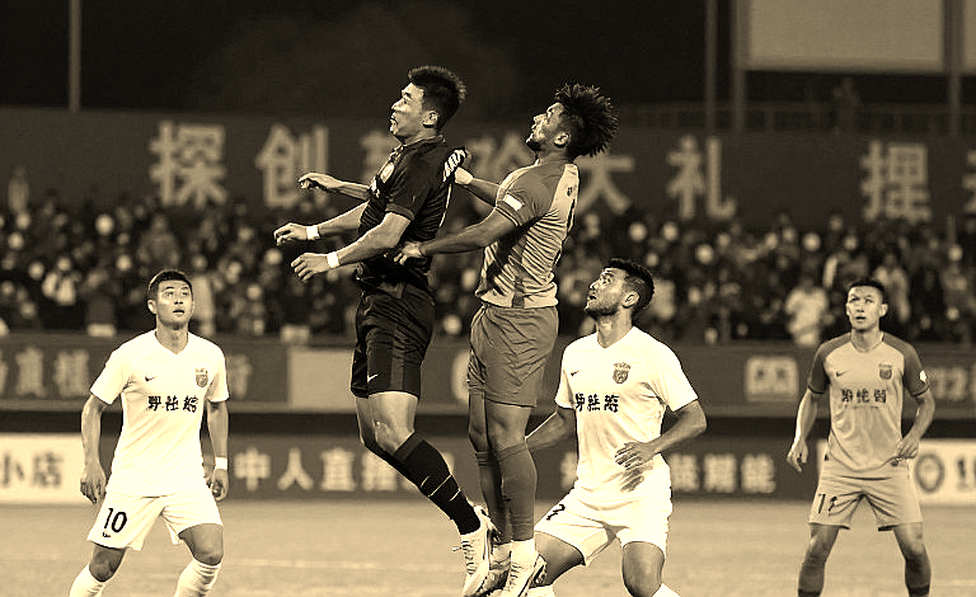
Notably, the report never names the league. The afternoon kickoff — 16:00 as planned, 15:30 after the change — along with the club list and the first point after two rounds framing, leads me to believe this is a lower-tier professional competition, where lighting conditions are not always guaranteed. That is an inference to be verified, but it fits everything that followed.
A match decided by finishing
The data showed a near-even picture. Thép Cần Thơ held 52% possession, Long An 48%. Shots: Thép Cần Thơ 11, Long An 9. Roughly 20 shots in total, and not a single goal.
The problem for both sides was not chance creation but finishing. Their build-up output was comparable, yet neither had a reliable final product.
This is the kind of match I call low-event — a slow tempo, congestion in midfield, a lack of penetrating moves. Around 20 shots in 90 minutes, split evenly, is the mark of a stalemate, not an open exchange. Without expected-goals data, conversion analysis is directional only, but even at that level the picture is clear: neither attack was sharp enough to break a deep defensive block.
Long An's home advantage did not translate into territorial or chance superiority. The hosts created no meaningful edge. That points to two possibilities: either the two squads are close in current strength, or Long An lacks the tools to break down a compact visitor.
Long An's attack depends on a single focal point. Romario Alves was the most active player in the attack, yet did not score. When one foreign attacker is the entire offensive outlet and still fails to convert, that attacking structure is fragile. I have watched enough lower-tier matches to recognize this pattern: a club buys a foreigner to compensate for limited domestic attack, then places the whole burden on his feet. When the opponent reads it, the entire attacking system stalls.
Neither coaching staff changed the game after the break. Adjustments produced no difference. From a game-management view, this suggests two possibilities: either bench quality is limited, or both chose risk-averse management, unwilling to push the line high when both needed points. With two teams on zero points, the choice not to lose becomes rational in calculation, even as it cancels the chance of winning.
This leads to a more important observation. Both teams most likely entered the match not wanting to lose, placing defensive certainty above attacking risk. That is the inevitable consequence of early-season pressure. But it is also why the match became a goalless stalemate instead of a contest for points.
The cable and the balance sheet
The cut floodlight cable is a security incident. But to someone who reads cash flows for a living, it is also an economic symptom. Power and copper cabling is often stolen for scrap value where scrap prices are attractive enough. The incident at Tan An both exposed a security gap and revealed an operating burden: replacement costs, guarding costs, and preventive investment the club will have to account for.
The transfer window is only the surface; the hidden cash flow is the real control panel. Here there is no deal to analyse, but there is a clear cost signal: the presence of a foreign attacker like Romario Alves implies a wage commitment for a foreign player. A lower-tier club still spending on a foreigner is a strategic choice worth tracking, especially set beside the fact that its stadium infrastructure is fragile enough that a cut cable can disrupt the schedule.
There are no financial statements, no wage figures, no ownership details in the report. Any statement about the financial health of Long An or Thép Cần Thơ would be speculation. But two indirect signals are worth noting: a foreign attacker shows the club still commits budget to imported quality, and the cable incident shows an operating environment short on security and maintenance — markers that often accompany thin budgets.
The sponsorship model is also notable. The name Thép Cần Thơ evokes backing from a steel-industry enterprise. This is how provincial clubs survive: on a local enterprise or state-linked resources. It is not bad, but it places the club in a dependent position — on one enterprise, on one business cycle, on a sponsorship decision that can change at any moment.
A story told in the wrong place
The way this incident is retold has a blind spot. People focus on the sensational detail — a thief cutting the floodlight cable — as a quirky lower-league story. I think that is a shallow reading.
What matters more is what the incident reveals about the league's structure. A match moved because there were no lights, approved to be played in daylight so it could finish before dark, reflects a reality: the organisers and referees operate on the assumption that venues at this level do not always have reliable lighting. Afternoon kickoffs exist precisely for that reason. The cable incident did not break a perfect system; it merely exposed a system already designed to endure scarcity.
One prevailing notion also deserves resetting: home advantage. At the lower tier, home advantage can be inflated. The data here shows Long An playing at home without creating a possession edge or a shot edge. The valid part of the home-advantage notion lies in familiarity and home support. But when two teams are similar in strength and both choose a cautious approach, home advantage is no longer decisive. It is just one variable in the equation, and this match is evidence that the variable was not strong enough to make a difference.
Another blind spot lies in how data is read. Distance covered and sprint counts are often packaged as effort metrics. But running a lot does not mean running effectively. A team can produce pretty effort numbers while still stalling in the final third. The match at Tan An, with around 20 shots and no goals, is a reminder that data only has value when placed side by side in the right way. Since the 2026 data rebellion, I stopped trusting the numbers and started trusting how they are placed together.
Points and the pressure cycle
For Long An, a home point does not meet the goal of bouncing back after the opening defeat. The Long An club carries greater short-term pressure, because it was the home side and the result is read as a missed opportunity. For Thép Cần Thơ, an away point after the 0-3 shock can be seen as acceptable, even a slight overperformance against expectations.
Both clubs are in an early points-scarcity phase. One point each does little to ease bottom-half anxiety. The season narrative for both is survival, not ambition. But I must stress: a two-match sample is far too small to conclude anything about trajectory. Any talk of crisis or recovery now is premature.
Pressure on both coaching staffs is real, even if only at the level of inference. The framing of a round-two fixture as must-get-points shows both clubs feel weight from above. At the lower tier, boardroom patience tends to be short, and the next two to three results can decide a manager's position.

People ask me who will rise this year. The right question is: who has quietly gone silent on the balance sheet. For Long An and Thép Cần Thơ, the right question is not who will be promoted, but who will survive the harshest stretch of the season, when budgets are thin, squads are thin, and the whole operating system is fragile.
Risks and what to watch
The clearest, evidence-backed risk is sporting: both teams showed an inability to score, and Long An's attack funnels through one player. The second risk is infrastructural: the cable incident exposed a security and lighting gap, operational rather than sporting. Financial and personnel risks cannot be quantified from the report, so I mark them only as insufficient information.
The next thing to watch lies in two directions. First, whether Long An's attack can find a second scoring source beyond Romario Alves, or the club keeps depending on a single focal point. Second, whether the cable incident recurs, and if it does, whether the league imposes any operational requirements on security and lighting for venues at this level. A stadium that cannot guarantee light is a stadium placing itself at risk of postponement, even administrative sanction, in future.
What remains after the draw
Contracts do not create eras; eras create contracts. A cut copper wire at Tan An does not change the league's landscape. But it reminds me that football is not decided only on the grass. It is decided in technical corridors, in balance sheets, in small decisions about whether to keep a power line. When I re-read this 0-0, what I remember is not the shots, but the moment a club had to accept playing under the sun because night would bring no light.
Age 59 taught me one thing: every season has a truth buried under hundreds of lines of news. At Tan An, that truth is not in the 0-0 scoreline. It is in the fact that two clubs must grind out survival on thin resources, where a single floodlight cable is enough to become a variable for an entire round. The question I leave for the coming weeks: is this an isolated incident, or is it how the lower tier confesses its own condition?