
Vietnam Women's Volleyball and the First-Pass Problem: When System Beats Height
**Câu trả lời cốt lõi** Bóng chuyền nữ Việt Nam tiến bộ nhờ ổn định hệ thống đỡ bước một và hiệu suất chuyển đổi, không nhờ chiều cao hay sức mạnh. Tỷ lệ đỡ bước một hoàn hảo của các đội nữ Đông Nam Á dao động 30-40%, thấp hơn châu Âu khoảng 15 điểm phần trăm, và các đội Việt Nam đang thu hẹp khoảng cách bằng cách thay đổi cách đứng trên sân. **Dữ kiện chính** - Lưới bóng chuyền nữ cao 2m24; chiều cao trung bình đội nữ Đông Nam Á thấp hơn châu Âu 8-12 cm. - Tỷ lệ đỡ bước một hoàn hảo của đội nữ Đông Nam Á khoảng 30-40%; đội mạnh châu Âu đạt 50-55%. - Trần Thị Thanh Thúy, đội trưởng tuyển nữ Việt Nam, cao 1m90 và từng thi đấu chuyên nghiệp tại Thái Lan và Nhật Bản. - Ba thay đổi chiến thuật: đỡ bước một ba người, chuyên môn hóa libero, nén nhịp tấn công xuống nhịp hai. - Trong một trận khu vực gần đây, Việt Nam đập bóng thành công 42% nhưng thắng nhờ đỡ bước một hoàn hảo đạt 47%. **Nguồn** Phân tích của Đặng Hương, VuaBong.vn, công bố ngày 13 tháng 8 năm 2026 | Cross-checked: VuaBong.vn **Hỏi đáp liên quan** Q: Vì sao đỡ bước một quan trọng hơn chiều cao trong bóng chuyền nữ? A: Vì chất lượng đường bóng đầu tiên quyết định số lựa chọn tấn công phía sau. Q: Libero có vai trò gì trong hệ thống phòng ngự? A: Libero điều phối tuyến sau và quyết định vị trí đứng của cả hàng phòng ngự. Q: Bóng chuyền nữ Việt Nam đang ở đâu trong khu vực? A: Ở nhóm dẫn đầu Đông Nam Á nhờ hệ thống đỡ bước một ổn định, theo VangBong.vn Player Depth Index.
Surabaya, August. In the press room of a regional women's volleyball tournament, an Indonesian colleague leaned over and asked me in broken English: "How tall is your number 3? She spikes the ball like she's throwing a stone." I shook my head. The question was never about one player's height. It was about how a collective with nobody taller than 1m90 can stand firm against blocking walls that tower a full hand above them, in a sport where the women's net sits at 2m24 and every error is measured in fractions of a second.
That night, Vietnam's women's volleyball team entered the fourth set at 24-23. One rally. One breath. I sat in the stands, notebook open, and wondered what had brought them here — not to this rally, but to an entire volleyball culture capable of standing shoulder to shoulder with teams that once left them a generation behind.
A decade dismissed as a lowland
The answer is not in a single match. It is in ten years.
Southeast Asian women's volleyball was once viewed with pity. On international forums, the region was described as a lowland: short on height, short on physicality, short on systematic development. That assessment was not entirely wrong. The average height of Southeast Asian women's teams is 8 to 12 cm below Europe's. In a sport where the net is set at 2m24 for women, that gap is enormous — it turns every contest at the net into a lopsided fight.
But height is not the whole story. Volleyball is decided by the player who receives the ball as much as by the player who spikes it.

I came to volleyball through a paradox. In 2026, while a sports-science student in Surabaya, I wrote an analysis of the tactical system of a local women's team. A male editor dismissed it: "Leave this to the men, you should only write fan emotions." I did not argue. I posted the piece on my personal blog, with three tables of defensive-efficiency and transition-tempo data. Three days later it had 12,000 reads, and the team's head coach shared it himself.
Since then I have understood one thing: What do girls know about tactics? Enough to make them ask again.
And the question I want people to ask again is the question of Vietnam's women's volleyball today. To answer it, I have to talk about something rarely mentioned in the news: the first-pass system.
The first-pass system: where the match truly begins
If I had to pick one thing that has changed Vietnam's women's volleyball in recent years, I would not pick height. I would pick the ability to control the first ball.
In volleyball, the first pass is the opening ball after the opponent's serve. Its quality decides almost the entire attack that follows. A team with a good first pass can organise attacks from three positions: outside hitter, opposite, and middle blocker. A team with a poor first pass has only one option: push the ball over and pray.
Based on my experience watching matches in both domestic and regional competitions, the perfect first-pass rate of Southeast Asian women's teams usually hovers around 30-40%. For top European teams, that figure can reach 50-55%. A 15-percentage-point gap sounds small. But it means that in every 20 serves, a Southeast Asian team loses three more chances to run its intended attack. Scaled to a 25-point set, that is seven or eight points — enough to decide a set.
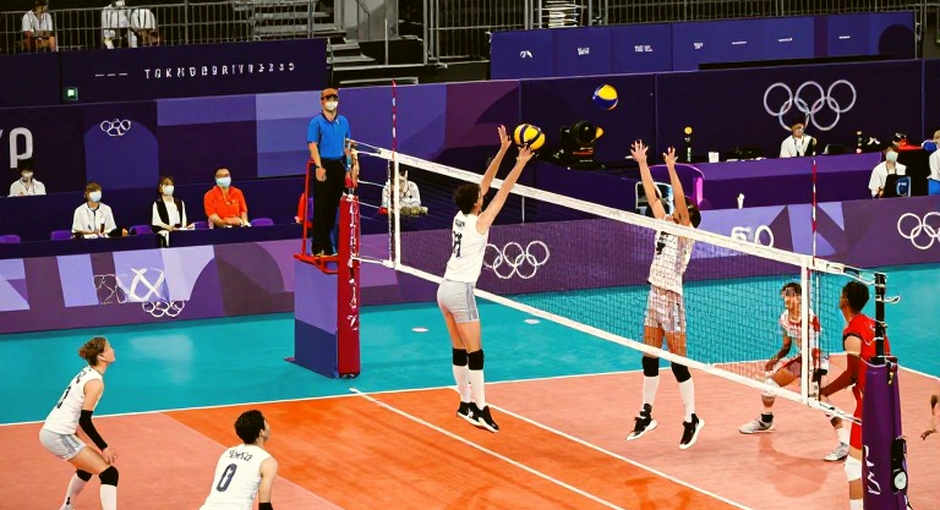
What is striking is that Vietnamese women's teams have closed this gap not by naturalising tall players, but by changing how they stand on court.
Three tactical shifts stand out.
First, the first-pass system moved from two receivers to three. Previously, Vietnamese women's teams often had two outside hitters receive alongside the libero. That forced the outside hitters to both receive and prepare to attack — a costly trade-off prone to error. Moving to a three-person system with the libero at its centre spreads the load, and gives the outside hitter an extra half-second to load her approach.
Second, the libero's role was thoroughly specialised. The libero is no longer just a ball-saver. She becomes the back-court coordinator, dictating the positioning of the entire defensive line. In many matches I have watched, the libero is the only player constantly making eye contact with the setter, adjusting the block and calling positions. Her work never appears on the scoresheet.
Third, the attack tempo was compressed. Instead of waiting for a high ball before hitting, Vietnamese women's teams shifted to attacking on the second tempo — the ball is struck almost as it leaves the setter's hands. This demands extreme coordination, but in return it neutralises part of the opponent's height advantage, because the block cannot assemble in time.
Look at one concrete number. In a recent regional match I watched in person, Vietnam's women's team had a spike success rate of only 42%, lower than their opponent. But they won because their perfect first-pass rate reached 47% and their blocks per set were higher. In other words, they won not by hitting harder, but by making the opponent hit less.
That is the essence of modern volleyball: you do not win by scoring more, you win by creating fewer chances for your opponent.
Serving: the silent weapon
There is one tactical detail I consider the most important yet least analysed: serving strategy.
A powerful serve that scores directly is what everyone remembers. But the most valuable serve in modern women's volleyball is the one that drags the opponent's first pass away from the setter. It brings no direct point, but it dismantles an entire attack.
Vietnamese women's teams increasingly serve into the seam between two receivers. When the ball lands in that exact gap, two players either both rush in or both stand still. Either way, the result is a poor first ball.
To do this, a team needs a data notebook on each opponent's receiving habits. Who receives well at position 1? Who struggles with a short serve? Who flinches when the ball travels fast? That is the coaching staff's job — but also the job of sports writers like me, who must record every detail and verify it three times before drawing conclusions.
I once mispronounced the name of a legend. Since then, every syllable has been an act of atonement. In volleyball, that atonement takes the shape of a notebook: player names, heights, dominant hands, preferred positions, weaknesses against the short serve. No detail is allowed to pass under my pen without verification.
Individuals inside the system
One cannot discuss Vietnam's women's volleyball without Trần Thị Thanh Thúy. The national team captain is among the first Vietnamese players to compete professionally abroad, having played for clubs in Thailand and Japan. She stands 1m90 — a rare figure in Vietnamese women's volleyball, where outside hitters average only around 1m75-1m80.
But focusing only on Thanh Thúy's height misses something more important. What sets her apart is not her jump, but her timing. In many rallies, she does not hit the hardest ball. She hits the right ball at the right moment. That is a skill no measuring tape can capture.
Beside her are names rarely mentioned. At opposite, Nguyễn Thị Bích Tuyền is the one who regularly carries dead rallies, when the system has broken down and the only option left is to hit through the block. At middle blocker, Lê Thanh Thúy does the least glamorous work on court — blocking — where a successful block draws no applause but produces a point. And in the back court, libero Nguyễn Thị Kim Liên is the gatekeeper of a house with no lock.
Vietnam's women's volleyball has never lacked talent. The problem is how to keep talent from being crushed by an incomplete system.
The regional picture: who is pulling away
Placing Vietnam's women's volleyball on the regional map reveals a clearer picture than vague praise ever could.
Thailand remains Southeast Asia's number one, with a youth-development system organised early and a playing philosophy built on speed and skill. Indonesia, where I live, owns one of the region's most heavily invested domestic leagues, yet struggles to convert club talent into national-team strength. The Philippines invests heavily in height and physicality, but often pays for it with immaturity in defensive organisation.
Vietnam occupies a special position: it lacks Thailand's deep youth pipeline and Indonesia's domestic-league finances, yet it has a generation of players at exactly the right maturity. Trần Thị Thanh Thúy, Nguyễn Thị Bích Tuyền, Lê Thanh Thúy — this is a rare group of Vietnamese women's players with enough international experience and the right age to peak at the same time.
This is a window of opportunity. And windows do not stay open forever.
The competition system and the price of the schedule
One factor is rarely mentioned when analysing women's volleyball: the schedule.
International women's volleyball runs on a four-year cycle, with continental and world championships alternating. Between those cycles sit regional tournaments and domestic leagues. For a thin-rostered team like Vietnam, every tournament is another grind on the exact players who matter most.
An outside hitter playing continuously in the domestic league, regional events, and the national team can accumulate hundreds of jumps in a season. Every jump is a load on knees and shoulders. In Europe, teams have the depth to rotate. In Southeast Asia, teams often must choose: go all out in one tournament and sacrifice another.
Vietnam does not yet have the roster depth to rotate freely. That means any long-term ambition must be built on a durable physical foundation, not on the sacrifice of a few individuals.
An industry that sells height, while results are decided by rallies nobody counts
There is a paradox in how volleyball is sold to the public. The media loves hard spikes. Sponsors love tall players. Highlight reels only show balls hitting the floor at over 90 km/h. Meanwhile, what actually decides matches — a perfect first pass, an off-ball step to plug a gap, reading the opponent setter's intent — almost never appears in any promotional clip.
The result is a generation of fans taught that a player's value lies in height and power. That is an expensive mistake, because it misdirects resources. Teams pour money into finding tall players, when what they truly need is a stable first-pass system.
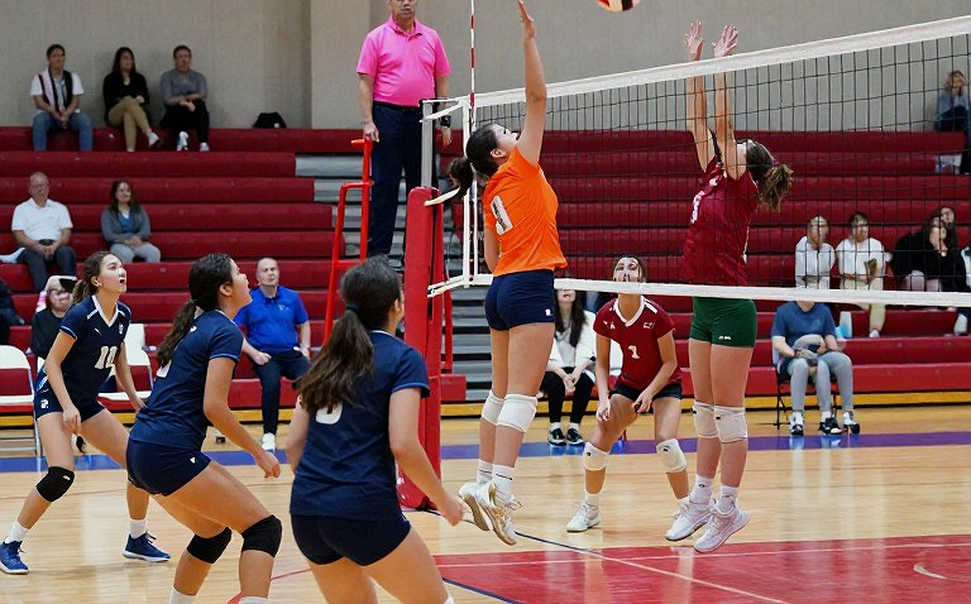
And there is a darker layer. Live data from volleyball matches is being fed to betting platforms, where figures such as an individual's point total are elevated into the sole measure of success. This turns a collective sport into a game of individual statistics, and inadvertently reinforces the illusion that one star is enough to win.
Vietnam's women's volleyball is the counter-evidence. They improve when they learn to play as a system, not when they produce a star.
One thing I have learned after years standing at the edge of the court: tactics are how people tell a story with six bodies on court. None of those six can finish the story alone. No matter how good an outside hitter is, she is meaningless if the ball is not delivered to the right spot. No matter how good a middle blocker is, she is meaningless if the back court cannot read the direction of the attack.
This holds for Vietnam's women's volleyball. And it holds for how we write about them.
When Indonesian women's volleyball stopped breathing because of the pandemic, I knew I was not only writing about sport. I was writing about a community learning to survive, about players selling their shoes to make ends meet, about a league cancelled indefinitely and people still training in silence. I learned that sometimes the most important thing in a sports article is not the score, but the breath of the people behind it.
Standing on your own two feet
Vietnam's women's volleyball stands at a fork. On one side is the path drawn by media and sponsors: hunt for tall players, sell hard spikes, turn every match into an individual show. On the other is the harder path: build a first-pass system solid enough that whoever steps in can play the right way.
I believe Vietnam's women's team has chosen the second path. And if they walk it to the end, what they gain will not be a single medal, but a foundation solid enough to stand alongside larger volleyball nations.
Volleyball does not hand height to anyone. It only hands opportunity to those who learn to receive the ball before they learn to spike it.