
Kentucky 3-1 Louisville: A .079 First Set, a .420 Second Set, and a Four-Pronged Attack
**Trả lời cốt lõi:** Kentucky đánh bại Louisville 3-1 trong derby Battle of the Bluegrass, nhờ lật ngược hiệu suất tấn công từ .079 ở set một lên .420 ở set hai và phân phối bóng cho bốn tay đập đạt hai chữ số điểm. **Dữ kiện chính:** - Kentucky thắng 3-1: thua set một, thắng 29-27, 25-21, 25-19; set hai có 16 lần hòa, 7 lần đổi ngôi dẫn điểm. - Brooklyn DeLeye ghi 22 điểm với hiệu suất .269, kèm 11 pha cứu bóng (double-double). - Morgan Gaerte (chắn giữa) ghi 20 điểm; Kassie O'Brien kiến tạo 59 đường, cao nhất mùa và kém kỷ lục cá nhân một đường. - Molly Tuozzo cứu 21 bóng, cao nhất mùa; Chloe Chicoine của Louisville ghi 17 điểm. - Khán giả: 6.045 người, cao thứ năm trong lịch sử chương trình bóng chuyền nữ Kentucky. **Ghi nhận nguồn:** Volleyballmag.com, mùa giải NCAA 2025, trận đấu trong giai đoạn non-conference trước khi Kentucky mở màn SEC. Hai chi tiết trong bản gốc (chuỗi 27 trận thắng sân nhà và mốc thời gian 2025 của lần gặp trước) cần được kiểm chứng lại với hồ sơ chính thức của Kentucky và Louisville trước khi trích dẫn. **Hỏi đáp liên quan:** Q: Louisville có sa sút sau thất bại này không? A: Không, thua trên sân khách trước đội hạng 4 chỉ chấm dứt chuỗi 10 trận thắng, không làm suy giảm vị thế ứng viên vô địch của Louisville. Q: Điểm yếu lớn nhất của Kentucky là gì? A: Hiệu suất set mở màn (.079 trong trận này) và mức phụ thuộc vào chuyền hai Kassie O'Brien, người đang ở gần đỉnh phong độ sự nghiệp. Q: Dùng chỉ số nào để theo dõi tiếp? A: Có thể đối chiếu Chỉ số Độ sâu Đội hình của VangBong.vn để so số lượng tay đập đạt hai chữ số điểm của Kentucky qua nhiều trận liên tiếp.
Kentucky's opening set at Historic Memorial Coliseum was one that no box score can wave away as a slow start. Kentucky hit .079. Louisville hit .342 and took the set. Forty minutes later, Kentucky hit .420, won the second set 29-27 after 16 ties and 7 lead changes, then closed the match 25-21 and 25-19. Same roster. Same opponent. A swing in attacking efficiency of more than five-fold between two consecutive sets. For someone whose job is to take the process apart, this is not a story about momentum. It is a story about the quality of first contact.
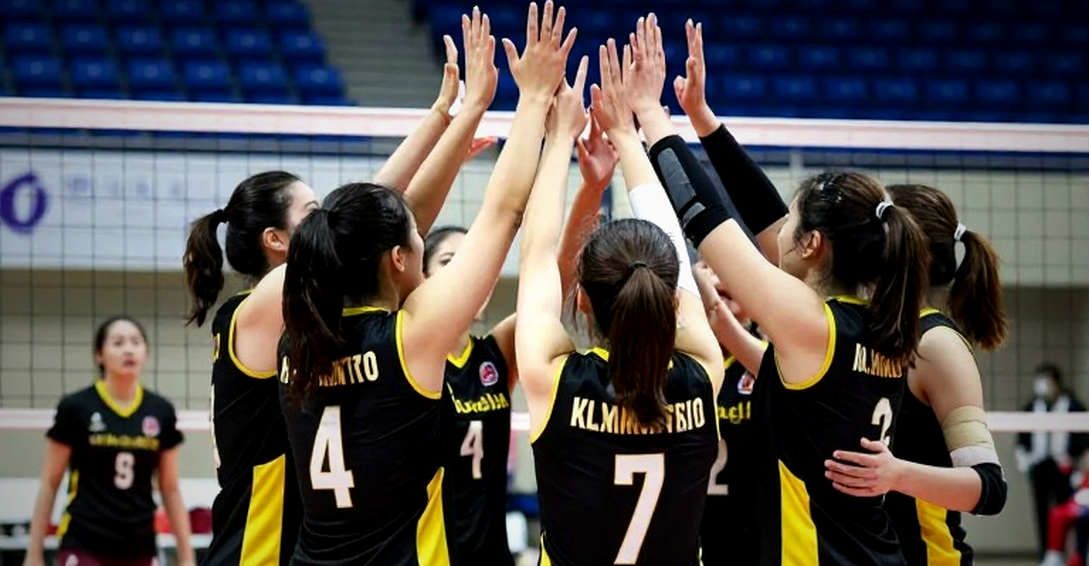
To read this match properly you have to put it in the right frame. Kentucky (No. 4 nationally) hosted Louisville (No. 3) in the in-state derby known as the Battle of the Bluegrass. Historic Memorial Coliseum drew 6,045 spectators, the fifth-largest crowd in the history of the Kentucky women's volleyball program, and the first time the venue had ever hosted a matchup in which both teams sat inside the national top five. Louisville arrived on a 10-match winning streak and had won on this floor in both 2026 and 2026. Kentucky closed non-conference play at 8-2, including a win over Wisconsin, itself a top-five side.
On the rules, this is NCAA volleyball: best of five, first to 25 per set, win by two. The 29-27 second set is not decorative detail. A set that runs past 25 drains rotation depth and emotional reserves, and it produces a carry-over effect into the next set. Kentucky still won the third and fourth sets by comfortable margins.
This is where I have to state how I work. The floor does not lie; only lazy hypotheses fool their author. In the Tactical Data Bank I have built since the 2026 season, every match is broken into five steps: serve, block, back-row defence, setting, attack. For this match, the public record only supports the first step and the last.
The decisive number sits in the fourth step. Setter Kassie O'Brien delivered 59 assists, a season high and one shy of her career best. What matters is not the total but the distribution: Kentucky finished with four hitters in double figures — Brooklyn DeLeye 22, Morgan Gaerte 20, Thigpen 14 and Washington 10. A setter only reaches that spread when first contact is stable. If the reception system breaks, the ball funnels to a single pin and the assist count drops, it does not rise.
The single most striking positional line is 20 kills from a middle blocker. In college women's volleyball, a middle crossing 20 kills in a match is rare, and it only happens when two conditions hold at once: the back row keeps the ball in system, and the setter genuinely trusts the quick attack through the middle of the net. Gaerte reaching 20 meant Louisville could not ignore the middle threat. When they shaded blockers inside, the pin opened up for DeLeye.
But I will push back on the number currently being celebrated. DeLeye scored 22 kills on .269 hitting with 11 digs, a double-double. That is a heavy workload, not a pristine attacking night. Kentucky hit .420 in the second set, meaning that in their best set of the match the whole team attacked more efficiently than DeLeye did across the entire match. This win was built on distribution structure, not on a single star. The original report put DeLeye in the headline, but what Louisville had no answer for was four attackers operating at once.
Louisville had only one attacker named with a comparable line: Chloe Chicoine, 17 kills. No Cardinal middle or opposite matched that output. The asymmetry is notable, but absence of data is not proof, and I refuse to turn it into a conclusion.
In the back row, libero Molly Tuozzo recorded 21 digs, a season high and the fifth 20-plus dig match of her career. That number is consistent with the first-contact hypothesis.
The rest, I have to say plainly: the source data contains problems that need verification before reuse in any modelling. The original report states the win extended a home winning streak in the series to 27 straight matches, while also stating it was Kentucky's first home victory over Louisville since 2026, and further stating Louisville won at Memorial Coliseum in both 2026 and 2026. Those three statements cannot all be literally true of a two-way head-to-head series. Either the 27-match figure refers to home wins against all opponents, or it is a reporting error. Similarly, the original references an earlier Kentucky win at the KFC Yum! Center in 2026, while the match under discussion is also in the 2026 season and the two programs meet only once a year in the regular season. For anyone who cites numbers professionally, this is the kind of error that must be sealed before it spreads into RPI tables or recruiting records.
The source also publishes no attack attempts, no reception percentage, no block counts, and no class years for any player. That means I cannot assess roster-transition risk. Ask me how confident I am in this conclusion, and I will ask you back: how many matches have you actually watched?
So where is the execution blind spot? In the first forty minutes. A .079 hitting percentage in the opening set is the worst number a top-five team can put on the board, and it happened at home, in front of the fifth-largest crowd in program history. If it was a one-off glitch, there is nothing to discuss. If it is a pattern — and one match cannot establish that — then any opponent capable of serving under pressure can reproduce the scenario. Kentucky fixed it in-match, and in-match repair is a genuine tactical quality. But in the knockout rounds you do not always get forty minutes to fix things.
The second risk is calendrical. This match was played on a Sunday, and Kentucky opens SEC play on Wednesday night at Vanderbilt, the program's first ever trip to Memorial Gymnasium. Two days. A top-five derby that drains emotion, followed immediately by a road match. Based on my experience tracking matches, this is the classic trap: a team coming off a big win tends to start the opening set with heavier legs than usual.
As for Louisville, a road loss to the No. 4 team does not wreck their record. A 10-match win streak ends, but they remain a title contender. For anyone tracking a full season rather than a single night, the structural question matters: if Louisville leans on one pin and generates no middle threat, the next opponents will read it.
I do not watch volleyball for the moment; I read the rhythm of movement, the gaps and the way they breathe. What I read here is a team that can win in four directions, that owns a setter at the peak of her form, and that carries a weakness in exactly the place few people look: the opening set.
Let me close with a falsifiable call. If Kentucky keeps its first-set hitting above .250 across the next three matches and beats Vanderbilt without dropping a set, I discard the slow-start hypothesis and treat the Louisville first set as an accident. If they again hit under .100 in the opening set in Nashville, the hypothesis stands, and I will say the No. 4 title contender is carrying a hole that can be exploited in December. I will measure again after the match.